
Pruning
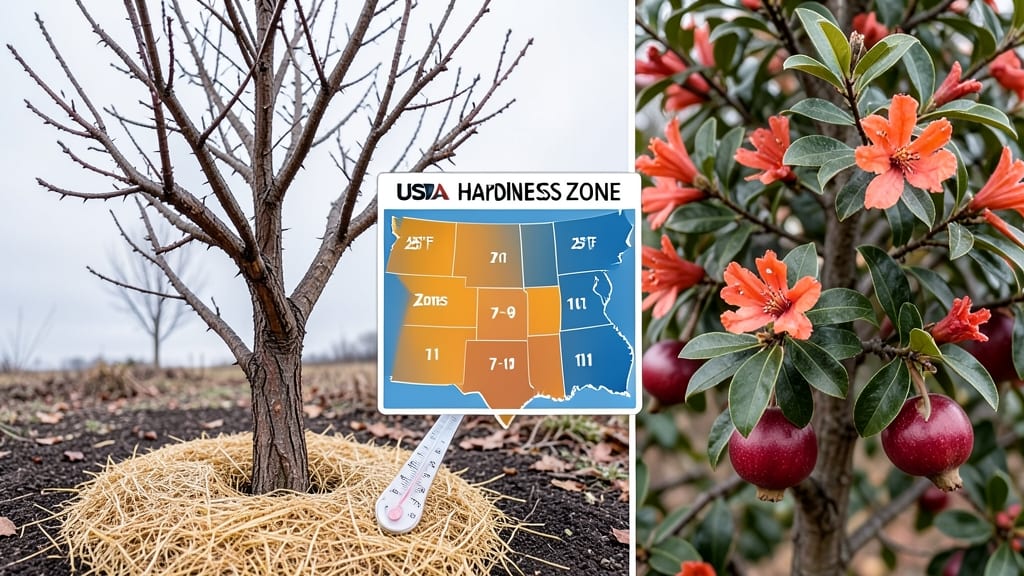
Understanding pomegranate tree cold tolerance reveals that these trees naturally grow best in USDA Zones 7-11 but can endure brief cold snaps down to 15°F (-9°C) when properly protected. Evergreen types handle slightly colder conditions, while deciduous varieties require extra winter care in Zones 6 or lower.
Pomegranate trees' cold tolerance varies dramatically between their evergreen and deciduous cousins.
Evergreen varieties like 'Wonderful' or 'Eversweet' can push their limits slightly lower, thanks to their year-round foliage that acts as natural insulation. 🌱 However, deciduous types—where leaves drop in winter—need more aggressive protection since they lose their protective layer.
The real danger isn't just the lowest temperature but rapid fluctuations, which stress the plant's vascular system. I've seen trees survive -10°F (-23°C) with proper mulching and wrapping, but only if they're acclimated gradually.
What's fascinating is how these trees adapt: their roots often survive colder temps than the above-ground growth. This means even if your trunk shows frost damage, the plant might regrow from protected root systems.
For gardeners in marginal zones, creating microclimates—like planting near south-facing walls or using windbreaks—can raise effective growing zones by 3-5 degrees.
The key is combining physical protection with proper timing: wrap trees after the first frost but before sustained cold, and remove wraps in early spring to prevent moisture buildup.
💡 In This Article
- USDA Zones for Pomegranate Trees: Hardiness Limits Explained
- Winterizing Pomegranate Trees in Cold Climates
USDA zones for pomegranate trees: hardiness limits explained
The cold tolerance of pomegranate trees hinges on their growth habit. Evergreen varieties like 'Wonderful' maintain leaves year-round, creating a natural insulating layer that protects tender tissues. These types can handle temperatures down to 20°F (-7°C) without significant damage, thanks to their dense foliage that traps heat near the trunk.
Deciduous varieties, however, lose their protective leaves in winter, making them more vulnerable to cold snaps below 15°F (-9°C).
USDA Zones provide a useful baseline, but real-world performance depends on microclimates. A tree in Zone 6 might survive winters if planted in a sheltered location with south-facing exposure, while one in Zone 8 could suffer damage during unexpected cold snaps.
The critical factor isn't just the absolute lowest temperature but how quickly temps drop—rapid fluctuations cause more stress than steady cold. For example, a sudden drop from 40°F (4°C) to -5°F (-21°C) can damage bark and branches faster than a gradual descent.
What most gardeners overlook is how root systems influence cold tolerance. Pomegranate roots often survive 5-10°F (-15 to -12°C) colder than the above-ground growth, which means even if your tree looks damaged, it might regrow from protected roots.
This is why proper soil insulation through mulching becomes crucial—adding 4-6 inches (10-15 cm) of organic mulch around the base can create a 10°F (5.5°C) warmer microclimate near the roots.
Temperature fluctuations create additional challenges. When daytime temps rise above 50°F (10°C) but nights drop below freezing, the plant's vascular system can freeze and thaw repeatedly, causing internal damage. This is why evergreen varieties have an edge—their year-round foliage moderates temperature swings better than bare branches.
For deciduous types, creating windbreaks and using frost cloths can reduce these harmful fluctuations by 20-30%.
Consider these key factors when evaluating cold tolerance:
- Variety selection: Evergreen types handle 5°F (3°C) colder temps than deciduous
- Plant placement: South-facing walls add 3-5°F (1.5-3°C) protection
- Soil depth: Deeper roots access warmer soil layers
- Acclimation period: Gradual temperature drops improve resilience
The science behind this involves how plant cells manage ice formation. Pomegranate trees produce antifreeze proteins that prevent ice crystal growth in their vascular system, but these proteins have limits. When temperatures drop below 15°F (-9°C), these natural protections fail, leading to cellular damage.
This biological mechanism explains why brief cold snaps are survivable, but prolonged exposure becomes deadly. 🌱