
Pruning
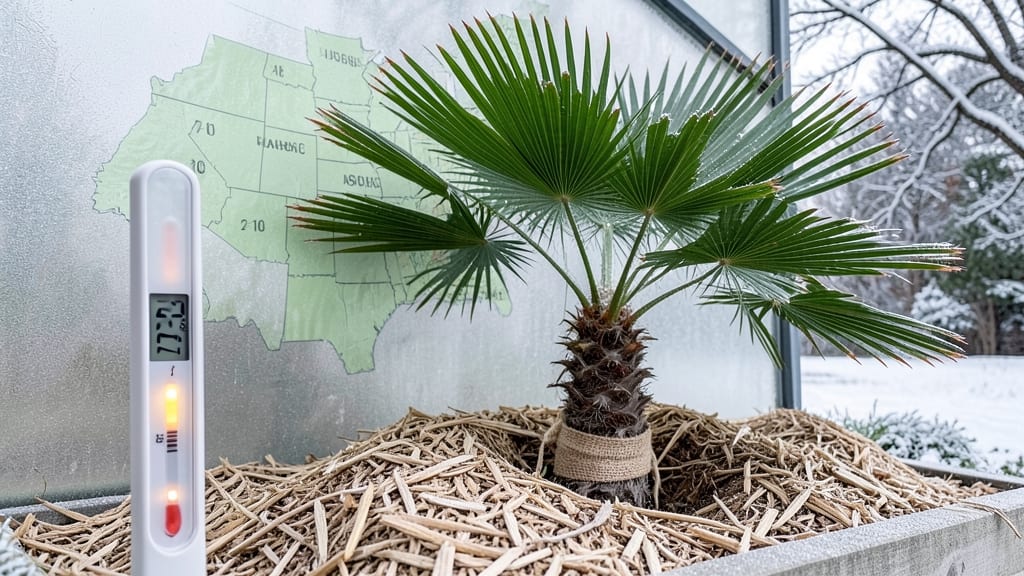
Understanding palm tree cold tolerance reveals that most varieties handle brief cold snaps down to 20–30°F (-6 to -1°C), while hardier species like the Needle Palm can survive 15°F (-9°C). Strategic winter care like mulching and wind protection is key to helping them thrive in colder regions.
Not all palms are created equal when it comes to frost.
While tropical species like the Canary Island Date Palm struggle below 25°F (-4°C), cold-hardy types such as the Windmill Palm or Mediterranean Fan Palm can push their limits further. 🌡️ The difference often comes down to their native climates—palms from higher elevations or coastal regions naturally adapt better to temperature fluctuations.
Even within the same species, younger trees tend to be more resilient than mature ones, so gradual acclimation in fall can make a big difference during winter.
What's interesting is how these trees handle cold differently based on their growth habits. Fan palms, for example, often recover better from frost damage than feather palms because their fronds are more compact and less prone to wind desiccation.
This is why choosing the right species for your climate—and providing proper winter care—can mean the difference between a thriving palm and one that struggles to bounce back.
💡 In This Article
- Cold Hardiness Zones for Different Palm Species
- Winter Care Tips to Protect Palm Trees from Frost
Cold hardiness zones for different palm species
Palm trees aren't monolithic in their cold tolerance—some species can handle 15°F (-9°C) while others wilt at 28°F (-2°C).
The key difference lies in their native habitats: palms from mountainous regions (like the Needle Palm) evolved to withstand cooler nights, while tropical varieties (such as the Royal Palm) are far more sensitive.
For example, the Mediterranean Fan Palm thrives in USDA Zone 8b, where winter lows reach 15-20°F (-9 to -6°C), while the Canary Island Date Palm struggles below 25°F (-4°C) in Zone 9a. 🌡️
Here's how temperature thresholds work: most palms experience mild damage at 25-28°F (-4 to -2°C), with frond tips browning but the trunk often surviving. At 20-25°F (-6 to -4°C), damage spreads to older fronds, and prolonged exposure can kill the growing point.
The hardiest palms (like the Windmill Palm) can endure 15°F (-9°C) for short periods because their thick, fibrous trunks store moisture and insulate the growing tip. This is why selecting species matched to your USDA zone is critical—planting a tropical palm in Zone 7 risks winterkill.
What's fascinating is how palm anatomy influences survival. Fan palms (like the Mediterranean Fan) have tightly clustered fronds that trap heat, while feather palms (like the Saw Palmetto) have delicate fronds that freeze more easily.
The growing tip, located at the top of the trunk, is the most vulnerable—when it freezes, the entire tree can't recover. This is why mulching (adding 4-6 inches of organic matter around the base) helps by insulating the roots and slowing temperature fluctuations. 🌱
For gardeners in marginal zones (Zone 8-9), the best strategy is to choose palms with proven cold hardiness.
The Needle Palm, for instance, handles 15°F (-9°C) and grows well in Zone 7b, while the Chinese Windmill Palm thrives in Zone 7a with 0°F (-18°C) tolerance for brief periods.
Even within these species, younger trees (under 5 years old) often survive colder snaps better than mature ones because their smaller trunks lose heat more slowly.
Understanding these thresholds helps with placement too. In Zone 8, plant palms near south-facing walls where winter sun provides 10-15°F warmer microclimates. In Zone 7, container-grown palms can be moved to protected areas during winter.
The key is matching the palm's native cold exposure to your local conditions—this is why nurseries often label palms with their minimum safe temperature.
One common misconception is that all palms are tropical. In reality, about 20% of palm species naturally grow in temperate climates, including the Pyrenean Fan Palm (surviving 14°F (-10°C)) and the Dwarf Palmetto (10°F (-12°C) tolerance).
These species offer hope for gardeners in Zones 6-7 who want palm-like foliage without the risk of winter damage. 🌿