
Trees
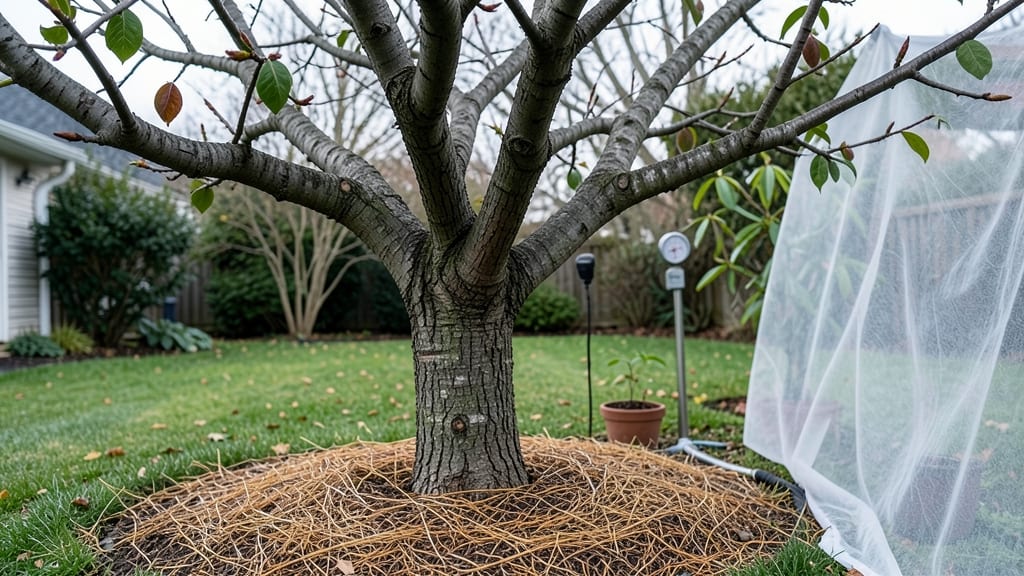
Mango trees can't survive winter in most cold climates without protection, since they're tropical plants that require temperatures between 65–90°F to thrive and suffer irreversible damage when exposed to freezing conditions below 30°F. Only cold-hardy varieties like 'Julie' or 'Ice Cream' can withstand brief cold snaps down to 20°F with proper winter care.
Mango trees originate from tropical regions where they naturally grow year-round, making them highly sensitive to cold temperatures. 🌱 When winter temperatures drop below 30°F, the tree's leaves, branches, and even roots can suffer frost damage, which disrupts photosynthesis and weakens the plant.
Even cold-hardy varieties need extra protection like thick mulching, frost cloths, or microclimates to survive. For those in colder zones, choosing the right variety and implementing winter care strategies can make the difference between a thriving tree and a lost investment.
If you're considering growing mango trees in cooler climates, focus on varieties bred for resilience and prepare your tree with insulation before the first frost. This approach helps mimic the tropical conditions they prefer, giving your mango tree the best chance to survive the winter months.
💡 In This Article
- Why Mango Trees Struggle in Cold Weather
- Step-by-Step Winter Protection for Mango Trees
Why mango trees struggle in cold weather
Mango trees are tropical plants that evolved in regions where temperatures rarely drop below 65°F, making them highly vulnerable to winter chills. When exposed to freezing temperatures (32°F or lower), ice crystals form within the tree's cells, rupturing their delicate membranes.
This cellular damage disrupts the tree's ability to transport water and nutrients, leading to leaf browning and branch dieback—a condition called "frostbite." 🌬️ The damage isn't just cosmetic; it halts photosynthesis, starving the tree of energy it needs to survive.
Root systems are particularly sensitive because cold soil slows microbial activity, reducing nutrient availability. In tropical climates, mango roots thrive in well-draining, consistently warm soil (70-85°F), but in winter, temperatures can plummet to 20°F or lower, shocking the roots into dormancy or death.
Even cold-hardy varieties like 'Julie' experience stress when roots freeze, though they recover better than tropical types. The key difference lies in their genetic adaptation to brief cold snaps, not sustained freezing.
Photosynthesis is another critical casualty of cold exposure. Mango leaves contain chlorophyll that functions optimally between 75-90°F. Below 50°F, enzyme activity slows dramatically, reducing the tree's ability to convert sunlight into energy.
This metabolic slowdown weakens the tree's defenses, making it susceptible to secondary issues like fungal infections or pest infestations that thrive in stressed plants. 🍃 Over time, repeated cold exposure can lead to permanent decline, even if the tree appears to recover in spring.
Comparing mango trees to temperate plants like apple trees highlights the stark physiological differences. Apple trees have evolved to endure winter dormancy, with buds protected by insulating scales and roots that grow deep to avoid frost.
Mango trees lack these adaptations; their thin bark and broad leaves offer little protection against cold. While some temperate trees can rebound from -10°F temperatures, mango trees typically suffer irreversible damage at 30°F or below.
Even the tree's flowering process is disrupted by cold. Mango blossoms are highly sensitive to temperature fluctuations, and exposure to 40°F or lower can cause buds to drop before they open. This reduces fruit set in the following season, compounding the stress on the tree.
The combination of cellular damage, root shock, and reproductive failure explains why mango trees struggle—and often perish—without winter protection in colder climates.
For those attempting to grow mango trees in marginal climates, understanding these biological vulnerabilities is the first step in providing effective protection.
Without intervention, the tree's tropical physiology makes winter survival nearly impossible, regardless of variety. 🌍 The challenge then shifts to replicating tropical conditions artificially, whether through insulation, microclimates, or selecting cold-tolerant cultivars.