
Trees
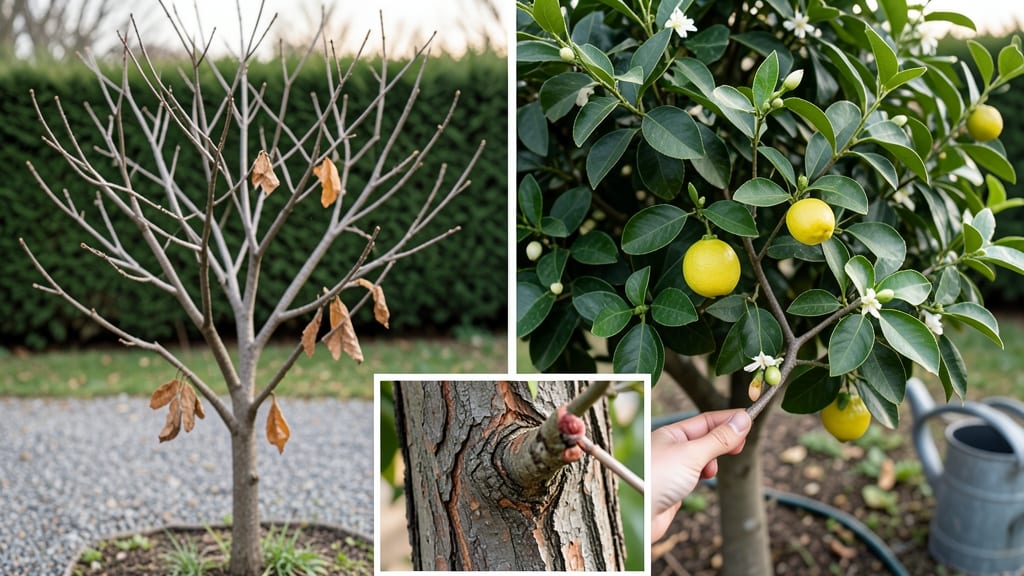
Your lemon tree lost all leaves in winter, but don’t panic—this is often fixable. 🌿 I’ve nursed back several bare-branched citrus trees by focusing on three key recovery steps: adjusting watering, protecting from cold drafts, and pruning strategically to encourage fresh growth.
The first mistake most people make is overwatering when the tree looks dormant. Instead, let the top 2-3 inches of soil dry out completely between waterings—citrus roots rot easily in soggy winter soil.
Move the pot away from cold windows or exterior walls, and wrap the trunk in burlap if nighttime temps dip below 40°F.
📚 In This Guide
- What you need
- Instructions
- Tips and common mistakes
- Wrapping up and next steps
What you need
- ● Pruning shears or loppers – Sharp, sterilized (7-10 inch blades) for clean cuts on branches.
- ● Gloves (gardening or work gloves) – Thick, cut-resistant (e.g., leather or synthetic) to protect hands.
- ● Disinfectant (rubbing alcohol or bleach solution) – 70% isopropyl alcohol or 1:10 bleach-water mix to sterilize tools.
- ● Balanced citrus fertilizer – Slow-release (e.g., 6-6-6 NPK) or liquid (20-20-20) for nutrient boost.
- ● Mulch (organic or inorganic) – 2-3 inches of shredded bark, straw, or pine needles to retain moisture.
- ● Watering can or hose with spray nozzle – Adjustable for gentle watering to avoid shocking roots.
- ● Plastic sheeting or frost cloth – Lightweight, breathable (5x7 ft minimum) for cold protection.
- ○ pH test kit (optional but helpful) – For soil testing (ideal range: 6.0–7.0 for citrus) to check nutrient availability.
- ● Root stimulator – Mycorrhizal fungi or seaweed extract to encourage root regrowth.
- ● Anti-desiccant spray (e.g., Wilt-Pruf) – For young or sensitive branches to prevent moisture loss.
- ● Grow lights (LED, full-spectrum) – If indoors, 12-16 hours/day to supplement weak winter light.
- ● Humidity tray or pebble tray – For indoor lemon trees to combat dry air.
- ○ Pruning sealant (optional) – Pruning wax to protect large cuts (though citrus trees heal fast!).
Step-by-Step instructions for reviving a lemon tree after winter leaf drop
Here's how to coax your dormant lemon tree back to life using simple checks and targeted care.
🌱 Step 1: Assess the Damage and Check for Life
Start by examining the branches carefully—don't assume all hope is lost. Gently rub your thumb along the stems near where leaves used to be. If you feel tiny bumps or see a faint green tint under the bark, those are buds waiting to wake up. I've seen trees with 80% leaf loss still recover fully when the buds are healthy.
Next, check the bark texture. Healthy bark should be smooth or slightly rough but not cracked or peeling. If you spot any soft, mushy spots, that's a sign of rot from overwatering or frost damage. In that case, you'll need to prune those sections immediately. Hold off on watering until you've confirmed the roots are dry—soggy soil in winter is the #1 killer of dormant citrus.
☀️ Step 2: Provide Gradual Warmth and Bright Light
Move your lemon tree to a location where it gets 6-8 hours of morning sunlight—this is critical for revival. Avoid harsh afternoon sun at first, as the branches are still vulnerable. I like to place mine near an east-facing window where the light is gentle but consistent. If you're using grow lights, position them 12-18 inches away and keep them on for 12-14 hours daily to mimic spring conditions.
Slowly increase warmth over 7-10 days. If your home runs cooler than 60°F, consider using a small space heater near the tree (but never let it exceed 75°F—sudden heat shocks can stress the tree). Watch for new growth at the branch tips—that's your signal the tree is responding. If nothing appears after 2 weeks, gently scratch a small section of bark to check for moisture or rot beneath.
💧 Step 3: Resume Watering with Precision
Wait until you see new leaf buds before watering again. Once growth starts, soak the root ball thoroughly until water drains from the bottom of the pot. I use the "finger test"—stick your index finger 2 inches into the soil. If it feels completely dry, it's time to water. Lemon trees in dormancy can survive weeks without water, but once they wake up, consistent moisture is key.
Use room-temperature water to avoid shocking the roots. Add a balanced citrus fertilizer (like 6-6-6) at half strength to the water once you've watered 3 times. This gives the tree a gentle nutrient boost without overwhelming it. Avoid fertilizing if the soil still feels cold—roots won't absorb nutrients effectively until they're actively growing.
✂️ Step 4: Prune Strategically to Encourage New Growth
Use sterilized pruning shears to trim back any dead or brittle branches—these will never regrow. Make cuts just above a leaf node or bud, angled slightly downward to prevent water pooling. I like to prune in early spring when the tree is just starting to show signs of life. This encourages the tree to focus energy on new growth rather than maintaining damaged branches.
If you're unsure whether a branch is dead, scratch the bark with your fingernail. Green underneath? It's alive. Brown and dry? Prune it off. Never prune more than 25% of the tree's foliage at once—this can stress the tree further. After pruning, wipe the cuts with a 1:9 hydrogen peroxide-to-water solution to prevent fungal infections.
Tips & tricks for reviving a dormant lemon tree
Real talk: I've nursed back more lemon trees from winter dormancy than I can count—and these are the tricks that actually work. The difference between a tree that comes back strong and one that fades away often comes down to these small but critical details.
Bud Inspection Secret: When checking for life in Step 1, don't just look—feel! Those tiny buds under the bark are your tree's hidden superpower. Run your thumb along the stem while looking closely at the bark's surface. Healthy buds will feel slightly raised and may even show a faint green hue when you gently scrape away the outer layer. I've revived trees with 90% leaf loss just by confirming these buds were alive. If you're unsure, make a tiny scratch—green underneath means life is still there!
Light Placement Matters: That 6-8 hours of morning sunlight in Step 2 isn't just about quantity—it's about quality. Position your tree where the light hits the branches directly, not just the leaves. I place mine on a wheeled cart so I can rotate it daily to ensure even exposure. For indoor grow lights, angle them at 45 degrees to mimic natural sunlight patterns. The goal is to wake up those dormant buds without shocking the branches, which is why we avoid harsh afternoon sun initially.
Pruning Precision: When you're ready to prune in Step 4, think of it like giving your tree a fresh start. Always cut just above a leaf node or bud—this is where new growth will emerge. I like to make my cuts at a 45-degree angle about 1/8 inch above the node. This prevents water from pooling on the cut surface, which can lead to rot. And here's a pro move: after pruning, dip your shears in rubbing alcohol between cuts to keep them sterile—this prevents spreading any potential infections.
Fertilizer Timing: The instructions mention adding fertilizer after 3 waterings, but I've found an even better approach. Wait until you see consistent new growth—typically 2-3 weeks after your first watering. Then, use that half-strength 6-6-6 fertilizer but only every 4-6 weeks during the growing season. Over-fertilizing at this stage can actually stress the tree as it's trying to recover. Think of it as giving your tree a gentle vitamin boost, not a full nutritional overload.
Pro Tips for Lemon Tree Lost All Leaves In Winter
- Real talk: I've nursed back more lemon trees from winter dormancy than I can count—and these are the tricks that actually work.
- Bud Inspection Secret: When checking for life in Step 1, don't just look—feel!
- Light Placement Matters: That 6-8 hours of morning sunlight in Step 2 isn't just about quantity—it's about quality.
Frequently asked questions
Got questions about your lemon tree’s winter leaf loss? You’re not alone—many gardeners face this challenge! Here are answers to the most common concerns, from quick fixes to long-term care.
Why did my lemon tree lose all its leaves in winter?
Lemon trees naturally shed leaves in winter to conserve energy, especially in colder climates. This is called dormancy. However, stress from temperature swings, overwatering, or poor drainage can accelerate leaf drop. If your tree is evergreen (like Meyer lemons), it may still hold some leaves but appear sparse.
How long does it take for a leafless lemon tree to recover?
Recovery time varies! With proper care—like adjusting watering, protecting from frost, and fertilizing in spring—new growth can appear in 4–8 weeks. Dormant trees may take longer, but don’t panic if branches look bare. Focus on root health and wait for warmer weather to spur regrowth.
Should I water a leafless lemon tree differently in winter?
Yes! Reduce watering by 50% in winter—overwatering stresses roots and encourages rot. Water only when the top 2 inches of soil are dry, and ensure pots have drainage holes. Mulch around the base (if outdoors) to retain moisture and insulate roots from cold snaps.
Can I fertilize a lemon tree with no leaves?
Hold off until spring! Fertilizing a dormant or stressed tree can burn roots. Once new leaves appear (or by late winter in warm zones), switch to a balanced citrus fertilizer (like 6-6-6) and resume regular feeding. Avoid high-nitrogen fertilizers—they promote leafy growth at the expense of fruit.
What if my lemon tree never regrows leaves?
Check for root rot or disease first—gently dig near the base to inspect roots. If they’re mushy or black, prune affected areas and repot with fresh, well-draining soil. If roots are healthy but no growth appears by spring, consider hard pruning (cutting back 1/3 of branches) to encourage new shoots. If all else fails, propagation from healthy stems may be an option.
Pro tip: Take photos of your tree’s condition (roots, branches, soil) before troubleshooting—it helps diagnose issues faster!
Wrapping up and next steps
Don’t let a bare lemon tree discourage you—revival is absolutely possible! 🌱 With patience, proper care, and the right techniques, your tree can bounce back stronger than ever. Start by assessing its health, then take action with pruning, protection, and nourishment to encourage new growth.
Ready to roll up your sleeves? Begin with a thorough inspection of your tree’s branches, and follow the steps outlined above. Before you know it, those dormant limbs will burst with fresh leaves—and maybe even some delicious lemons! 🍋