
Trees
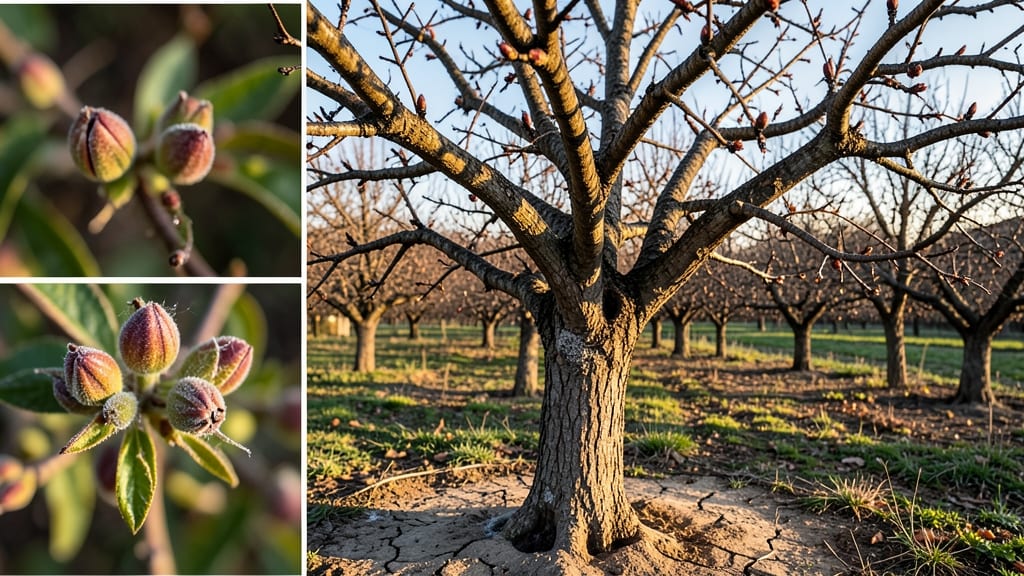
A peach tree that lost all its leaves isn't a death sentence—it just needs the right care. 🌿 I've nursed back several trees that looked completely done for, and the key is acting fast to identify why it happened and what to do next.
The most common causes are fungal diseases like peach leaf curl or bacterial spots, but it could also be environmental stress from drought, frost, or even overwatering. The good news? Each problem has a specific fix, from pruning out dead branches to applying fungicide at the right time.
You'll see new buds forming within 2-3 weeks if you treat the root cause. The leaves might not be perfect at first, but with proper care, your tree will bounce back stronger than ever. Works for backyard trees, container-grown peaches, and even young saplings. Let's get those branches reviving!
Root Causes Behind Sudden Leaf Loss
Understanding why your peach tree shed all its leaves is the first step to bringing it back to life. 🌳💨 These trees are resilient, but when leaves disappear overnight, it’s usually a sign of stress—often triggered by environmental, biological, or cultural factors.
Let’s break down the most common culprits with clear science-backed explanations so you can diagnose the issue accurately.
---
Peach trees (Prunus persica) are semi-tropical, meaning they thrive in warm climates but can suffer when temperatures swing dramatically. Sudden cold snaps, late-season frosts, or even heatwaves can shock the tree into dropping leaves as a survival mechanism.
- How it happens: - Frost damage: When temperatures drop below 28°F (-2°C), cell membranes in leaves rupture, causing them to blacken and fall.
This is common in early spring when buds swell but frost hits. - Heat stress: Prolonged exposure to above 95°F (35°C) can scorch leaves, leading to premature drop-off.
The tree prioritizes water conservation by shedding foliage. - Transplant shock: If moved during hot or cold extremes, roots struggle to absorb water, starving the leaves.
- Actionable fix: - Protect from frost: Cover young trees with frost blankets or row covers during cold snaps.
Use string lights or heat lamps for extra warmth if needed. - Water deeply during heatwaves to reduce stress (1–1.5 inches per week). - Avoid transplanting in extreme weather—wait for mild spring or fall conditions.
---
Fungi like bacterial leaf spot, powdery mildew, or peach leaf curl (caused by Taphrina deformans) can turn leaves yellow, brown, or crispy before they fall. These pathogens thrive in humid, wet conditions and can weaken the tree over time.
- How to spot them: - Peach leaf curl: Leaves pucker, thicken, and turn red/brown in early spring (before new growth). - Bacterial spot: Tiny water-soaked spots with yellow halos that enlarge and drop leaves prematurely. - Powdery mildew: White, fluffy coatings on leaves, often in shaded or crowded areas.
- Actionable fix: - Prune infected branches immediately and sterilize tools with 70% rubbing alcohol to prevent spread. - Apply fungicides like copper-based sprays (for bacterial spot) or neem oil (for mildew) before bud break in early spring. - Improve airflow by thinning dense branches and watering at the base (not overhead) to reduce humidity.
---
Peach trees hate soggy roots. Overwatering or compacted, poorly draining soil leads to root rot (often caused by Phytophthora fungi), which cuts off nutrient and water supply to the leaves. Wilting, yellowing, and sudden defoliation follow.
- Signs of overwatering: - Mushy, dark roots when dug up. - Yellow leaves with green veins (nutrient deficiency from poor uptake). - Stunted new growth despite ample water.
- Actionable fix: - Test your soil: Stick a screwdriver in the ground—if it goes in easily after watering, drainage is poor. Aim for well-draining soil (sandy loam is ideal). - Adjust watering: Water deeply 1–2 times per week (not daily).
Let the top 2–3 inches of soil dry out between sessions. - Amend soil: Mix in compost or perlite to improve aeration. If planting, choose a slightly elevated spot to prevent water pooling.
---
Insects like aphids, spider mites, or peach tree borers can strip a tree of its vitality, causing leaves to yellow, curl, and fall. These pests weaken the tree’s ability to photosynthesize, leading to rapid defoliation.
- Common pests and their damage: - Aphids: Tiny green/black bugs that cluster on new growth, excreting sticky honeydew (attracts sooty mold). - Spider mites: Almost invisible until they web leaves, causing stippling and browning. - Peach tree borers: Larvae bore into bark, disrupting water flow and causing oozing sap or sawdust-like frass.
- Actionable fix: - Blast pests off with a strong spray of water (especially for aphids). - Use insecticidal soap or neem oil for mites/aphids (reapply every 5–7 days). - Wrap the trunk with borer-resistant tape (like Tanglefoot) in early spring to trap adults before they lay eggs. - Encourage natural predators: Ladybugs and lacewings devour aphids—plant dill or marigolds nearby to attract them.
--- Peach trees need balanced nutrients (especially nitrogen, phosphorus, and micronutrients) to sustain leaf health. Deficiencies—often from poor soil or improper fertilization—can cause yellowing (chlorosis) and premature leaf drop.
- Key deficiencies and symptoms: - Nitrogen (N) deficiency: Pale yellow leaves (starting with older ones) and stunted growth. - Iron (Fe) deficiency: Yellow leaves with green veins (common in alkaline soil). - Potassium (K) deficiency: Brown leaf edges and weak stems.
- Actionable fix: - Test your soil (use a DIY kit or send a sample to a cooperative extension service). - Amend soil based on results: - For nitrogen: Apply compost or a balanced fertilizer (10-10-10) in early spring. - For iron: Use chelated iron supplements or sulfur to lower soil pH (ideal: 6.0–6.5). - For potassium: Add wood ash or a potassium-rich fertilizer like greensand. - Avoid over-fertilizing—too much salt can burn roots and worsen the problem.
--- Peach trees are sensitive to physical stress from high winds, drought, or air pollution. Leaves may drop as a protective response to conserve energy.
- How it manifests: - Wind damage: Leaves tear or desiccate from constant exposure, especially in open or exposed areas. - Drought stress: Roots can’t keep up with demand, causing leaves to curl and fall (even if soil looks moist). - Air pollution: Ozone or smog (common in urban areas) causes brown speckling and premature leaf drop.
- Actionable fix: - Protect from wind: Plant near a natural windbreak (like a fence or hedge) or stake young trees in storm-prone areas. - Mulch heavily: Use 3–4 inches of organic mulch (wood chips, straw) to retain moisture and regulate soil temperature. - Water deeply during droughts: Use drip irrigation to deliver water slowly to the roots. - Move potted trees indoors during smog alerts if possible.
--- Aggressive pruning, mechanical damage (like lawnmower hits), or animal browsing can shock a peach tree into dropping leaves. Even root disturbance (like digging near the trunk) can trigger stress responses.
- Common triggers: - Over-pruning: Removing more than 25% of foliage at once disrupts photosynthesis. - Topping the tree: Cutting back main branches encourages weak, water-sprout growth. - Animal damage: Deer, rabbits, or rodents gnawing on
Revive Your Tree Step by Step
Your peach tree’s bare branches may feel like a heartbreaking sight, but with the right approach, you can nurse it back to health—and even prevent future leaf loss. Below are practical, actionable solutions tailored to the most common causes, along with proactive tips to keep your tree thriving.
Let’s roll up our sleeves and get to work! 🌱🔧
---
If freezing temperatures stripped your tree of leaves, the good news is that peach trees are surprisingly resilient. The key is to protect the tree from further stress and encourage new growth.
#### How to Help: ✅ Prune damaged branches 🔪 - Use sterilized pruners to cut back any blackened, mushy, or brittle branches at a 45-degree angle, about ¼ inch above a healthy bud or lateral branch. - Avoid heavy pruning—focus on removing only the dead wood to reduce stress.
✅ Mulch like a pro 🌿 - Apply 2–4 inches of organic mulch (straw, wood chips, or shredded leaves) around the base of the tree, keeping it 6 inches away from the trunk to prevent rot. - Mulch retains moisture and regulates soil temperature, giving roots a fighting chance.
✅ Water deeply but wisely 💧 - Water slowly and deeply (1–2 inches per week) to encourage root growth, but avoid soggy soil—peach trees hate "wet feet." - Morning watering is best to reduce evaporation and fungal risks.
✅ Protect from late frosts ❄️ - If frost is still a threat, cover young trees with frost cloth or burlap at night, securing it loosely to avoid damage. - Avoid plastic sheets—they can trap heat and cause more harm.
#### 💡 Prevention Tips: - Plant peach trees in sheltered locations (e.g., near a south-facing fence or wall). - Choose cold-hardy varieties (like ‘Relenta’ or ‘Redhaven’) if you live in a frost-prone zone. - Avoid late-season fertilizing, which can stimulate tender new growth vulnerable to frost.
---
If your tree’s leaves turned yellow and fell off due to root rot or waterlogged soil, the solution is all about improving drainage and reducing stress.
#### How to Help: ✅ Test your soil 📊 - Stick a wooden dowel or screwdriver into the soil—if it comes out muddy, your drainage is poor. - For a quick fix, amend the soil with compost or perlite to loosen heavy clay.
✅ Adjust your watering habits 🚰 - Water only when the top 2 inches of soil are dry—stick your finger in to check! - If your tree is in a low spot, consider raising the bed or installing a French drain to redirect excess water.
✅ Aerate compacted soil 🏗️ - Use a garden fork to poke holes around the drip line (the area under the tree’s canopy) to improve airflow to the roots. - For severe compaction, top-dress with coarse sand or gravel (mixed into the top 6 inches of soil).
✅ Prune for airflow 🌬️ - Thin out dense branches to allow sunlight and air circulation, reducing humidity that fuels fungal growth.
#### 💡 Prevention Tips: - Plant peach trees on slopes or mounds to prevent water pooling. - Avoid over-mulching—keep mulch 2–3 inches thick and renew it annually. - If your yard has clay-heavy soil, consider raising the tree in a mound at planting time.
---
If aphids, spider mites, or bacterial leaf spot caused your tree to shed leaves, you’ll need to identify the culprit and take targeted action.
#### How to Help: ✅ Inspect for pests 🔍 - Aphids: Look for sticky residue (honeydew) on leaves and curled or distorted foliage. - Spider mites: Check the undersides of leaves for tiny webs and speckled yellowing. - Borers: Tap branches—hollow-sounding wood means it’s time to act.
✅ Treat infestations naturally 🌿 - Aphids/Mites: Spray with a soapy water solution (1 tsp mild dish soap + 1 quart water) or neem oil (follow label instructions). - Borers: Apply beneficial nematodes (like Heterorhabditis bacteriophora) or borer-specific sprays (e.g., Bayer Advanced Tree & Shrub Insect Killer). - Fungal diseases: Use copper fungicide or baking soda spray (1 tbsp baking soda + 1 quart water + a few drops of soap).
✅ Encourage beneficial insects 🐞 - Plant marigolds, dill, or yarrow nearby to attract ladybugs and lacewings, which devour pests. - Avoid broad-spectrum pesticides—they can kill helpful bugs too!
✅ Remove infected debris 🧹 - Rake up and dispose of fallen leaves (especially if they’re spotted or discolored) to prevent reinfection. - Sterilize pruners with rubbing alcohol between cuts to avoid spreading disease.
#### 💡 Prevention Tips: - Monitor trees weekly during growing season for early signs of pests. - Space trees properly (15–20 feet apart) to reduce humidity and improve airflow. - Apply preventive sprays (like neem oil) in early spring before pests arrive.
---
No matter the reason for leaf loss, these universal strategies will help your peach tree bounce back:
🌿 Fertilize lightly 🍃 - Use a balanced, slow-release fertilizer (10-10-10) in early spring—avoid high-nitrogen fertilizers, which can burn roots and promote weak growth.
🌿 Support new growth 🌱 - If your tree is bare but alive, it may still sprout leaves from dormant buds. Keep it well-watered and mulched to encourage regrowth.
🌿 Be patient ⏳ - Peach trees can take 2–4 weeks to show new leaves after stress. Don’t prune too aggressively—let the tree recover its energy first.
--- Final Thought: A leafless peach tree isn’t necessarily a death sentence—it’s often a call to action. By identifying the cause and applying the right fix, you’ll give your tree the best shot at a full, fruitful comeback. 🍑💪
(Need more help? Drop a comment below—we’re happy to troubleshoot!)
Frequently asked questions
Is my peach tree dead if it lost all its leaves?
Not necessarily! Many peach trees lose leaves due to stress but remain alive. Check for green buds or new shoots—these indicate life. Also, scratch a small section of bark: if it's green underneath, the tree is still viable. Even if it looks dormant, roots may still be active.
When should I prune a leafless peach tree?
Wait until late winter or early spring (just before buds swell) to prune. This timing helps the tree recover faster and reduces stress. Remove only dead, diseased, or crossing branches—avoid heavy pruning, which can weaken an already stressed tree.
Can I still get fruit from a peach tree that lost all leaves?
Possibly, but it depends on the cause. If the tree lost leaves due to dormancy or frost, it may still produce fruit. However, if the issue was disease, pests, or severe root damage, fruiting may be reduced. Focus on recovery first—healthy leaves mean better fruit production next season!
How long does it take for a peach tree to regrow leaves?
With proper care, you may see new leaves within 2-4 weeks. The timeline depends on the cause: frost damage recovers faster than fungal infections. Keep the tree well-watered and mulched to support regrowth. Avoid fertilizing until new growth appears.
Should I fertilize a peach tree that lost all leaves?
Only if the soil test shows deficiencies. Fertilizing a stressed tree can burn roots or encourage weak growth. Instead, focus on watering and mulching first. Once new leaves appear, apply a balanced fertilizer (10-10-10) in early spring.