
Pests and Diseases
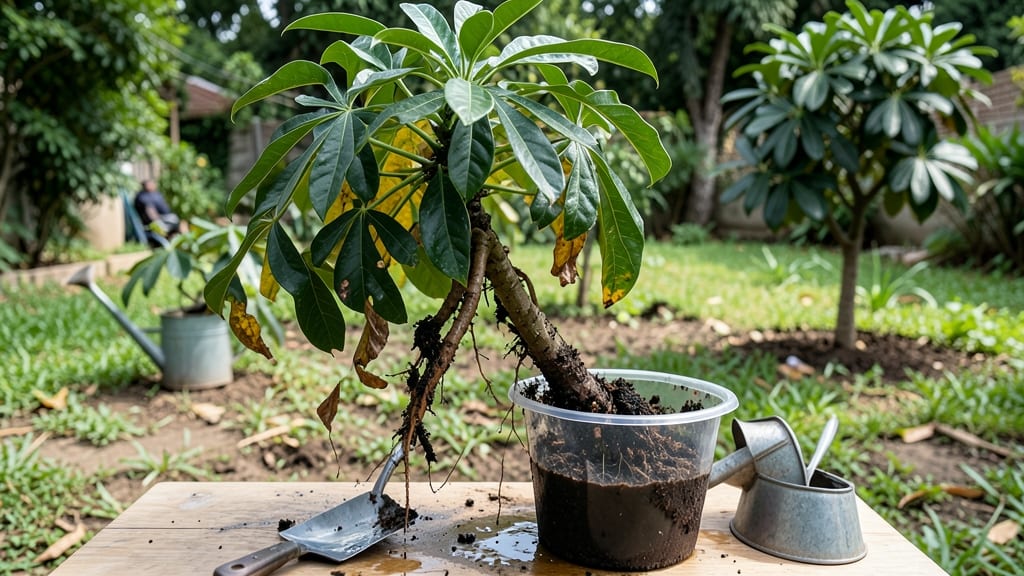
Your money tree’s drooping leaves and foul-smelling soil scream one thing: overwatered money tree root rot—and it’s fixable. 🌱 I’ve nursed back more than a dozen of these tropical survivors, and the recovery process starts with a single, honest look at the roots.
The good news? Even severely damaged plants can bounce back with the right care.
Root rot thrives in soggy soil, where roots suffocate and turn mushy brown instead of firm white. Check for blackened stems at the base or a pungent, rotten smell when you lift the plant—those are your red flags.
The cause? Usually, well-meaning watering every few days, poor drainage, or a pot without drainage holes. My first mistake was ignoring the yellowing leaves until the roots were half-rotted.
Here’s the game-changer: trim away the rotten roots with sterilized scissors, repot in fresh, fast-draining mix, and adjust your watering to “only when the top inch is bone-dry.” Within 4-6 weeks, you’ll see new growth pushing through—proof the plant’s fighting spirit is still intact.
The key is patience; recovery takes time, but the payoff is a lush, thriving money tree that’s actually happy.
Prevention is simpler than you think: use a pot with drainage, water only when needed, and avoid letting the plant sit in saucers of standing water. I swear by the “finger test”—stick your finger in the soil before watering.
If it’s damp, wait another day. Long-term, this habit saves more plants than any rescue technique ever will.
Root Rot’s Silent Triggers
Root rot in your money tree (Pachira aquatica) doesn’t strike out of nowhere—it’s usually the result of a few sneaky but preventable mistakes. Understanding the root causes (pun intended!) helps you avoid turning your tropical houseplant into a soggy science experiment.
Let’s break down the key factors that turn excess water into a death sentence for your plant’s roots.
Your money tree thrives in well-draining soil, but when you overwater it, the roots suffocate in a swampy environment. Here’s why it’s so dangerous:
- Oxygen Deprivation: Roots need oxygen to respire and absorb nutrients. When soil stays waterlogged, oxygen is replaced by water, starving the roots of what they need to survive. Think of it like drowning—your plant can’t breathe!
- Fungal Feast: Stagnant water creates the perfect breeding ground for Phytophthora and Pythium, fungi that thrive in wet conditions. These pathogens attack root cells, breaking down their structure and clogging water transport pathways.
- Nutrient Lockout: Even if your soil is nutrient-rich, waterlogged conditions prevent roots from accessing those nutrients. The excess water leaches away essential minerals like nitrogen and potassium, leaving your plant malnourished.
Pro Tip: 💡 Stick your finger 1-2 inches into the soil before watering. If it’s damp, wait. If it’s bone-dry, it’s likely been too long since your last watering—but if it’s squishy, you’ve overdone it.
Not all soils are created equal, and neither are pots. If your money tree’s container lacks drainage holes or the soil retains too much moisture, water has nowhere to go but down—straight to the roots.
- Clay or Compacted Soil: Heavy soils (like garden soil or clay) hold water like a sponge. Money trees hate this—their roots need aeration to stay healthy. If water can’t drain within 24 hours, rot sets in.
- No Drainage Holes: Pots without holes act like bathtubs for your plant. Even with well-draining soil, water pools at the bottom, creating a permanent soggy zone where roots rot.
- Root-Bound Stress: When roots fill the pot completely, they struggle to absorb water efficiently. This forces excess moisture to linger, increasing the risk of rot.
Fix It: ✨ Repot your money tree in a terracotta or fabric pot with drainage holes, and use a chunky, airy mix like 60% potting soil, 30% perlite, and 10% orchid bark.
Money trees love humidity—but not when it’s combined with poor water management. High humidity (above 60%) + overwatering = a double whammy for root health.
- Slow Evaporation: In humid conditions, soil dries out much slower. If you water on a schedule (e.g., every Tuesday), your plant’s roots may never get a chance to dry between waterings.
- Fungal Spread: Humidity helps fungal spores travel faster through the soil. Once one root is infected, the disease spreads like wildfire to healthy roots.
- Transpiration Drop: High humidity reduces the plant’s ability to transpire (release water vapor). This means excess water stays in the soil longer, increasing rot risk.
Balance It: 🌡️ Keep humidity between 40-50% for your money tree. Use a hygrometer to monitor levels, and avoid misting the soil directly.
Extreme temperatures—both hot and cold—disrupt your money tree’s ability to regulate moisture, making it more susceptible to rot.
- Cold Roots: Temperatures below 60°F (15°C) slow root activity. If the soil stays cold and wet, roots can’t process water efficiently, leading to anaerobic conditions (no oxygen) and rot.
- Heat Stress: While money trees love warmth, direct heat sources (like radiators or vents) can dry out the soil’s surface while keeping the roots damp. This creates a false sense of dryness—the top looks dry, but the roots are still soggy.
- Drafty Spots: Cold drafts (from windows or AC) can cause temperature fluctuations, stressing the roots and making them more vulnerable to pathogens.
Keep It Steady: 🎯 Place your money tree in a spot with consistent temperatures between 65-85°F (18-29°C) and avoid placing it near heaters or cold windows.
Now that you know the real culprits behind root rot, the next step is diagnosing your plant’s condition. But first—don’t panic! Many overwatered money trees can recover with the right care. Stay tuned for our 3-step fix guide to save your soggy (but salvageable) plant.
Revive Your Money Tree Now
Overwatering can turn your money tree’s roots into a soggy mess, but don’t panic—this plant is tougher than it looks! 🌱 With the right steps, you can diagnose the damage, rescue the roots, and bring your money tree back to life.
Below, we’ll break down cause-specific fixes so you can act fast and prevent future disasters.
---
Cause: Chronic soggy soil (waterlogged roots, no airflow) Fix: 1. Remove the plant carefully from its pot—gently loosen the root ball if stuck. 2. Rinse the roots under lukewarm water to wash away excess soil and inspect for: - Black/mushy roots = Rot (trim these with sterilized scissors). - Firm, white/tan roots = Healthy (save these!). 3. Repot immediately in a clean pot with fresh, well-draining soil mix (see [🌡️ Pro Tip](#) below for the perfect blend).
💡 Pro Tip: If repotting isn’t an option, poke drainage holes in the bottom of the pot today and add a 2-inch layer of perlite or orchid bark to improve airflow.
---
Cause: Overzealous watering (no "dry spell" between waterings) Fix: - Wait until the top 1–2 inches of soil are bone-dry before watering again. Stick your finger in—if it’s damp, wait 1 more day. - Water deeply but less often: Drench the soil until water runs out the drainage holes, then empty the saucer to prevent root suffocation. - Use room-temperature water (cold water shocks roots!).
🌡️ Pro Tip: Bottom-watering is your new best friend! Place the pot in a tray of water for 10–15 minutes, then drain. This encourages roots to grow downward (stronger structure!) and reduces overwatering risks.
---
Cause: Stress from root trauma + poor growing conditions Fix: - Move to bright, indirect light (no harsh sun—think filtered sunlight near a window). - Humidity hack: Mist leaves 2–3 times a week or place the pot on a pebble tray with water (evaporation = natural humidity boost). - Fertilize lightly after 4–6 weeks of recovery with a balanced, diluted liquid fertilizer (½ strength). No fertilizer yet? Wait until new growth appears.
✨ Pro Tip: Yellow leaves? Don’t panic! They’re the plant’s way of shedding damaged foliage. Trim them off to redirect energy to new, healthy growth.
---
Cause: Ignoring warning signs + poor pot/soil choices Fix: | Problem | Solution | |---------------------------|------------------------------------------------------------------------------| | No drainage holes | Repot into a terracotta or ceramic pot with holes (or drill them yourself!). | | Compacted soil | Mix 50% potting soil + 50% perlite/orchid bark for airflow. | | Overcrowded roots | Repot every 2–3 years in a pot 1–2 inches larger than the last. | | Cold drafts | Keep away from AC vents, doors, or windows that drop temps below 60°F. |
🎯 Final Pro Tip: Stick to a schedule—set a reminder to check soil moisture every 7–10 days (adjust based on your home’s humidity).
--- Your money tree can bounce back—just give it time, patience, and the right conditions! With these fixes, you’ll see new growth in 4–8 weeks. 🌿✨
Frequently asked questions
How can I tell if my money tree has root rot from overwatering?
Look for these key signs: black, mushy roots when you gently remove the plant from its pot, a foul, sour smell from the soil, and yellowing leaves that feel soft or wilted. Healthy roots should be firm and white or tan. If you see brown, slimy roots, that’s a clear sign of rot caused by too much moisture.
Can I save a money tree with severe root rot?
Yes, but you’ll need to act fast! Trim away all black/mushy roots with sterilized scissors, then repot in fresh, well-draining soil. Give it time—new growth should appear in 4-6 weeks if the remaining roots are healthy. The key is patience and proper aftercare (like bottom-watering and bright indirect light).
Why does my money tree keep getting root rot even after I fixed it?
This usually means your pot lacks drainage holes, your soil retains too much water, or you’re still watering on a schedule. Money trees need soil that dries out between waterings—stick your finger 1-2 inches deep before watering. If it’s damp, wait! Also, use a chunky soil mix with perlite or orchid bark to improve airflow.
Is it better to underwater than overwater a money tree?
While both extremes are bad, money trees are more forgiving of underwatering than overwatering. They can bounce back from dry spells, but root rot is often fatal if ignored. The secret is consistency: water only when the top 1-2 inches of soil are bone-dry, and always use a pot with drainage holes.
How often should I repot my money tree after fixing root rot?
Wait 4-6 weeks after recovery to let new roots establish, then repot into a clean pot with fresh soil (use a mix of potting soil, perlite, and orchid bark). Avoid repotting too soon—this can stress the plant. After recovery, repot every 2-3 years or when you see roots circling the pot.