
How To
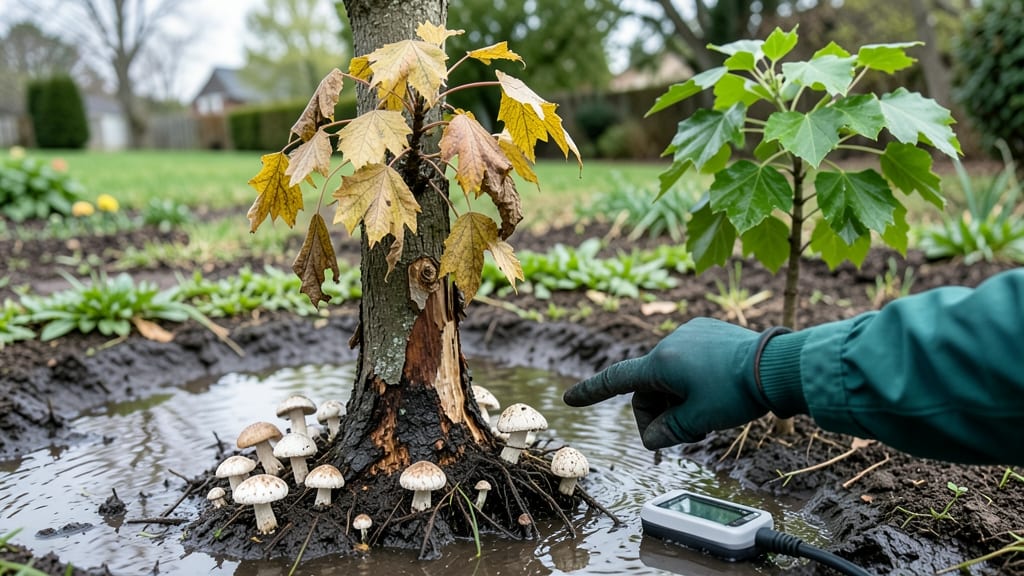
How to tell if your tree is overwatered might surprise you—its drooping leaves could mean it's drowning, not thirsty. 🌳 I've seen overwatered trees look identical to underwatered ones, and the difference comes down to what's happening below the soil surface. The first clue is often yellowing leaves that start at the bottom, paired with a soggy, musty smell when you check the soil.
Here's the thing—trees need their roots to breathe, and too much water suffocates them. Stick your finger 2-3 inches into the soil: if it feels damp, hold off on watering. Root rot sets in when roots can't get oxygen, turning brown and mushy instead of firm and white.
I learned this the hard way with my first willow tree, which took a year to recover.
Once you confirm overwatering, the fix is simple: stop watering immediately and improve drainage. Amend heavy clay soil with compost or sand, and consider planting in raised beds for better airflow. Within weeks, you'll see fresh green growth as roots recover—proof you've given your tree a second chance.
Prevention is easier than cleanup: water deeply but infrequently, especially in winter when trees need less. My garden journal now tracks rainfall and soil moisture to avoid this mistake again. A little vigilance keeps trees thriving instead of struggling.
📚 In This Guide
- What you need
- Instructions
- Tips and common mistakes
- Wrapping up and next steps
What you need
- ● Garden trowel or small shovel – For gently lifting the soil to check roots (6–12 inches deep, depending on tree size).
- ● Moisture meter – A digital soil moisture sensor (e.g., Xiaomi Mi Flower Care or Govee Soil Moisture Meter) to measure soil dampness accurately.
- ● Gloves (nitrile or gardening gloves) – Protects hands from dirt, sharp roots, or potential pathogens.
- ● Notebook & pen – To record observations like leaf color, soil texture, and root condition.
- ● Waterproof camera or smartphone – Capture close-ups of leaves, stems, and roots for comparison later.
- ○ Ruler or measuring tape – To assess leaf size, stem thickness, or root spread (optional but helpful).
- ● Hand lens (magnifying glass) – For inspecting tiny details like fungal growth on roots or leaf undersides.
- ● pH testing kit – Overwatered soil often has poor drainage and may be too acidic (e.g., LaMotte Soil pH Test Kit).
- ● Pruning shears – If you need to trim severely damaged branches or leaves for closer inspection.
- ● Bucket or wheelbarrow – To temporarily hold soil samples if testing drainage or compost.
- ● Tree care guidebook or app – For species-specific signs of overwatering (e.g., PictureThis or iNaturalist).
How to diagnose overwatered trees using visual and physical clues
Here's how I spot the subtle signs of overwatering before it's too late—no guesswork needed.
🌿 Step 1: Check Leaf Color for Yellowing Patterns
Start by examining the leaves from top to bottom. Overwatered trees often show yellowing on older leaves first, especially those closest to the ground. This happens because the roots can't absorb oxygen when soil stays soggy, cutting off nutrients. Look for bright yellow patches rather than the gradual browning of drought stress.
Flip a few leaves over—if you see yellowing between the veins (called chlorosis), that's a classic waterlogging sign. Healthy leaves stay uniformly green, even when older. I always check the undersides of leaves because early yellowing often starts there before spreading.
💧 Step 2: Test Soil Moisture with Your Fingers
Stick your finger 2-3 inches deep into the soil near the tree's drip line. If it feels cold, slick, or smells like rot, you've got overwatering. Healthy soil should feel cool but not cold, with a slight resistance when squeezed—like a damp sponge that holds its shape.
For a quick test, grab a handful of soil and squeeze it. If water beads up on the surface or the clump stays intact when you try to crumble it, the soil is too wet. I like to do this test in the late afternoon when evaporation gives the most accurate reading of moisture levels.
⏰ Step 3: Observe Drooping Leaves That Don't Recover
Overwatered trees often show lethargic drooping that doesn't bounce back when you gently pull the leaf. This happens because the roots can't take up water efficiently in waterlogged soil. Unlike wilting from thirst, overwatered droop feels soft and limp rather than crisp and dry.
Wait an hour after noticing droop. If leaves remain flaccid (not just temporarily wilted from heat), that's a red flag. I've seen trees recover from afternoon wilting only to collapse by morning if roots were drowning. Check multiple branches—if more than 20% of the canopy shows this pattern, overwatering is likely the cause.
🪴 Step 4: Look for Mushroom Growth or Fungal Spots
Scan the soil surface and mulch layer for tiny black or white fungal growths—these mushrooms or mold spots thrive in constantly wet conditions. Even a single small cluster near the base means your tree's roots are suffering from poor aeration.
Examine leaves for dark, greasy-looking spots that might have fuzzy edges. These are often root rot spores hitchhiking upward. I once saw a perfectly green oak tree with sudden brown patches—turns out the irrigation timer was stuck on for days, creating the perfect fungus buffet.
✂️ Step 5: Check Root Health with a Simple Probe
Use a sterilized screwdriver or soil probe to gently lift a small section of soil near the trunk. Healthy roots should be white to tan, firm, and branching. Overwatered roots, however, turn dark brown or black, feel mushy, and often smell sour or rotten.
If you see fewer than 3-4 roots per square inch in the top 6 inches of soil, that's another sign of stress. I've found that root-bound trees (where roots circle the pot or base) are especially prone to overwatering because they can't spread out to seek oxygen. If you're unsure, take a photo—comparing it to healthy root images online helps confirm your suspicions.
Tips & tricks for diagnosing overwatered trees
Don't let overwatering sneak up on you—these simple tricks will help you catch the problem early and save your trees.
Leaf Color Clues: When checking for yellowing in Step 1, focus on the undersides of leaves first—they often show signs before the tops do. I've found that bright yellow patches between veins are more reliable indicators than general yellowing. Compare both sides of leaves and check multiple branches, especially on the south side of the tree where sunlight is strongest.
Soil Test Timing: The soil moisture test in Step 2 works best in the late afternoon when evaporation has occurred. If you test first thing in the morning, you might get a false reading because the soil is cooler and retains more moisture. Press your finger 2-3 inches deep—this is where most tree roots absorb water, not just the surface.
Droop Recovery Test: For Step 3, wait at least 30 minutes after watering before checking for leaf recovery. This gives the tree time to redistribute water. If leaves remain soft and limp after this time—especially on more than 20% of the canopy—that's a clear sign of overwatering. I've seen this happen most often with young trees or container-grown plants that can't handle excess moisture.
Root Inspection Safety: When checking roots in Step 5, use a sterilized tool to avoid spreading disease. If you notice fewer than 3-4 roots per square inch in the top 6 inches of soil, that's a red flag. Healthy trees should have a dense root network. For container-grown trees, gently remove the plant from its pot and inspect the root ball—if you see roots circling the pot, this restricts growth and makes overwatering more likely.
Pro Tips for Tell If Tree Is Overwatered
- Don't let overwatering sneak up on you—these simple tricks will help you catch the problem early and save your trees.
- Leaf Color Clues: When checking for yellowing in Step 1, focus on the undersides of leaves first—they often show signs before the tops do.
- Soil Test Timing: The soil moisture test in Step 2 works best in the late afternoon when evaporation has occurred.
Frequently asked questions
Got questions about overwatered trees? You’re not alone! Here are some of the most common concerns—and straightforward answers—to help you keep your greenery thriving.
How often should I water my tree to avoid overwatering?
Watering frequency depends on your tree type, soil, and climate. As a general rule, most mature trees need 1–1.5 inches of water per week (including rainfall). For young trees, water deeply 2–3 times per week during dry spells. Always check the soil first—if the top 2–3 inches are dry, it’s time to water. Overwatering is easier than you think, so when in doubt, wait!
Can I fix an overwatered tree, or is it too late?
Early intervention can save your tree! If you catch root rot or wilting early, reduce watering immediately and improve drainage by adding organic mulch or sand. For severe cases, consult an arborist—they may recommend pruning affected roots or even transplanting. Act fast, but don’t panic!
What’s the difference between overwatered and underwatered trees?
Overwatered trees show yellowing leaves, mushy stems, and foul-smelling soil, while underwatered trees have brown, crispy edges and dry, cracked soil. The key difference? Overwatered trees often have soggy roots (test by digging gently), whereas underwatered trees pull away from the soil. Touch and sniff your soil—it talks!
Are there any trees that are more prone to overwatering?
Yes! Trees with shallow root systems (like willows, maples, or fruit trees) or those planted in clay-heavy or compacted soil are high-risk. Evergreens and tropical species also struggle with excess moisture. If you’re unsure, research your tree’s native habitat—if it thrives in dry climates, treat it like a desert plant!
What’s a quick fix for soggy soil around my tree?
If your tree’s soil feels like a swamp, act fast! Loosen the top 6–12 inches of soil with a garden fork to improve aeration, then mix in compost or perlite to boost drainage. Avoid heavy mulch piles near the trunk (keep it 3–4 inches thick, 6+ inches from the base). For extreme cases, consider a French drain or raised bed to redirect water.
Wrapping up and next steps
Spotting the signs of an overwatered tree—like drooping leaves, yellowing foliage, or mushy roots—can save your green friend before it’s too late! 🌱 By checking soil moisture, inspecting leaves, and monitoring root health, you’re already taking the right steps to keep your tree thriving. Don’t stress—even if you’ve overdone it, adjusting your watering habits and improving drainage can turn things around.
Now that you’re armed with the know-how, take action! Start with a soil test, trim any damaged foliage, and give your tree’s roots the space they need to breathe. Your efforts will pay off with a healthier, happier tree—one watering session at a time! 💧✨