
Pruning
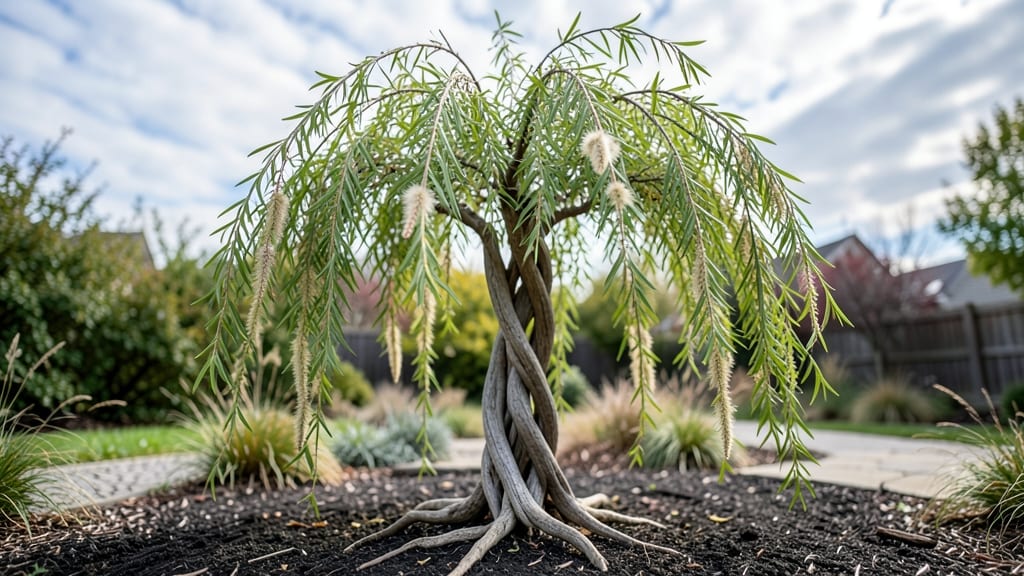
A full-grown braided willow tree 🌳 soars to 10–15 feet with a dramatic, twisting silhouette that steals the show in any garden.
Picture this: a single trunk splitting into three elegant braids, each reaching skyward like a living sculpture. But here’s the catch—without the right care, those graceful branches can become unruly, or worse, lose their iconic shape over time.
This guide dives into how to keep your mature braided willow tree thriving, from pruning secrets to ideal placement tips that highlight its natural beauty.
Whether you’re using it for privacy, shade, or as a stunning focal point, you’ll learn how to maintain its height, spread, and that signature braided form for years to come.
Full-grown braided willow tree dimensions: height, spread & growth habits explained
The braided willow tree (Salix matsudana 'Tortuosa') is a stunning ornamental tree known for its distinctive, intertwined branches. When fully mature, it becomes a focal point in any landscape, but understanding its growth dimensions is crucial for proper planning and care.
This tree typically reaches 10 to 15 feet tall at maturity, with a spread that can extend 8 to 12 feet wide, depending on growing conditions.
One of the most striking features of this tree is its unique braided trunk, which forms naturally over time. The branches grow in a twisting pattern, creating an elegant, almost whimsical appearance.
However, achieving this look requires patience, as it can take 3 to 5 years for the braiding to become fully pronounced. Proper pruning and training are essential during its early years to encourage this growth habit.
Here’s a quick reference to help you visualize the mature size and growth patterns of a braided willow tree:
| Characteristic | Specification |
|---|---|
| Mature Height | 10–15 feet |
| Mature Spread | 8–12 feet |
| Root Depth | 3–5 feet deep |
| Growth Rate | Moderate to fast |
| Time to Maturity | 10–15 years |
| Canopy Shape | Round to oval |
The growth rate of a braided willow tree can vary significantly based on environmental factors. In optimal conditions, such as full sun exposure and moist, well-drained soil, this tree can grow 2 to 3 feet per year during its early years.
However, in cooler climates or poor soil conditions, growth may slow to just 1 foot per year. This variability is why it’s important to choose the right location for planting.
When planning your landscape, consider the root spread of the braided willow tree. Its roots can extend 3 to 5 feet deep and spread outward, making it essential to plant it at least 10 feet away from structures like houses, sidewalks, or driveways.
This distance prevents root damage and ensures the tree has enough space to grow without becoming a nuisance. Always dig a hole twice as wide as the root ball to encourage healthy root development.
Climate plays a major role in determining how quickly your braided willow tree will mature. In warmer regions, such as USDA Zones 6 through 9, this tree thrives and can reach its full height faster.
In contrast, in cooler climates, like Zone 5 or colder, growth may be slower, and the tree might take longer to develop its iconic braided trunk. If you live in a colder region, consider planting in a sheltered location to protect it from harsh winters.
Soil type also influences the overall health and size of your braided willow tree. This tree prefers moist, well-draining soil with a slightly acidic to neutral pH. If your soil is heavy clay or sandy, amending it with compost or organic matter can improve drainage and nutrient availability.
Avoid planting in areas with waterlogged soil, as this can lead to root rot and stunt growth.
For landscape planning, it’s helpful to visualize the long-term projections for your braided willow tree. If planted in an open area, it can create a natural privacy screen or serve as a stunning focal point in a garden.
Pair it with complementary plants, such as hostas or ferns, to enhance its beauty and create a cohesive look. Always leave ample space for its mature spread to avoid overcrowding other plants.
Regular pruning and maintenance are key to keeping your braided willow tree healthy and ensuring its distinctive braided trunk remains intact. Prune in late winter or early spring to remove dead or crossing branches and encourage new growth.
Avoid heavy pruning in summer or fall, as this can stress the tree and reduce its ability to develop its signature braided pattern.
By understanding the full-grown dimensions and growth habits of the braided willow tree, you can create a stunning and functional landscape that highlights its natural beauty for years to come.
Whether you’re planting it for shade, privacy, or simply as an ornamental feature, this tree is sure to become a cherished part of your garden. 🌳
Pruning a mature braided willow tree: seasonal techniques to maintain shape & health
A mature braided willow tree can reach 10-15 feet tall with a sprawling canopy, making pruning essential to preserve its iconic intertwined branches. Unlike young trees, full-grown willows require strategic seasonal pruning to control aggressive growth while maintaining that dramatic braided structure.
The wrong approach can weaken the tree or disrupt its natural form—so timing and technique matter most.
Most gardeners make two critical mistakes when pruning mature willows: cutting too late in the season (which encourages suckering) or removing too many branches at once (which stresses the tree). Instead, focus on targeted pruning during dormant season (late winter/early spring) and light shaping after flowering.
This guide breaks down the exact steps to keep your tree healthy, dense, and visually stunning for years.
Step-by-Step Pruning Guide for Mature Braided Willow Trees
-
Step 1: Gather the Right Tools
Use sharp bypass pruners for small branches (1-inch diameter) and a pruning saw for thicker stems. Sterilize tools with rubbing alcohol to prevent disease spread. Wear gloves—willow sap can irritate skin. -
Step 2: Prune in Late Winter (USDA Zone 6a: February-March)
Wait until dormant season (after last frost) but before bud break. Remove dead or crossing branches first, then thin out 10-15% of the canopy to improve airflow. -
Step 3: Shape the Braids
Gently weave loose braids back into place and secure with soft ties (avoid wire—it can cut into bark). Trim overlong strands to encourage denser growth at the base. Never cut more than 1/3 of any branch in one season. -
Step 4: Control Suckers & Water Sprouts
Remove aggressive suckers at the base with a sharp knife, cutting flush to the ground. For water sprouts (vertical shoots), snip them just above a leaf node to redirect energy to the braided structure. -
Step 5: Light Summer Pruning (Optional)
After flowering (late spring), do a light shaping pass to remove only the most unruly growth. Avoid heavy cuts—this can stimulate weak, leggy growth. Focus on balancing the silhouette rather than drastic changes. -
Step 6: Clean Up & Monitor
Rake up debris to prevent fungal growth. Apply mulch around the base (3-inch layer) to retain moisture. Inspect for pests (aphids, spider mites) and treat early if needed. -
Step 7: Avoid Fall/Winter Pruning
Never prune in late fall or winter—this can invite disease and delay spring growth. If winter damage occurs, wait until early spring to assess and prune only the most damaged areas.
For aggressive growers, I recommend a two-phase approach: heavy dormant pruning every 2-3 years to reset growth, paired with annual light maintenance. This keeps the tree compact and manageable while preserving its ornamental value.
Always step back after pruning to check the balanced silhouette—your goal is to enhance the braids, not obscure them.
Safety is non-negotiable with mature willow trees. Use a stable ladder or hire an arborist for branches over 10 feet high. Willows can sprout vigorously after pruning, so monitor for water sprouts and address them promptly.
With the right technique, your braided willow will remain a showstopper for decades.
Pro tip: Photograph your tree before pruning to reference the original shape. This helps maintain symmetry and proportion, especially if you’re new to willow pruning. Over time, you’ll develop an eye for how much to remove without sacrificing the tree’s natural elegance.