
Container Gardens
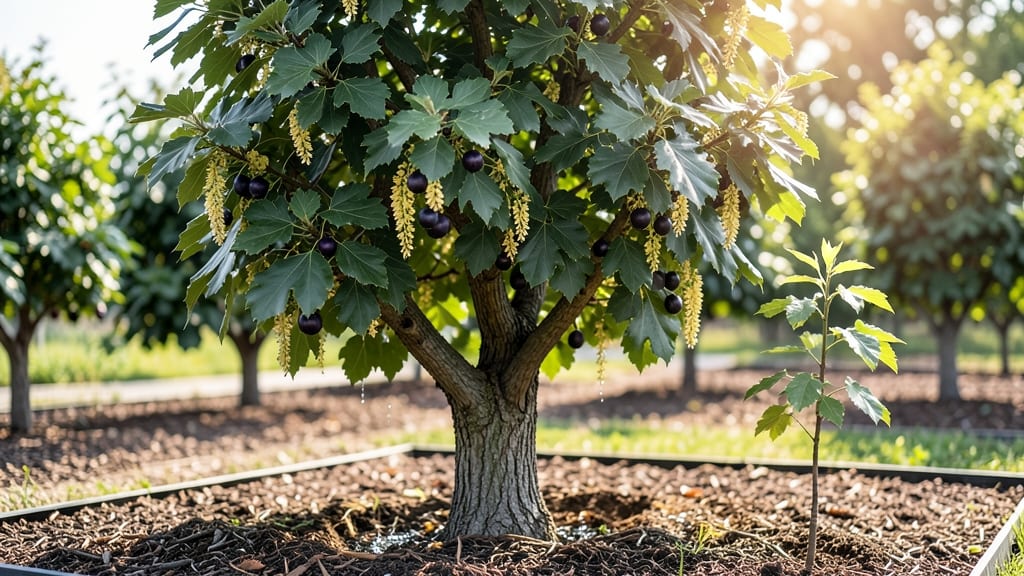
The ideal mulberry tree growing conditions are simple: hot, sunny spots with rich soil. 🌞 I’ve watched mine go from scraggly saplings to fruit-bearing giants in just five years, and the secret isn’t complicated: give them sun, space, and patience. These trees love heat, drought, and even poor soil, but they’ll reward you with sweet berries and shade if you meet their basic needs.
The mulberry tree needs full sun (at least 6 hours daily) and well-draining soil—whether in the ground or a 10-gallon+ container. They tolerate clay, sand, or rocky soil, but amending with compost gives you bigger fruit and healthier growth.
In colder zones (like mine in Zone 6), young trees need winter protection, while mature ones handle frost like champs.
Watering is simple: deep soaks once a week (more in extreme heat). Mulberries hate soggy roots, so raised beds or containers with drainage holes work best. By summer, you’ll see glossy leaves and clusters of berries—proof that these trees are low-maintenance powerhouses.
The only trade-off? Those berries stain everything, so plant them where you don’t mind a little mess.
Whether you’re growing in a backyard or a large pot, mulberries adapt—just avoid pruning unless you’re shaping the tree. They fruit on old wood, so less is more. Start with a young tree, and in a few years, you’ll have shade, wildlife, and a harvest that’s worth the wait.
📚 In This Guide
- What you need
- Instructions
- Tips and common mistakes
- Wrapping up and next steps
What you need
- ● Mulberry tree sapling: Choose a healthy, disease-free Morus species (e.g., white, red, or black mulberry). Nursery-bought saplings (2–4 feet tall) work best.
- ● Well-draining soil: A mix of 60% topsoil, 30% compost, and 10% perlite/sand (for containers, use a 10–15 gallon pot with drainage holes).
- ● Organic fertilizer: A balanced 10-10-10 or 5-5-5 fertilizer (apply at planting and again in spring).
- ● Mulch: 2–3 inches of wood chips or straw to retain moisture and suppress weeds.
- ● Garden gloves (to protect hands from thorns and soil).
- ● Trowel or shovel (for digging planting holes).
- ● Watering can or hose (with a gentle spray nozzle).
- ● Pruning shears (for shaping and removing dead branches).
- ○ pH testing kit (optional but helpful—mulberries prefer 6.0–7.5 pH).
- ● Sunlight: Full sun (6–8+ hours/day)—mulberries thrive in warmth!
- ● Hardiness zone: USDA Zones 5–9 (check your local climate).
- ● Wind protection: Young trees benefit from a temporary windbreak (e.g., burlap or stakes).
Step-by-step guide to mulberry tree growing conditions
Here’s how to give your mulberry tree the perfect mix of sun, soil, and seasonal care.
☀️ Step 1: Choose the Right Sunlight Spot
Mulberry trees thrive in full sun—at least 6-8 hours daily. I always pick the sunniest part of my yard because mulberries need intense light to produce sweet, abundant fruit. If your tree gets less than 6 hours, expect smaller berries and fewer harvests.
Watch for these clues: If nearby plants wilt by midday, your tree will too. Mulberries tolerate light shade (like morning sun with afternoon dappled light), but fruit quality suffers. In hot climates, afternoon shade helps prevent leaf scorch, but don’t block morning sun entirely.
🪴 Step 2: Prepare Well-Draining, Fertile Soil
Mulberries adapt to many soil types but perform best in loamy, slightly acidic to neutral soil (pH 6.0-7.5). Before planting, mix in 2-3 inches of compost into the top 12 inches of soil—this improves drainage and adds nutrients. Heavy clay? Amend with sand or peat moss to prevent root rot.
Dig a hole twice as wide as the root ball but only as deep as the container’s base. Mulberries hate soggy roots, so avoid low spots where water pools. If your soil drains poorly, mound a 6-inch-high layer of gravel at the hole’s bottom before adding amended soil.
💧 Step 3: Water Deeply and Consistently
Young mulberry trees need 1-2 inches of water weekly, but established trees (3+ years old) tolerate drought once roots spread. Water deeply 2-3 times per week during the first growing season to encourage deep root growth. You’ll know it’s enough when soil 6 inches down stays slightly moist—not soggy.
Mulberries hate wet feet, so water at the base (not overhead) to avoid fungal diseases. In summer, water early morning to reduce evaporation. Once established, mulberries thrive with rainfall alone, but fruit production improves with regular deep watering during dry spells.
⏰ Step 4: Adjust Care by Season
Spring is for light pruning—remove dead or crossing branches while the tree is still dormant. Mulberries bloom on new wood, so prune after fruiting to avoid cutting off next year’s berries. In summer, mulch around the base with 2-3 inches of organic mulch (like wood chips) to retain moisture and cool roots.
Fall is for deep watering before the first frost. Mulberries store nutrients in their roots, so a final soak in late fall helps them survive winter. In winter, young trees need winter protection (like burlap wraps) in cold climates (below 0°F), but mature trees handle frost well.
🌿 Step 5: Monitor for Pests and Diseases
Mulberries rarely have pests, but aphids or scale can appear on new growth. I spray with neem oil if I see sticky residue (honeydew) on leaves. Watch for powdery mildew in humid summers—prune for airflow and avoid overhead watering. If leaves yellow, check for iron deficiency (common in alkaline soil) and amend with chelated iron.
Here’s the thing—mulberries are tough, but over-fertilizing causes weak growth. Use a balanced 10-10-10 fertilizer in early spring only if leaves look pale. Too much nitrogen = fewer berries. If your tree drops leaves in summer, it’s likely stressed from heat or drought—water deeply and provide afternoon shade temporarily.
Tips & tricks for perfect mulberry tree growth
Here’s what I’ve learned after growing mulberries for years—simple tricks that’ll make all the difference in your tree’s health and fruit production.
Sunlight Spot Selection: When choosing your planting location, pay attention to the sun’s path throughout the day. The 6-8 hours of full sun requirement means you need direct sunlight from early morning until at least mid-afternoon. I’ve found that trees planted on the south or west side of buildings get the most consistent sunlight. If your yard has limited sun, consider a container where you can move the tree to follow the sun’s arc.
Soil Preparation Pro Tip: Before planting, do a simple soil test to check your pH—mulberries prefer that 6.0-7.5 range. If your soil is too alkaline, mix in sulfur or peat moss to lower the pH gradually. For the 2-3 inches of compost called for, I like to use a mix of well-rotted manure and leaf mold for the best nutrient balance. Remember, mulberries hate soggy roots, so if your soil drains poorly, that 6-inch gravel mound at the bottom of the planting hole can be a real game-changer.
Watering Wisdom: The 1-2 inches of water weekly guideline works best when applied deeply. I use a rain gauge or tuna can to measure exactly how much water my trees get—it’s shocking how much more water you need than you think! For young trees, I water in the morning for 2-3 times per week, but I always check that soil 6 inches down stays moist. Pro tip: Water at the base using a soaker hose or drip irrigation to avoid wetting the leaves, which helps prevent fungal diseases like powdery mildew.
Seasonal Care Calendar: Mark your calendar for these key seasonal tasks: In spring, prune after the tree finishes fruiting to avoid cutting off next year’s berries. In summer, that 2-3 inches of organic mulch around the base helps retain moisture and keeps roots cool. For fall, don’t forget that final deep watering before frost—it’s crucial for winter survival. And in winter, if you’re in a climate below 0°F, wrap young trees in burlap to protect them from cold winds. I’ve seen trees survive winters just fine without this, but the extra protection gives me peace of mind.
Pro Tips for Mulberry Tree Growing Conditions
- Here’s what I’ve learned after growing mulberries for years—simple tricks that’ll make all the difference in your tree’s health and fruit production.
- Sunlight Spot Selection: When choosing your planting location, pay attention to the sun’s path throughout the day.
- Soil Preparation Pro Tip: Before planting, do a simple soil test to check your pH—mulberries prefer that 6.0-7.5 range.
Frequently asked questions
Got questions about growing mulberry trees? You’re not alone! Here are answers to the most common queries to help you cultivate a thriving tree—whether in your backyard, container, or urban space.
How much sunlight does a mulberry tree need daily?
A mulberry tree thrives in full sun (6–8+ hours daily). While it tolerates partial shade, expect slower growth and fewer berries. If planting in containers, place them in the sunniest spot possible—like a south-facing patio or balcony. Pro tip: Young trees benefit from gradual sun exposure to avoid leaf scorch.
Can mulberry trees survive cold winters?
Most mulberry varieties (like Morus alba or Morus nigra) are hardy in USDA Zones 5–9. In colder zones (Zone 4 or below), plant near a south-facing wall or mulch heavily to insulate roots. Young trees may need winter protection (burlap wraps or frost cloth) until established. Fun fact: Their wood is surprisingly resilient—even in freeze-thaw cycles!
How often should I water a mulberry tree?
Water deeply 1–2 times per week during the first year, keeping soil moist but not soggy. Mature trees are drought-tolerant but produce better fruit with consistent moisture. Container growers: Check soil daily—containers dry out faster! Mulch around the base to retain moisture and regulate temperature.
What pests or diseases should I watch for?
Mulberry trees are generally low-maintenance, but watch for:
- Aphids (sap-sucking insects)—Spray with soapy water or introduce ladybugs.
- Powdery mildew (white fungal spots)—Improve airflow and avoid overhead watering.
- Borers (tunnel into wood)—Prune infested branches and treat with neem oil.
Can I grow a mulberry tree in a container?
Dwarf varieties like Morus ‘Illinois Everbearing’ thrive in 15–20 gallon pots. Use well-draining soil, repot every 2–3 years, and choose a large container for stability. Key: Containers dry out faster—water frequently and fertilize monthly during growing season.
How long does it take for a mulberry tree to bear fruit?
Patience is key! Most mulberry trees take 3–5 years to produce fruit, depending on variety and growing conditions. Female trees (or hermaphroditic types like Morus ‘White Mulberry’) yield berries, while males are ornamental. Speed tip: Plant grafted trees or rootstocks for faster fruiting!
Wrapping up and next steps
Growing a mulberry tree is a rewarding journey that blends patience with the joy of nurturing life! With the right sunlight, well-draining soil, and seasonal care, your tree will thrive and even gift you delicious berries.
Whether you’re a beginner or a seasoned gardener, these conditions make it easier than you think—so roll up your sleeves and get planting!
Ready to take the next step? Start by selecting your spot and prepping the soil this weekend—your mulberry tree is waiting for you! 🌱