
Pruning
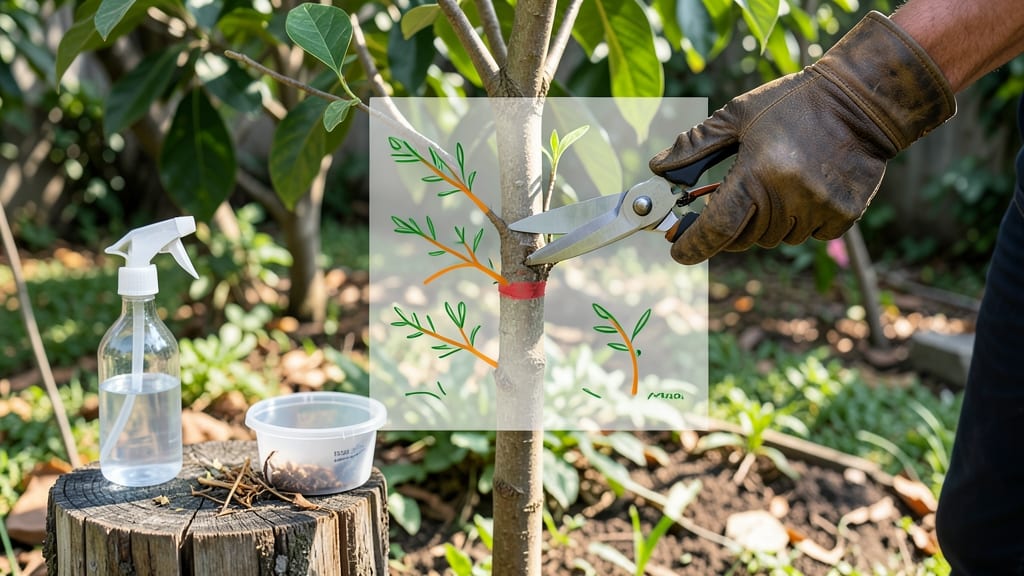
Pruning a mango tree for fruit isn’t just about cutting branches—it’s about unlocking that juicy abundance you’ve been dreaming of. 🌿 I’ve watched my own tree go from sparse, bitter fruit to heavy branches bending under sweet, ripe mangoes, all thanks to a few key cuts at the right time.
The secret lies in shaping the tree to focus its energy where it matters most: on fruit production, not just foliage.
Timing is everything—prune during the dry season (just after harvest) to avoid disease, and always use clean, sharp pruners to make smooth cuts. You’ll target water sprouts (those fast-growing vertical shoots), crossing branches, and any dead or diseased wood.
The goal? Open up the canopy so sunlight reaches the center, where most fruit forms. A well-pruned tree can produce 30-50% more fruit in just one season.
After pruning, your tree will send out fresh growth within weeks, and by next season, you’ll notice bigger, sweeter fruit—if you’ve done it right. The key is patience: it takes 2-3 years of consistent pruning to see the full benefits, but the payoff is worth it.
Think of it as sculpting your tree into a fruit-producing machine, not just a pretty shade tree.
Works for both young trees (to establish structure) and mature ones (to boost yield). Here’s how to do it without killing your tree—or your patience. Let’s get those branches talking to each other the right way.
📚 In This Guide
- What you need
- Instructions
- Tips and common mistakes
- Wrapping up and next steps
What you need
- ● Pruning shears (bypass pruners): Sharp, high-quality shears (e.g., Felco or Fiskars) with a 4- to 6-inch blade for clean cuts on small branches.
- ● Loppers: A pair with a 10- to 16-inch blade for thicker branches (up to 2 inches in diameter). Look for ratchet-style loppers for extra leverage.
- ● Pruning saw: A curved-tooth handsaw (e.g., Fiskars X27) for branches over 2 inches thick. Avoid straight-tooth saws—they can tear wood.
- ● Gloves: Heavy-duty, cut-resistant gloves (e.g., Mechanix or PIP) to protect your hands from thorns and sharp tools.
- ● Disinfectant (70% isopropyl alcohol or bleach solution): Clean tools between cuts to prevent bacterial/fungal spread (mix 1 part bleach with 9 parts water).
- ● Rubbing alcohol or hand sanitizer: For wiping down cuts on the tree to reduce infection risk.
- ● Tarp or drop cloth: A 5x7-foot tarp to collect debris and protect the ground.
- ○ Marking twine or tape: For labeling branches to prune (optional but helpful for complex trees).
- ● Pole pruner: Extendable shears (e.g., 30- to 40-foot reach) for high branches—saves time and effort!
- ● Tree wound dressing (e.g., Tanglefoot or pruning sealant): Controversial but some gardeners use it to protect large cuts from pests/disease.
- ● Ladder (or sturdy stool): A stable, non-slip ladder (e.g., aluminum extension ladder) for taller trees. Never stand on the ground level!
- ● Pruning spray (copper fungicide): For treating cuts if signs of infection appear post-pruning.
- ● Notebook & pen: To jot down notes on branch angles, growth patterns, or areas needing future attention.
- ● Timing: Prune during the dormant season (late winter/early spring, before new growth) for best results. Avoid pruning during fruit production unless addressing disease.
- ● Weather: Choose a dry, overcast day to minimize stress on the tree. Wet conditions can spread disease.
- ● Safety first: Wear long sleeves and pants to protect from thorns and sap. Avoid loose clothing that could get caught.
- ● Tree health check: Inspect the tree for pests (e.g., mango seed weevils) or disease (e.g., anthracnose) before pruning. Treat issues first!
Step-by-Step instructions for pruning a mango tree for fruit
This is how I’ve trained my mango trees to produce heavy, consistent harvests—no fancy tools, just sharp cuts and a little patience.
🌿 Step 1: Prune During the Dry Season for Cleaner Cuts
Timing matters more than technique here. I always prune in late winter or early spring, just before new growth begins. That’s when the tree is dormant but not yet pushing energy into leaves. Avoid pruning during rainy seasons—wet conditions invite fungal infections through fresh cuts.
Start by removing any dead, diseased, or crossing branches first. You’ll know a branch is dead if it snaps when bent or has no green bark. Cut these out completely at the branch collar—the swollen area where the branch meets the trunk. Never leave stubs; they rot and attract pests.
✂️ Step 2: Open the Canopy for Sunlight and Airflow
Mango trees produce fruit on new growth, so you want sunlight reaching all the way into the center. I focus on thinning the canopy by removing branches that grow inward or rub against others. These compete for sunlight and can damage each other over time.
Look for branches that grow straight up from the trunk—these are called "water sprouts." They steal energy from fruiting branches. Cut these back to a lateral branch or bud. For thicker branches, make your cut just outside the branch collar at a 45-degree angle. Thinner branches can be removed cleanly with hand pruners.
☀️ Step 3: Encourage Fruit Production with Strategic Cuts
Here’s where it gets strategic: I target branches that have already borne fruit. After harvest, I shorten these branches by about one-third to encourage new, vigorous growth. This new growth will produce next year’s fruit clusters.
Leave at least 3-4 strong branches per main scaffold branch to ensure a good fruit load. If you see clusters of small, tight buds, you’re on the right track—these will develop into fruit. Avoid over-thinning; a balanced tree produces better than a skeletal one.
🪴 Step 4: Clean Up and Protect the Tree
After pruning, rake up all the debris from the ground. Leaving cuttings underneath can harbor pests and diseases. I also sterilize my pruners with rubbing alcohol between cuts to prevent spreading anything.
Once finished, give the tree a light watering to help it recover. If you’ve made heavy cuts, the tree might look sparse for a while—but that’s normal. New growth will fill in by summer, and you’ll see flower buds forming by late spring.
⏰ Step 5: Monitor and Adjust Through the Year
Pruning isn’t a one-time job. I check my trees every 4-6 weeks during the growing season to remove any suckers or aggressive water sprouts. These pop up at the base of the trunk or along branches and drain energy from fruit production.
If you notice branches growing too long and leggy, they need another trim. The goal is a tree that’s open enough for sunlight to reach all branches but still has a strong structure to support fruit. Patience is key—it can take a few years to train a young mango tree this way, but the payoff is worth it.
Tips & tricks for pruning a mango tree for fruit
Real talk: Pruning a mango tree isn't just about cutting branches—it's about teaching your tree to grow fruit like a pro. Here's what nobody tells you about getting it right.
Timing is Everything: That late winter/early spring window is critical because the tree is dormant but not yet pushing energy into leaves. I've seen people prune during rainy seasons, and their trees end up with fungal infections from the wet cuts. If you miss the dry season, wait until the tree is completely dry after rain before pruning. The goal is clean cuts that don't invite pests or diseases.
The 45-Degree Angle Secret: When you're cutting thicker branches in Step 2, that 45-degree angle isn't just for looks—it helps water run off the cut instead of pooling and rotting the wound. I use a small notch just above the branch collar to prevent water from sitting on the cut surface. For thinner branches, clean cuts are fine, but always make them just outside the collar to avoid damaging the tree's protective layer.
One-Third Rule for Fruit Production: Shortening branches by about one-third after harvest might seem drastic, but it works wonders. I've seen trees that were over-pruned become skeletal, and others that were under-pruned produce too many small fruits. The key is leaving those 3-4 strong branches per scaffold branch—this gives the tree enough structure to support fruit while still encouraging new growth. Look for those tight clusters of buds as your green light that you're on the right track.
Sterilization Saves Trees: This is where most people slip up. I sterilize my pruners with rubbing alcohol between every few cuts, especially when moving from diseased branches to healthy ones. You'd be surprised how quickly fungal spores and bacteria can spread. A quick wipe with alcohol or even a flame (for metal pruners) makes all the difference in keeping your tree healthy. And always rake up those cuttings—they're breeding grounds for pests if left under the tree.
Pro Tips for Prune A Mango Tree For Fruit
- Real talk: Pruning a mango tree isn't just about cutting branches—it's about teaching your tree to grow fruit like a ...
- Timing is Everything: That late winter/early spring window is critical because the tree is dormant but not yet pushin...
- The 45-Degree Angle Secret: When you're cutting thicker branches in Step 2, that 45-degree angle isn't just for looks...
Frequently asked questions
Got questions about pruning your mango tree for a bountiful harvest? You’re not alone! Here are answers to the most common concerns—so you can prune with confidence and enjoy those juicy rewards.
When is the best time to prune a mango tree for fruit?
The ideal time is late winter or early spring (just before new growth starts), but avoid pruning during heavy flowering or fruiting seasons. For tropical climates, prune during the dry season to reduce disease risk. Light shaping cuts can be done year-round, but major structural pruning should wait for dormancy.
How much can I prune a mango tree without harming it?
Never remove more than 25-30% of the tree’s canopy in one session. Over-pruning stresses the tree, reducing fruit production. Focus on selective cuts: thin out dense branches, remove dead wood, and open the center for airflow. Young trees need less pruning (5-10%) than mature ones (15-20%).
Will pruning my mango tree increase fruit size or quantity?
Yes—but it’s about balance! Pruning improves air circulation and sunlight penetration, which boosts fruit size and quality. However, heavy pruning can reduce total yield the first year. Aim for moderate cuts to encourage stronger growth and better fruit development over time. Patience pays off!
What should I do if my mango tree isn’t fruiting after pruning?
Several factors could be at play:
- Age: Young trees (under 3–5 years) focus on growth, not fruit.
- Nutrients: Ensure balanced fertilizer (high in potassium and phosphorus) during flowering.
- Pollination: Hand-pollinate if bees are scarce (use a soft brush to transfer pollen).
- Climate: Mangoes need warmth and specific temperature shifts to flower.
Can I prune a mango tree with just hand pruners, or do I need power tools?
For most home gardens, hand pruners and a pruning saw are sufficient. Use:
- Hand pruners for small branches (<1 inch thick).
- A bypass pruning saw for thicker branches (1–3 inches).
- Loppers for medium-sized limbs (up to 2 inches).
What’s the difference between pruning for fruit vs. pruning for shape?
Both goals overlap, but the focus differs:
- Fruit-focused pruning: Prioritizes removing dense growth, thinning out water sprouts, and opening the canopy to maximize sunlight and airflow—key for fruit development.
- Shape-focused pruning: Aims to maintain an aesthetically pleasing form (e.g., removing crossing branches or low-hanging limbs).
Wrapping up and next steps
Pruning your mango tree isn’t just about trimming—it’s about unlocking its full fruiting potential! 🌱 By following these strategic cuts, you’ll encourage stronger growth, better airflow, and a bountiful harvest year after year. Start small, stay consistent, and watch your tree thrive.
Ready to take action? Grab your pruners, mark your calendar, and begin pruning during the dormant season—your future mango feast starts now! 🍈