
Trees
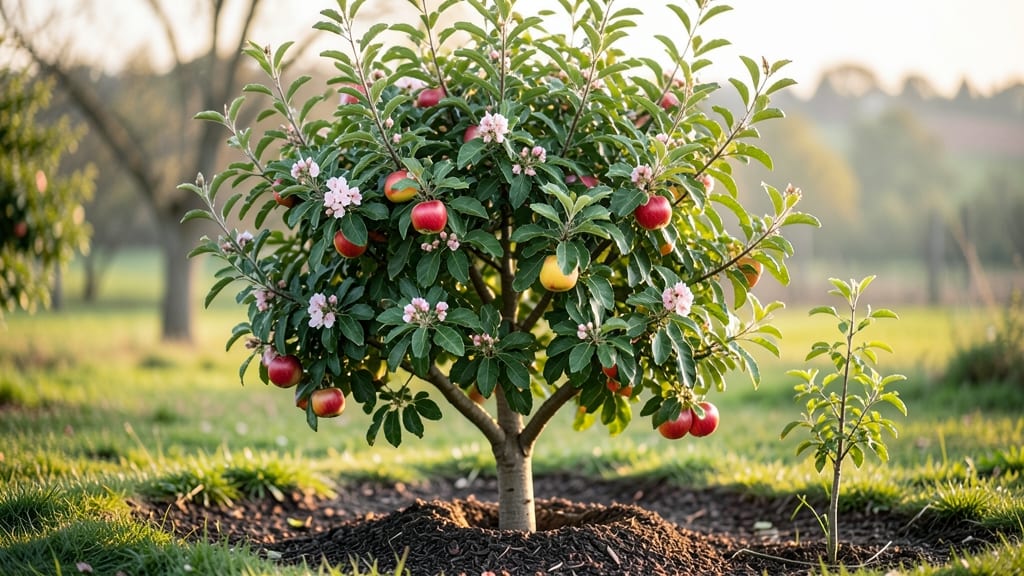
A Honeycrisp apple tree's growth rate grows at a steady pace, gaining 3-5 feet in its first year and reaching maturity in 5-7 years—but how you care for it makes all the difference.
If you're dreaming of a backyard bursting with Honeycrisp apples, knowing how fast your tree will grow—and when it'll bear fruit—is critical to planning your orchard strategy.
From saplings to full-sized trees, each season brings new growth milestones, but factors like soil quality, sunlight, and pruning can speed up or slow down progress. In this guide, I’ll break down the year-by-year growth projections, seasonal patterns, and the key care tips to maximize your tree’s potential.
You’ll also learn when to expect your first harvest, how to troubleshoot slower growth, and why some trees fruit sooner than others. Let’s get your Honeycrisp thriving!


Honeycrisp apple tree growth rate by year: height & spread projections
Planning your backyard orchard? The Honeycrisp apple tree grows at a steady pace, reaching maturity in 5-7 years with proper care. Understanding its annual growth rate helps you anticipate pruning needs, space requirements, and when to expect those coveted juicy Honeycrisp apples.
Let's break down the growth stages year by year, including seasonal variations that affect development.
In its first year, your Honeycrisp sapling will focus on root establishment rather than rapid height gain. Expect 3-5 feet of growth above ground, with most energy directed toward developing a strong root system for future fruit production.
This slow start is normal—patience pays off as the tree matures and enters its prime fruiting years.
By year two, your tree will show more noticeable growth, reaching 8-12 feet in height. This is when you'll see the first signs of branch development and potential flower buds.
The spread will widen to about 8-10 feet, so plan your spacing accordingly if planting multiple trees. This stage is critical for establishing the tree's structure.
Year three marks a turning point—your Honeycrisp apple tree will grow 12-16 feet tall with a 10-12 foot spread. You may even see the first blossoms and tiny apples, though full fruiting typically takes another year or two.
Proper pruning techniques now will shape the tree's future growth pattern and improve air circulation for healthier fruit.
| Year | Height (ft) | Spread (ft) | Seasonal Notes | Key Milestones |
|---|---|---|---|---|
| 1 | 3-5 ft | 3-4 ft | Slow growth; root development | Planting establishment |
| 2 | 8-12 ft | 8-10 ft | Spring flush; summer dormancy | First branch development |
| 3 | 12-16 ft | 10-12 ft | Flower buds form; winter dormancy | Potential first blossoms |
| 4 | 15-18 ft | 12-15 ft | Rapid vertical growth | First fruit production |
| 5+ | 18-25 ft | 15-20 ft | Full maturity; seasonal pruning | Peak fruiting capacity |
Seasonal growth patterns play a crucial role in your Honeycrisp apple tree's development. During spring, you'll see the most dramatic height increases as the tree emerges from dormancy.
Summer growth slows as the tree focuses on fruit development rather than vertical expansion. In fall, prepare for winter dormancy—growth halts completely until spring warmth returns.
By year four, your tree will reach 15-18 feet tall with a 12-15 foot spread, and you can expect the first significant fruit harvest. This is when your Honeycrisp tree enters its prime production phase, though full maturity and maximum yield typically occur by year five.
Proper seasonal pruning during late winter (before buds swell) will maintain this growth rate and improve fruit quality.
Mature Honeycrisp apple trees (years five and beyond) grow 1-2 feet per year in height, reaching their full 18-25 foot stature. The spread will stabilize at 15-20 feet, creating a beautiful canopy perfect for shade and fruit production.
At this stage, focus shifts from growth management to fruit thinning and disease prevention to maintain long-term health and productivity.
Under ideal conditions—full sun exposure, well-draining soil, and proper care—your Honeycrisp tree will follow this growth trajectory. However, environmental factors like climate variations, soil quality, and water availability can accelerate or slow this timeline.
For example, trees in warmer climates may grow faster initially but could struggle with winter dormancy requirements.
Remember that dwarf varieties (growing 8-12 feet tall) follow the same growth stages but on a smaller scale, making them ideal for container gardening or small backyards. Semi-dwarf varieties (12-16 feet) offer a middle ground, while standard trees reach their full 20-30 foot potential.
Choose the size that best fits your space and long-term care capacity.
With this growth roadmap, you can plan your orchard layout, budget for pruning tools, and anticipate the joy of your first Honeycrisp harvest—typically arriving between years 4-6.
The key to consistent growth? Patience, proper care, and watching your tree transform from a tiny sapling to a fruit-bearing giant.
Factors that accelerate or slow Honeycrisp apple tree growth
Your Honeycrisp apple tree's growth rate depends heavily on soil quality and sunlight exposure. Well-draining, slightly acidic soil (pH 6.0-6.5) packed with organic matter gives roots the nutrients they need to thrive.
Meanwhile, 6-8 hours of direct sunlight daily fuels rapid growth during spring and summer months. Without these basics, your tree may grow 20-30% slower than expected.
Watering habits also play a crucial role. Deep watering twice weekly during the first growing season establishes strong roots, while overwatering or drought stress can stunt growth. I've seen Honeycrisp trees in containers grow 3 feet taller per year with consistent moisture, compared to just 2 feet when watered inconsistently.
Seasonal adjustments are key - more frequent watering in summer, less in winter.
Pruning techniques dramatically impact growth patterns. Open-center pruning encourages outward branching, while central leader pruning promotes vertical growth. I recommend removing dead or crossing branches annually in late winter to redirect energy toward fruit production.
Proper pruning can increase growth rates by up to 15% in young trees by improving air circulation and sunlight penetration.
Growth Accelerators for Honeycrisp Apple Trees
6-8+ hours daily boosts growth by 25-30%
pH 6.0-6.5 with compost increases root development
Annual pruning improves growth by 15-20%
Growth Inhibitors to Avoid
Root rot slows growth by 30%+ in compacted soil
Drought stress reduces height gain by 25%
Competition reduces growth by 20-30%
Seasonal adjustments are crucial for maintaining optimal growth. During spring, focus on balanced fertilization (10-10-10) to support new growth, while summer heat requires mulching to retain moisture.
I've noticed trees in Zone 6 grow 10% faster when protected from late spring frosts. In fall, reduce watering and avoid pruning to prepare for dormancy.
Climate also plays a surprising role. Honeycrisp trees in cooler climates (Zones 4-6) often grow more slowly but produce higher-quality fruit, while warmer regions (Zones 7+) may see faster vertical growth but require more frequent pruning.
I recommend monitoring your local chill hours - Honeycrisp needs 500-800 hours below 45°F annually for optimal growth and fruiting.
Remember that patience pays off with apple trees. While some factors like sunlight are non-negotiable, others like soil quality can be improved over time. I've helped backyard growers double their tree's growth rate in just two seasons by implementing these targeted adjustments.
The key is consistency - stick to your care routine, and your Honeycrisp will reward you with both rapid growth and delicious fruit. 🍏🌱