
Pruning
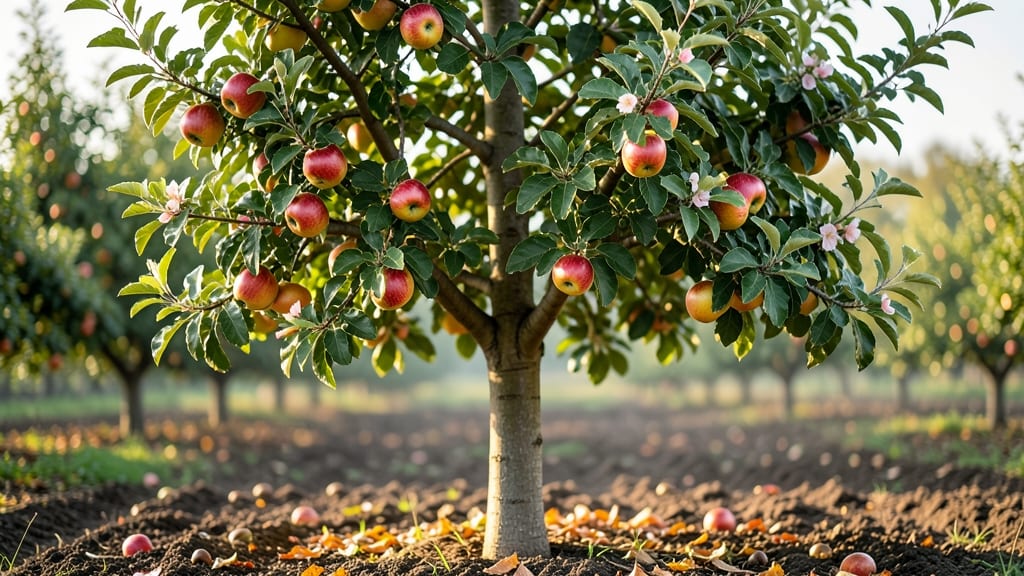
A honeycrisp apple tree’s height can reach 15 to 25 feet at maturity, towering over most home gardens if left unchecked.
If you're dreaming of a Honeycrisp apple tree in your backyard, knowing its growth pattern is key to planning space, sunlight, and long-term care—because this variety grows taller than most home gardeners expect.
Without proper pruning, a standard Honeycrisp can easily outgrow its welcome, crowding out other plants and making harvesting a challenge. But with the right techniques, you can keep it manageable while still enjoying bountiful harvests of those sweet, crisp apples.
Below, I’ll break down how height develops year by year, how to control growth through pruning, and whether a dwarf variety might be a better fit for your space.

Honeycrisp apple tree height by year: growth timeline & mature size
Planning to grow a Honeycrisp apple tree? Understanding its height progression helps you design your garden layout, choose the right variety, and prepare for long-term care. This popular variety typically reaches 15-25 feet at maturity, but growth rates vary based on climate, soil quality, and rootstock type.
Let’s break down exactly how tall your tree will be each year and what factors influence its size.
In the first year, your Honeycrisp sapling will grow 2-4 feet tall, establishing its root system and early branches. By year two, expect a jump to 6-10 feet, with vigorous growth if planted in full sun and well-draining soil.
These early years are critical for setting the foundation for future height and fruit production. Without proper care, growth can slow or become uneven.
| Year | Standard Variety Height | Dwarf Variety Height | Key Growth Notes |
|---|---|---|---|
| Year 1 | 2-4 ft | 1-2 ft | Focus on root development; minimal pruning needed. |
| Year 2 | 6-10 ft | 3-5 ft | Rapid vertical growth; prune to shape and encourage branching. |
| Year 3 | 12-16 ft | 6-8 ft | Tree establishes canopy; fruit buds begin forming. |
| Year 4-5 | 15-20 ft | 8-10 ft | Peak growth phase; regular pruning essential for fruit access. |
| Mature (5-10+ years) | 20-25 ft | 8-12 ft | Full fruit production; height stabilizes; prune for air circulation. |
The mature height of a Honeycrisp apple tree depends heavily on the rootstock used. Standard trees (grafted on seedling rootstock) can tower 20-30 feet, while dwarf varieties (grafted on dwarfing rootstock like M.9 or B.9) stay between 8-12 feet.
Semi-dwarf varieties fall in between at 12-18 feet. If space is limited, dwarf rootstock is your best bet for keeping the tree manageable while still yielding sweet, crisp fruit.
Climate plays a surprising role in growth rates. Trees in warmer USDA zones (7-9) may grow 1-2 feet taller per year compared to those in cooler zones (5-6), where growth slows during shorter summers.
In northern climates, expect slightly slower but steady growth, while southern regions may see more aggressive vertical expansion. Always check your local last frost date to time planting for optimal early growth.
Pruning early and often is the secret to controlling height. In the first two years, focus on structural pruning to encourage a strong central leader and outward branches. By year three, shift to fruitwood development—removing water sprouts and thinning crowded branches.
Without pruning, a standard Honeycrisp can easily exceed 25 feet, making harvesting difficult and increasing disease risk from poor air circulation.
For container growing, choose a dwarf variety and plan for a 20-gallon pot minimum. Even dwarf trees need regular repotting every 2-3 years to accommodate root growth. Containers limit height to 6-8 feet but require diligent watering and fertilization to compensate for restricted root space.
Always use a pot with drainage holes to prevent root rot.
If you’re planting near a fence or structure, leave at least 10 feet of clearance for standard trees to avoid shading issues and future pruning headaches. Dwarf varieties need only 6-8 feet of space.
Remember, Honeycrisp trees are self-pollinating but produce more fruit with a pollinator variety nearby. Planting two trees close together can also encourage better branching habits in early years.
Monitor your tree’s growth annually and adjust pruning strategies as it matures. A well-maintained Honeycrisp tree will reward you with juicy, disease-resistant fruit for decades—whether it’s a towering standard or a compact dwarf. With the right planning, you can enjoy homegrown apples without sacrificing your garden’s layout.
🍎
How to control Honeycrisp apple tree height: pruning techniques for smaller trees
If your Honeycrisp apple tree is reaching for the sky faster than you'd like, don't worry—you're not alone. This variety can grow 15-25 feet tall, but with the right pruning techniques, you can keep it at a more manageable height.
The key is understanding when and how to prune to encourage a compact growth habit while maintaining healthy fruit production.
Pruning isn't just about cutting branches—it's about shaping your tree's future. By removing suckers, water sprouts, and overly tall growth, you redirect energy to the tree's structure, keeping it 8-12 feet tall if you choose a dwarf rootstock.
Even standard varieties can be managed with consistent pruning. Let's break down the steps to keep your Honeycrisp apple tree at your desired height.
Step-by-Step Pruning Guide
- Step 1: Choose the Right Tools
- Sharp pruning shears for small branches
- Loppers for medium branches (½-2 inches)
- Pruning saw for thick branches (2+ inches)
- Disinfect tools with rubbing alcohol to prevent disease
- Step 2: Prune at the Right Time
- Late winter (dormant season) for structural pruning
- Early spring (before buds swell) to shape the tree
- Avoid pruning in fall (September-October) to prevent disease
- Step 3: Remove Problematic Growth
- Cut out suckers (shoots from the base) to save energy
- Prune water sprouts (vertical shoots) to open the canopy
- Trim dead, diseased, or crossing branches first
- Step 4: Use the "Open Center" Method
- Remove branches growing inward or downward
- Keep 3-5 main scaffold branches evenly spaced
- Aim for a vase-shaped canopy for airflow and sunlight
- Step 5: Head Back Tall Growth
- Cut 1/3 of the tallest branches to slow vertical growth
- Make cuts just above a bud or side branch
- Avoid cutting into old wood—focus on new growth
- Step 6: Thin Out Fruit Spurs
- Remove overcrowded fruit clusters to improve size and quality
- Keep 1-2 apples per spur for optimal growth
- Prune thin branches to reduce weight on the tree
- Step 7: Clean Up and Monitor
- Rake up and dispose of pruned branches to prevent pests
- Apply mulch around the base to retain moisture
- Inspect the tree monthly for new suckers or water sprouts
For even smaller trees, consider planting a Honeycrisp apple tree on dwarf rootstock. These varieties stay 8-12 feet tall and produce fruit just as sweetly. If you already have a standard tree, don't worry—consistent pruning over 3-5 years can gradually reduce its height by 30-50%.
Just remember, pruning is an ongoing process, not a one-time fix.
One common mistake is pruning too much at once, which can stress the tree. Stick to removing no more than 25% of the tree's foliage in a single session. Also, avoid pruning during wet or windy conditions, as this can damage the tree and invite disease.
With patience and the right techniques, you'll have a Honeycrisp apple tree that fits perfectly in your space while still yielding delicious fruit.
If you're unsure about where to make cuts, sketch a simple diagram of your tree's structure before pruning. This helps visualize the ideal shape and ensures you're making cuts that promote healthy growth.
Over time, you'll develop an eye for pruning and can adjust your approach based on how your tree responds each season.
🌳