
Pruning
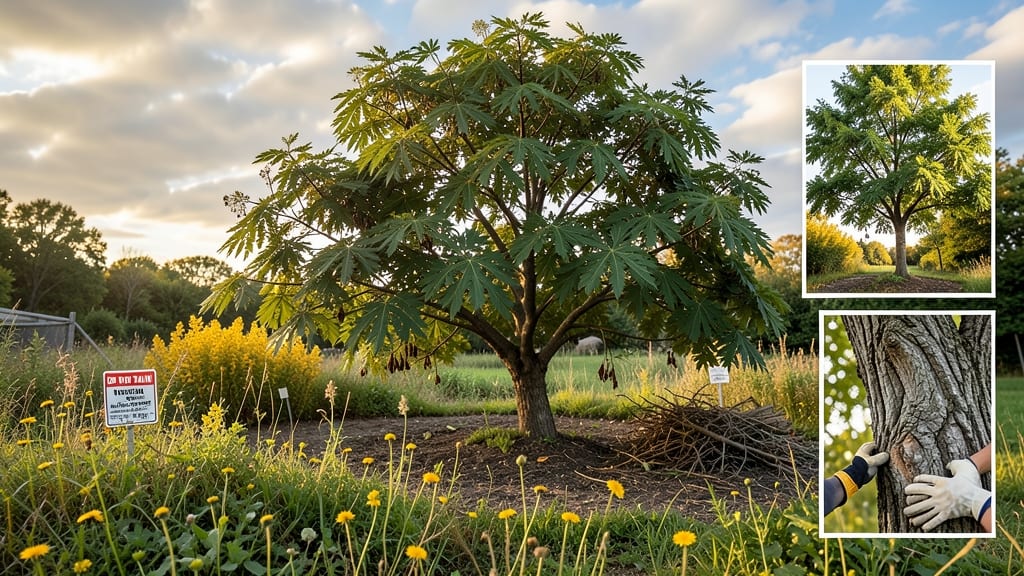
Tree of heaven is considered bad because its invasive nature disrupts ecosystems by outcompeting native plants, releasing harmful chemicals that stifle other vegetation, and spreading uncontrollably through both seeds and aggressive root systems, making it nearly impossible to eradicate once established.
The tree of heaven earns its notorious reputation through its ecological dominance. 🌳 Its roots release toxic compounds called phytoalexins that poison surrounding plants, while its dense growth blocks sunlight from reaching the forest floor. This creates a "shade monopoly" that smothers native species, leaving little room for biodiversity.
Even worse, its winged seeds travel miles on wind, ensuring new infestations pop up constantly. Experts warn that once this tree takes hold, it's nearly impossible to remove without specialized treatment.
What makes this particularly problematic is how quickly it adapts. The tree thrives in disturbed soils, urban areas, and even alongside roads—places where native plants struggle to compete. Its rapid growth can also damage infrastructure as roots invade foundations and pavement.
Many homeowners and land managers face costly removal battles because standard pruning methods often fail to stop its relentless spread.
💡 In This Article
- Toxic Chemicals and Ecological Damage Caused by Tree of Heaven
- How to Identify and Remove Tree of Heaven from Your Property
Toxic chemicals and ecological damage caused by tree of heaven
The tree of heaven (Ailanthus altissima) earns its invasive reputation through a chemical warfare strategy called allelopathy. This tree releases phytoalexins like ailanthone and ailanthoidin through its roots and fallen leaves, which act like natural herbicides.
These compounds can suppress the growth of up to 80% of surrounding plants within a 30-foot radius, creating what scientists call an "allelopathic halo." 🌱 For example, studies show that even small concentrations of these chemicals can inhibit seed germination in native species like oak and maple by up to 90%, giving the tree of heaven an unfair competitive edge.
Beyond chemical suppression, its dense canopy creates a physical blockade. A mature tree of heaven can grow 50-70 feet tall with a spread of 40-60 feet, casting deep shade that prevents sunlight from reaching the forest floor.
This "shade monopoly" stunts the growth of understory plants and seedlings, effectively turning diverse ecosystems into monocultures. The tree's roots also release toxins that alter soil chemistry, reducing microbial diversity by up to 60% in affected areas—a critical service for nutrient cycling in healthy ecosystems.
The ecological damage extends to wildlife too. Birds that rely on native trees for nesting find fewer suitable sites, while insects that depend on specific plant species lose their food sources. For instance, the tree of heaven's flowers produce little nectar, offering minimal support to pollinators compared to native species.
Even its seeds, though abundant, provide poor nutrition for wildlife, creating a "food desert" effect in invaded areas. 🐦 This disruption cascades through food chains, reducing biodiversity and making ecosystems more vulnerable to further invasions.
What makes this particularly insidious is how the tree adapts to human-altered landscapes. It thrives in disturbed soils, urban environments, and along roadsides—places where native plants often struggle. Its roots can grow 10-15 feet deep and spread aggressively, invading sidewalks, sewer lines, and even building foundations.
The combination of chemical suppression, physical dominance, and structural damage makes it one of the most challenging invasive species to manage.
Consider this: In some U.S. cities, tree of heaven now makes up 20-30% of the urban forest canopy in certain neighborhoods, outcompeting native trees that provide better ecological benefits.
The lack of natural predators or controls means once established, these trees can persist for decades, continuously releasing toxins and spreading seeds. This relentless cycle is why experts classify it as an "ecological menace" rather than just a nuisance plant.
The damage isn't just theoretical—it's measurable. In one Pennsylvania study, areas dominated by tree of heaven showed 40% lower plant diversity and 30% fewer bird species compared to native forests.
The economic cost of removal and ecosystem restoration can reach thousands per acre, making prevention and early intervention critical strategies for land managers. 🌿