
Pruning
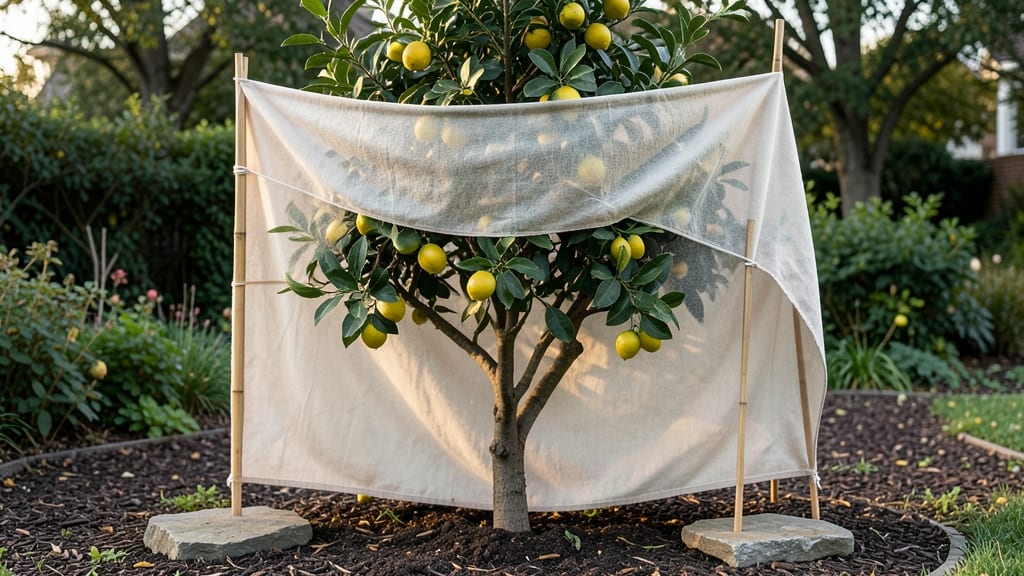
Whether you should cover your lemon tree in winter depends on your USDA hardiness zone: in zones 8-9, protect it from cold snaps with frost cloth or burlap; in zones 10+, minimal covering suffices, while zones 7 and below require full insulation and indoor relocation for extreme cold.
Cold temperatures can stress lemon trees differently depending on how long they're exposed and how severe the chill is. 🌬️ For example, a sudden freeze below 28°F can damage leaves and branches, while prolonged cold weakens the tree's roots over time.
In zones 7 and below, where winters are harsh, moving your lemon tree indoors is often the best solution to prevent long-term damage. Even in milder zones, covering your tree with breathable materials like frost cloth helps protect it from unexpected cold snaps that can drop temperatures rapidly.
When deciding on winter protection, consider your local climate patterns. If your area experiences frequent temperature fluctuations, layering protection—like wrapping the trunk with insulation and covering the canopy—can make a big difference.
Always remove covers during the day when temperatures rise to prevent moisture buildup, which can lead to fungal issues. Monitoring your tree's health throughout the winter will help you adjust your approach as needed.
💡 In This Article
- When and How Cold Damages Lemon Trees
- Zone-Specific Lemon Tree Winter Care Guide
When and how cold damages lemon tree
Lemon trees are tender perennials that originate from subtropical climates, making them highly sensitive to cold. The damage begins when temperatures drop below 28°F, where ice crystals form inside plant cells, rupturing their membranes—a process called frost injury.
Leaves are the first to show signs, developing brown or black spots and curling inward as their cells dehydrate. 🌬️ The bark, especially on younger trees, can crack or peel if exposed to prolonged freezing, creating entry points for diseases like canker.
Roots suffer the most from prolonged cold, as they lack the protective bark of branches. When soil temperatures drop below 40°F, root activity slows dramatically, weakening the tree's ability to absorb water and nutrients.
In zones 7 and below, where winters often dip into the 10-20°F range, roots can freeze solid, leading to dieback even if the above-ground parts survive. Sudden freezes are particularly damaging because they don't allow the tree time to acclimate—unlike gradual cooling, which triggers protective compounds in some plants.
The critical factor isn't just temperature but duration. A single night at 25°F might cause leaf damage, but extended exposure below 20°F can kill the entire tree.
This is why zone 8 gardens, where winters hover around 10-15°F, require careful covering—even a few hours below 28°F can stress the tree. The science shows that citrus trees enter dormancy at 50°F, but they can't survive prolonged sub-freezing conditions without protection.
Cold damage manifests in predictable patterns: leaves blacken first, followed by branch dieback, and finally root failure. In zone 9, where winters rarely drop below 20°F, you might see only leaf scorch, while zone 7 trees could lose entire branches if left uncovered.
The key is understanding your local microclimate—valleys and low-lying areas often get colder than hilltops due to cold air settling.
What most gardeners overlook is how wind exacerbates cold damage. Even at 30°F, a strong wind can create a wind-chill effect that feels like 15°F to the tree's delicate tissues.
This is why covering isn't just about temperature—it's about creating a still, insulated microclimate around your lemon tree. 🌿 The right materials (like frost cloth) trap a thin layer of air that acts as insulation, keeping temperatures a few degrees warmer than the surrounding air.