
Planting
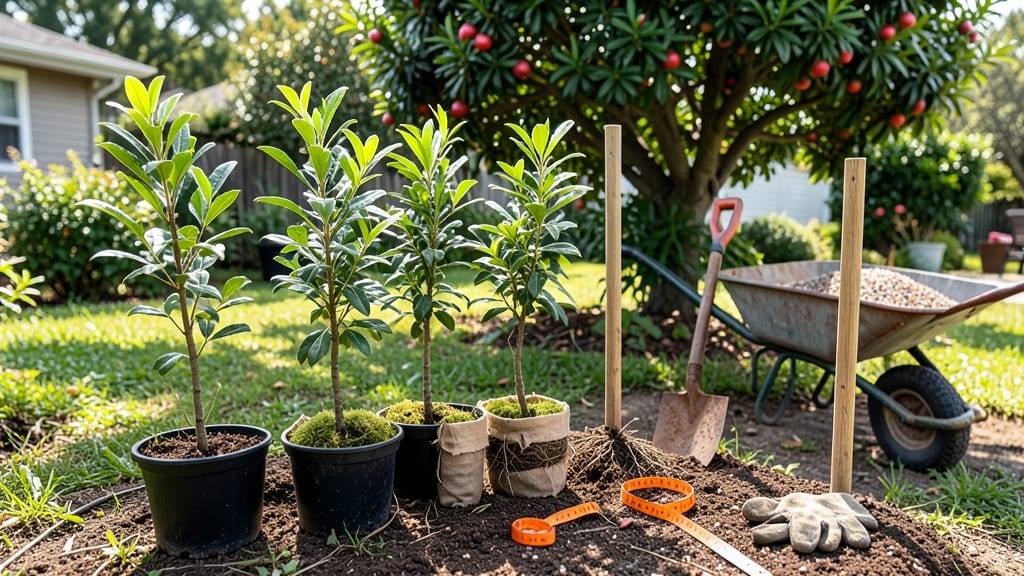
Spacing your pomegranate trees correctly is the key to healthy growth and a bountiful harvest—and getting it wrong can leave you with stunted trees or tiny fruit.
Struggling to maximize your pomegranate harvest? The right spacing between trees can mean the difference between a meager yield and a thriving orchard—here’s how to get it right.
In USDA Zone 6, where pomegranates thrive, standard varieties need 15-20 feet between trees to avoid root competition and crowding. But dwarf varieties? They’ll happily grow just 8-10 feet apart, making them perfect for smaller yards.
Below, I’ll break down the ideal distances for your climate, soil type, and tree size—plus how to adjust spacing for containers or small gardens without sacrificing fruit production.
Optimal pomegranate tree spacing by variety and climate conditions
Getting your pomegranate tree spacing right is the foundation of a thriving orchard. Too close, and your trees compete for nutrients and sunlight, leading to stunted growth and poor fruit quality. Too far apart, and you waste space that could produce more fruit.
The ideal distance depends on your pomegranate variety—whether it's a dwarf, semi-dwarf, or standard tree—and your climate zone, from hot deserts to cooler Mediterranean regions.
In warm climates like USDA Zones 8-11, pomegranates thrive with 6-8 hours of sunlight daily, but spacing must account for intense heat and drought. In cooler zones (6-7), trees grow slower, so spacing can be slightly tighter.
For container growing, dwarf varieties can even thrive on balconies with proper spacing adjustments. Let’s break down the exact distances for each scenario to maximize your harvest.
🌱 Pro Tip: Always measure spacing from the trunk of one tree to the trunk of another, not the dripline. This prevents root overlap and ensures healthy competition for resources.
For warm climates, tighter spacing (e.g., 6-8 feet for dwarfs) works because trees grow faster and need airflow to combat heat stress.
In cooler zones, give them extra room (10-12 feet) to account for slower growth and larger canopies over time. Container growing is ideal for urban gardeners—just ensure pots are at least 20 gallons and use well-draining soil to prevent root rot.
If you’re planting multiple trees, consider cross-pollination. While some varieties like 'Wonderful' are self-fruitful, others like 'Eversweet' produce more fruit with a second tree 10-15 feet away.
This also improves genetic diversity and reduces the risk of disease. For example, pairing a dwarf with a semi-dwarf in a small orchard creates a balanced pollination system.
One common mistake is ignoring future canopy size. A standard pomegranate tree can spread 15-20 feet wide at maturity, so planting them 20 feet apart ensures branches don’t tangle.
Use a measuring tape to mark planting spots before digging—this prevents costly relocations later. In windy areas, add 2-3 extra feet of space to avoid wind damage to branches.
For container gardening, choose dwarf varieties like 'Nana' or 'Wonderful Compact' and place them 12-18 inches apart in large pots. Use espalier training to grow trees flat against a wall or fence, saving space while maximizing sunlight exposure.
Just ensure containers have drainage holes and are placed in full sun for at least 6 hours daily. 🪴
In cold regions (Zones 6-7), space trees 10-15% wider
How spacing affects pomegranate tree health and fruit production
Pomegranate trees thrive when given the right amount of space, but too much or too little can drastically impact their health and fruit production. Proper spacing ensures adequate sunlight exposure, air circulation, and root development, all of which are critical for a productive tree.
Without it, you risk stunted growth, poor fruit quality, and even disease outbreaks.
One of the biggest mistakes I see is planting pomegranate trees too closely together. When trees compete for nutrients and water, their growth slows, and fruit development suffers. Overcrowding also creates a humid microclimate, trapping moisture and inviting fungal diseases like powdery mildew.
On the flip side, spacing them too far apart can waste garden space and reduce cross-pollination opportunities, especially if you're growing multiple varieties.
Pomegranate trees planted too closely (less than 10 feet apart) often develop weak branches and small, underdeveloped fruit. Poor air circulation leads to fungal infections and pest infestations, while excessive shade from overcrowded canopies reduces photosynthesis and sugar production in the fruit.
For standard varieties, aim for 15-20 feet between trees. Semi-dwarf varieties need 10-15 feet, and dwarf varieties can thrive with 8-10 feet of space. Adjust based on your climate—hotter regions may require slightly more space to prevent heat stress.
Sunlight is another critical factor influenced by spacing. Pomegranate trees need 6-8 hours of direct sunlight daily to produce high-quality fruit. When trees are spaced too closely, their canopies shade each other, leading to uneven ripening and smaller fruit size.
I’ve seen orchards where the inner trees produce barely half the yield of those on the edges simply because they’re deprived of sunlight.
Root competition is equally important. Shallow root systems of pomegranate trees spread widely, and when roots overlap, trees struggle to access water and nutrients. This competition weakens the tree’s immune system, making it more susceptible to root rot and nutrient deficiencies.
Proper spacing allows roots to establish deeply, ensuring your tree stays healthy and productive for decades.
Disease prevention is another key benefit of correct spacing. Air circulation reduces humidity around the leaves, which is crucial for preventing powdery mildew and bacterial blight. In tightly packed orchards, these diseases spread rapidly, often leading to defoliation and fruit drop.
I once had a pomegranate tree in a crowded garden that lost nearly all its leaves to mildew—proper spacing could have saved it.
Finally, spacing affects fruit quality. When trees have enough room, they produce larger, sweeter pomegranates with thicker arils. Overcrowded trees often develop small, seedy fruit with less flavor. If you’re growing pomegranates for commercial purposes or simply want the best-tasting fruit, spacing is non-negotiable.
Think of it as giving your trees the personal space they need to thrive—just like we do!