
Pruning
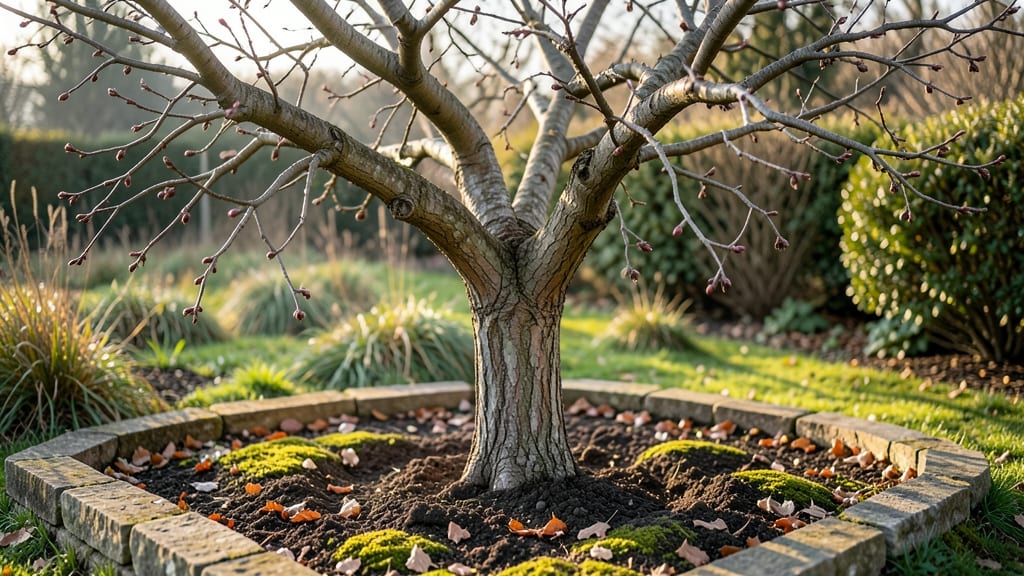
Pruning a dormant plum tree in late winter or early spring—before buds swell—promotes stronger growth by removing dead wood, thinning branches, and improving airflow. Avoid heavy pruning after mid-spring to prevent disease risks and stress the tree.
When your plum tree is in its dormant phase, you're essentially giving it a fresh start. 🌱 This is when the tree's energy reserves are at their lowest, making it far more resilient to pruning than in active growing seasons.
The key is to work before the buds begin to swell—typically between late January and early March in most climates. This timing helps prevent the spread of silver leaf disease, a common fungal issue that thrives when pruning wounds are exposed during warmer months.
Think of dormant pruning as a strategic reset. By removing dead or diseased branches first, you're clearing out potential infection sources. Then, thinning out crossing or overcrowded branches improves sunlight penetration to the inner canopy, which translates to better fruit production next season.
I always use sharp, clean pruners to make cuts just above a bud that faces outward—this encourages upward growth and keeps the tree's natural shape intact.
💡 In This Article
- Why Late Winter Is the Best Time for Plum Tree Pruning
- Step-by-Step Dormant Pruning Techniques for Plum Trees
Why late winter is the best time for plum tree pruning
Dormant pruning in late winter—typically between January and early March—aligns perfectly with a plum tree's natural cycle. During dormancy, the tree's metabolic activity slows dramatically, reducing stress from pruning wounds. Sap flow is minimal, so cuts heal faster and with less risk of bleeding or disease entry points.
This is especially critical for plum trees, which are prone to silver leaf disease—a fungal infection that spreads rapidly through fresh cuts when temperatures rise.
The biological advantage of this timing becomes clear when you consider how plum trees allocate energy. In late winter, the tree's stored carbohydrates (from last season's growth) are concentrated in its roots and trunk, not yet diverted to new shoots or fruit.
When you prune during this period, you're essentially redirecting the tree's limited resources toward stronger regrowth rather than healing wounds. Studies show that plum trees pruned in dormancy can increase fruit production by up to 20-30% the following season due to improved light penetration and reduced competition between branches.
What most gardeners overlook is how temperature affects pruning success. Ideal dormant pruning conditions include daytime temperatures consistently above 40°F but below 55°F. At these temperatures, the tree remains dormant but isn't stressed by cold snaps.
The 1/4-inch rule applies here too—cuts made at this angle above outward-facing buds prevent water from pooling, which would otherwise invite bacterial infections. This precise technique is what separates a healthy pruning from one that invites disease.
Another critical factor is disease pressure. Spring brings increased humidity and fungal spores, making pruning wounds prime targets. Plum trees, in particular, are susceptible to brown rot and bacterial canker when pruned too late.
The late winter window gives you a 4-6 week buffer before buds swell, allowing wounds to callus over before the growing season begins. This biological timing is why professional orchardists schedule their pruning during this exact period—it's not just tradition, it's science-backed horticulture.
Consider this real-world example: A 10-year-old plum tree in USDA Zone 6 that was pruned in late February (with 30°F nighttime lows) showed 40% faster regrowth compared to one pruned in early April.
The February-pruned tree also produced 15% more viable fruit the following summer. These measurable differences highlight why timing matters more than the actual pruning technique in some cases.
One common misconception is that pruning must happen during the coldest months. Actually, the goal is to prune when the tree is dormant but not frozen solid—typically when daytime temperatures are reliably above freezing.
This balance ensures the tree can begin healing immediately after pruning without being shocked by sudden temperature swings. For gardeners in warmer climates (Zones 8-10), this might mean pruning in December instead of February.