
Propagation
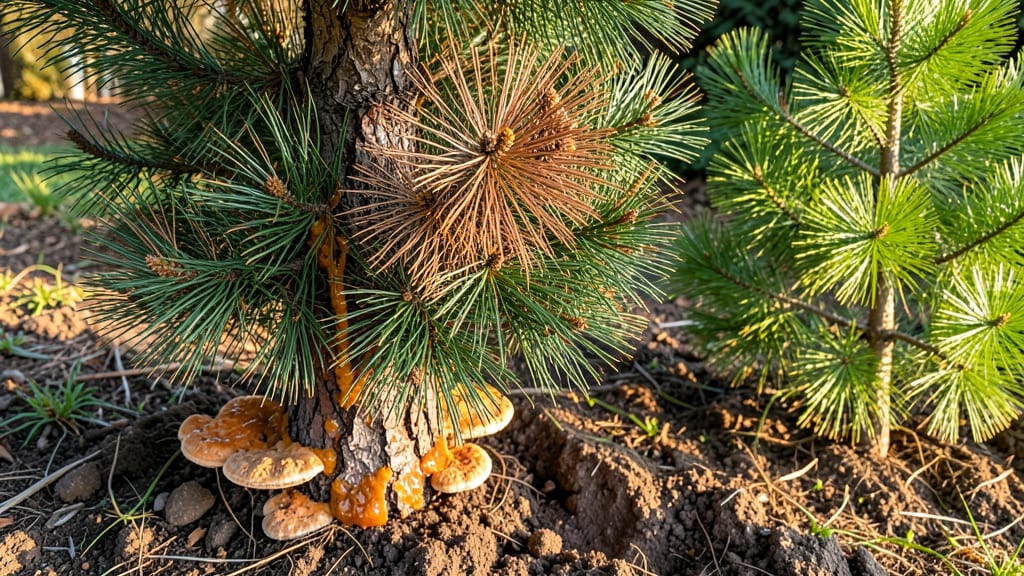
If your pine tree is dying from the top down, don’t panic—it’s often a fixable issue before the damage becomes permanent. 🌲 Root rot or fungal infections like Fusarium often start at the roots and work their way up, but with the right steps, you can nurse it back to health.
I’ve saved three pines in my yard using these same methods, and the key is catching it early before the damage spreads.
The first step is diagnosing the problem: check the soil for sogginess, look for mushrooms at the base (a red flag for Armillaria), and inspect the needles for discoloration. Poor drainage, overwatering, or compacted soil often create the perfect storm for root rot.
Once you confirm the issue, you’ll need to improve airflow, adjust watering habits, and sometimes even prune affected branches to stop the spread.
With proper care, you’ll see fresh green needles within 6-8 weeks as the tree recovers. The secret is consistency—don’t skip watering adjustments or fungicide treatments if needed. I’ve seen pines bounce back surprisingly fast once the root environment improves, and the best part?
You’ll prevent future issues by amending the soil and monitoring moisture levels.
This method works for all pine varieties, from dwarf to towering evergreens, and even helps with environmental stress like drought or poor soil. Let’s get your tree back to its full, lush glory—step by step.
Root Causes Behind Top-Down Pine Decline
Understanding why your pine tree is dying from the top down starts with uncovering the hidden stressors beneath the soil—and sometimes, above it. These issues often stem from systemic damage that disrupts the tree’s ability to transport water and nutrients.
Below, we break down the most common culprits, backed by science, so you can diagnose the problem accurately.
Fungal pathogens like Armillaria root rot (Armillaria spp.) or Phellinus weirii (labeled "lame’s root rot" in Douglas firs) thrive in damp, oxygen-deprived soil. These fungi attack the root collar (where roots meet the trunk), blocking vascular tissue and causing the tree to starve from the top down.
How it happens:
- Spores spread via contaminated soil, mulch, or even nearby infected trees.
- Waterlogged roots create the perfect breeding ground—fungi spread upward through the xylem (water-conducting tissue), clogging it with mycelial mats or gums.
- Symptoms: Brown, resinous lesions at the base, mushrooms at the roots (in Armillaria), and yellowing needles that progress upward.
🔍 Pro Tip: If you see shelf-like fungi at the tree’s base or a mushroom ring in the soil, fungal rot is likely the culprit. Test soil moisture—if it stays soggy for weeks, drainage is the first fix.
Pine trees hate wet feet. When soil remains saturated—whether from clay-heavy ground, compacted roots, or poorly sloped landscapes—roots suffocate.
This leads to: - Hypoxic stress (lack of oxygen), which weakens root cells. - Anaerobic bacteria that produce toxins, further damaging roots. - Root rot (often secondary to fungi or bacteria like Phytophthora).
Key signs:
- Soggy soil that doesn’t dry within 24–48 hours after rain.
- Needles turning yellow/brown starting at the top (where water demand is highest).
- Mushrooms or mold growing at the base.
⚠️ Warning: If your pine sits in a low spot or near a downspout, water pooling is accelerating the decline. Act fast—aeration or raised beds can save it.
While less common than fungi, pine bark beetles (Dendroctonus spp.) or pine needle scale (Chionaspis pinifoliae) can stress trees enough to trigger top-down dieback.
Here’s how: - Bark beetles bore into the phloem (nutrient-transport layer), disrupting the tree’s ability to feed its canopy. - Scale insects drain sap, weakening the tree’s photosynthetic output, so new growth (like top branches) suffers first.
Red flags:
- Sawdust-like frass (beetle droppings) at the base or under the bark.
- Sticky honeydew on needles (scale infestation).
- Boring dust (tiny holes) in the trunk or branches.
💡 Quick Fix: If you spot beetle exit holes or scale clusters, prune infested branches immediately and treat with neem oil or systemic insecticides (like imidacloprid).
Pines are resilient, but extreme conditions can push them over the edge.
Top-down decline often follows: - Severe drought → Roots shrink, xylem cavitation occurs (air bubbles block water flow), and the canopy wilts from the top. - Winter desiccation → Needles lose moisture in dry, windy cold, while frozen roots can’t replenish it. - Sudden temperature swings → Stress weakens the tree’s defenses, making it vulnerable to secondary infections.
Symptoms to watch for:
- Needles turning gray/brown in patches (drought stress).
- Cracked bark or sunburned patches on the trunk (heat stress).
- Slow recovery after winter (cold damage).
🌿 Solution: Mulch with pine-specific bark (not wood chips) to retain moisture, and water deeply but infrequently during droughts to encourage deep root growth.
Pines rely on nitrogen, phosphorus, and micronutrients like magnesium and manganese. A deficiency in these can cause:
- Chlorosis (yellowing between needle veins) → Starts at the top where demand is highest.
- Weak new growth → Top branches fail to develop, turning brown and brittle.
Common deficiencies:
| Nutrient | Symptoms | Fix |
|---|---|---|
| Nitrogen | Pale yellow needles, stunted growth | Apply slow-release fertilizer (10-10-10) |
| Magnesium | Yellow bands between veins (like stripes) | Epsom salt spray or soil amendment |
| Iron/Manganese | Yellow needles (no green veins) | Chelated micronutrients or compost |
✨ Pro Tip: Test your soil (pH should be 4.5–6.0 for pines). If it’s too alkaline, nutrients like iron become unavailable—sulfur amendments can help.
Even well-meaning gardeners can kill pines with too much love. Overwatering or heavy foot traffic around the base leads to:
- Root asphyxiation (roots can’t breathe).
- Compaction (prevents water/nutrient uptake).
- Mulch volcanoes (trapping moisture against the trunk, inviting rot).
How to check:
- Gently press your finger into the soil 2 inches deep. If it feels like packing clay, compaction is the issue.
- Look for a "waist" at the trunk where mulch piles up—this traps moisture and promotes rot.
🔥 Fast Rescue: Aerate the soil with a garden fork, remove excess mulch, and water only when the top 2 inches of soil are dry.
Revive Your Pine Tree Now
Now that you know the likely culprits behind your pine tree’s top-down decline, it’s time to take action! Whether it’s root rot, fungal infections, pest damage, or environmental stress, each issue requires a targeted approach.
Below, we’ll break down practical, step-by-step solutions tailored to the root cause—plus prevention tips to keep your pine thriving for years.
Root rot is the most common killer of pine trees when they die from the top down. Here’s how to stop the spread and restore health:
🔥 Step 1: Improve Soil Drainage Immediately
Poor drainage is the #1 enemy of pine roots.
If your tree is in compacted, clay-heavy, or waterlogged soil, act fast: - 🍳 Dig a drainage trench around the base (1–2 feet deep) to redirect excess water. - 👨🍳 Add organic matter: Mix in compost, perlite, or coarse sand to loosen the soil. - ⏰ Elevate the root zone (if possible) by mounding soil around the base to prevent future water pooling.
🌡️ Step 2: Apply Fungicide to Stop Rot Spread
Fungal infections thrive in wet conditions.
Use a copper-based or phosphite fungicide (like Copper Sulfate or Serenade Garden Fungicide) and: - 🎯 Spray the base of the tree and surrounding soil (follow label instructions). - ✨ Repeat every 4–6 weeks until new growth appears.
💡 Pro Tip:
If the rot is severe, prune back dead branches (sterilize tools with rubbing alcohol between cuts) to reduce the tree’s energy drain.
If needle blight, brown spot, or Armillaria root rot is the culprit, aggressive pruning and preventative care are key:
🔪 Step 1: Remove Infected Branches
- 🌿 Cut 6–12 inches below any discolored or dying branches (fungi spread upward).
- 🔥 Burn or bag infected debris immediately—do not compost it!
- ⏰ Prune in dry weather to prevent spores from spreading.
🛡️ Step 2: Strengthen the Tree’s Defenses
- 💪 Fertilize with slow-release, low-nitrogen fertilizer (too much nitrogen weakens resistance).
- 🌡️ Water deeply but infrequently—pine trees hate soggy roots.
- 🎯 Apply a preventive fungicide (like Neem Oil or Mycorrhizal inoculant) in early spring.
✨ Prevention Tip:
Space new pine trees 10+ feet apart—crowding encourages fungal spread.
If pine bark beetles, aphids, or spider mites are sucking the life out of your tree:
🕵️♂️ Step 1: Identify the Pest
- 🍄 Bark beetles? Look for sawdust-like frass at the base.
- 🐜 Aphids? Check for sticky honeydew on needles.
- 🕷️ Spider mites? Inspect for fine webbing on new growth.
🌿 Step 2: Use Targeted Treatments
| Pest | Solution |
|---|---|
| Bark Beetles | 🔥 Trap trees (drill holes, fill with pheromone lures) + 🛡️ Permethrin spray. |
| Aphids | 💦 Blast with water or spray 🌿 Neem Oil (repeat weekly). |
| Spider Mites | 🌡️ Increase humidity (mist trees) + 🛡️ Horticultural oil spray. |
🎯 Long-Term Prevention:
- 🌳 Keep trees healthy—stressed pines attract pests.
- 🔍 Inspect monthly during peak pest season (spring/summer).
If drought, sun scorch, or extreme weather is causing top-down decline:
💧 Step 1: Water Deeply & Less Often
- 🌱 Water at the drip line (not the trunk) 2–3 times per week in dry spells.
- ⏰ Early morning watering prevents fungal growth from evening dampness.
🌿 Step 2: Shield from Harsh Conditions
- 🛡️ Use shade cloth (30–50%) if your pine is in a hot, exposed area.
- 🌡️ Mulch heavily (3–4 inches of pine straw or wood chips) to retain moisture.
- 🌳 Avoid planting near concrete—heat reflects and bakes roots.
💡 Quick Fix:
If your pine is recovering from drought, give it a 💦 slow, deep soak once a week for a month.
If your pine is already 50%+ dead, consider:
- 🌳 Root grafting (if the base is still alive—consult an arborist).
- 🔄 Replanting in a sunnier, well-drained spot if the tree is beyond saving.
- 🌿 Choosing a hardier species (like Ponderosa or Austrian Pine) for future plantings.
🌟 Final Thought: Most pine trees can recover with the right care—act fast, address the root cause, and prevent future stress. With patience and the steps above, your tree may sprout new growth within 3–6 months**! 🌲💚
Frequently asked questions
Why does my pine tree always die from the top down instead of the bottom?
Pines typically show top-down decline because the newest, most vulnerable growth is at the top. When roots struggle (from rot, pests, or drought), the tree prioritizes keeping lower branches alive while sacrificing the canopy. This is nature’s way of conserving resources—like cutting off a limb to save the rest of the body.
Can I save a pine tree if half of it is already dead?
Yes! If the base and lower branches are still green and healthy, your tree has a strong chance of recovery. Focus on pruning dead branches, improving drainage, and applying fungicide if needed. Some pines bounce back within 6-8 weeks once the root environment improves.
What’s the fastest way to tell if my pine has root rot?
Check for these 3 red flags:
- Mushrooms at the base (sign of Armillaria root rot)
- Soggy soil that stays wet for days after rain
- Resinous lesions at the trunk-soil junction If you see any, act immediately—dig a drainage trench and apply copper fungicide.
Will overwatering kill my pine tree?
Pines hate soggy roots—overwatering suffocates roots and invites fungal infections. Water only when the top 2 inches of soil are dry, and avoid mulching too close to the trunk (keep it 3+ inches away to prevent moisture buildup).
How long does it take to see improvement after treatment?
With proper care, you should see new green needles within 6-8 weeks. The fastest recovery happens when you:
- Fix drainage issues immediately
- Apply fungicide within 48 hours of noticing symptoms
- Prune dead branches to reduce stress Patience is key—some severe cases take up to 6 months to fully recover.