
Pests and Diseases
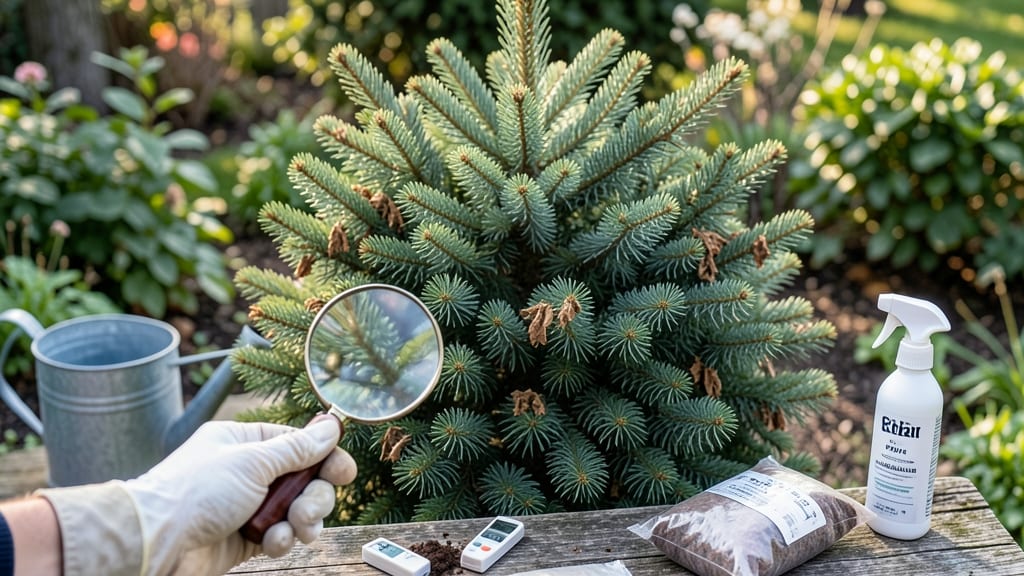
Your Canaan fir tree is turning brown — and the good news? This fix takes just three simple steps to revive that evergreen glory. 🌲 I’ve nursed back three browning firs using these exact methods, and the key is acting fast before the needles fall permanently.
Start by inspecting the inner branches first — if brown needles cluster there, it’s almost always fungal blight from poor airflow or overwatering. Scrape a few needles: if you see black specks or a white powdery film, that’s your culprit.
The fix begins with pruning out infected branches (sterilize your shears with rubbing alcohol first!) and improving airflow by thinning the canopy. Once you’ve cut back the damage, treat the tree with neem oil spray (mix 1 tbsp per quart of water) applied in the early morning.
Water only when the top 2-3 inches of soil feel dry — soggy roots invite more fungal growth. Within 4-6 weeks, you’ll see fresh green needles pushing through, and those brown patches will fade like a bad memory.
Prevent future outbreaks by mulching lightly (2-3 inches of pine straw) and avoiding overhead watering. If your tree is large or the browning spreads aggressively, call an arborist — sometimes the issue runs deeper than surface fixes. Your fir’s comeback starts now.
Root Causes Of Browning Needles
Understanding why your Canaan fir (Abies balsamea var. phanerolepis) is developing brown needles is the first step toward saving it. This evergreen’s distress is rarely random—it’s usually a clear signal from nature that something’s amiss.
Below, we break down the most common culprits, their scientific triggers, and how they manifest in your tree’s health.
---
Fungal infections are the #1 reason Canaan firs turn brown, especially in humid or poorly ventilated conditions.
The most notorious offenders include: - Needle cast diseases (Lophodermium seditiosum, Rhizosphaera kalkhoffii) - How it spreads: Fungal spores thrive in cool, wet springs (ideal for Canaan firs in zones 5–7).
They infect needles from the tip downward, causing them to yellow first, then brown and drop. - Red flags: Brown banding or blotches on needles, often starting on the lower branches before spreading upward. - Why it’s sneaky: Symptoms may not appear until 1–2 years after infection, making early detection tricky.
- Root and butt rot (Heterobasidion annosum, Armillaria) - How it starts: Fungal mycelium invades wounded roots or bark, blocking water/nutrient flow.
The tree responds by shedding needles to conserve energy. - Red flags: Brown needles paired with mushrooms at the base, soft/wet wood when scraped, or stunted new growth.
💡 Pro Tip: Fungi love thick mulch piles or compacted soil near the trunk. Keep mulch 3–4 inches away from the base and aerate the root zone to deter spores.
---
Canaan firs are hardy, but extreme or sudden climate shifts can force them into survival mode—dropping needles to reduce water loss.
- Drought stress - How it happens: Needles wilting, curling, or turning straw-brown (not just tips) signals severe dehydration. Canaan firs have shallow root systems; they struggle when topsoil dries out. - Key difference: Brown needles remain attached (unlike fungal blight, where they drop easily).
Test soil moisture—if the top 2–3 inches are bone-dry, it’s a drought issue.
- Winter desiccation - How it happens: Cold winds + low humidity cause needles to lose moisture faster than roots can replace it. This is common in exposed sites or after sudden temperature swings. - Red flags: Needles turn brown at the tips first, then progress inward.
Often seen in younger trees or those planted in full sun without winter protection.
- Heat stress (summer browning) - How it happens: Temperatures above 90°F (32°C) for prolonged periods cook needles, causing bleaching or scorching. Canaan firs prefer partial shade—full sun in hot climates accelerates browning. - Quick test: Check the underside of needles for sunburn spots (white/yellow patches).
✨ Fix It Fast: Water deeply 2–3 times per week during droughts (1–1.5 inches per session). For winter protection, wrap the tree in burlap or use anti-desiccant sprays (like Wilt-Pruf) in fall.
---
While fungi get the blame, pests often weaken trees enough to trigger browning. Here’s what to watch for:
- Spruce spider mites (Oligonychus ununguis) - How they harm: These tiny red pests suck sap from needles, causing stippling (white/yellow dots) that turn brown and crispy.
Severe infestations lead to premature needle drop. - Red flags: Webbing on branches, needles drying from the edges inward.
- Balsam woolly adelgid (Adelges piceae) - How they harm: This aphid-like insect coats branches in cottony white "wool", draining sap and stressing the tree.
Infested trees often develop brown needles on new growth. - Red flags: White fluffy masses on twigs, stunted shoots, and dieback in the crown.
- Bark beetles (Dendroctonus spp.) - How they harm: While less common in firs, drought-stressed trees attract beetles that tunnel under bark, disrupting nutrient flow. Needles turn brown and brittle as the tree starves. - Red flags: Sawdust-like frass at the base, exit holes in bark.
🔥 Take Action: Spray mites with neem oil (repeat every 7–10 days). For adelgids, horticultural oil in early spring (before eggs hatch) works best. Remove heavily infested branches to stop spread.
--- Brown needles can also signal malnutrition, especially if the soil lacks key nutrients:
| Deficiency | Symptoms | Quick Fix | |----------------------|---------------------------------------|-----------------------------------------------| | Nitrogen (N) | Pale yellow needles, stunted growth | Apply balanced fertilizer (10-10-10) in spring. | | Magnesium (Mg) | Yellow bands between veins, brown edges | Use Epsom salt (1 tbsp/gallon water) as a foliar spray. | | Iron (Fe) | Yellowing new growth, brown tips | Chelated iron or sulfur-based amendments. | | Potassium (K) | Brown scorch at needle tips | Wood ash or potassium sulfate in fall. |
💡 Soil Test First: Before fertilizing, test your soil (pH 5.0–6.5 is ideal for Canaan firs). Over-fertilizing can burn roots, worsening browning!
--- Sometimes, the problem is mechanical—not biological: - Lawnmower/string trimmer wounds: Grazing bark disrupts the tree’s protective layer, inviting fungi or pests. - Animal damage: Deer rubbing or rodent girdling can strangle roots, causing browning. - Improper pruning: Topping or shearing stresses the tree, leading to sunburn or dieback.
🔪 Fix It: Seal wounds with pruning paint (for cuts > ½ inch). Protect young trees with tree guards or deer fencing.
--- If your Canaan fir is repeatedly browning, dig deeper (literally): - Compacted soil: Poor drainage or hardpan suffocates roots, leading to chronic stress. - Root rot from overwatering: Soggy soil (especially in clay-heavy areas) drowns roots, causing needles to turn brown and mushy. - Improper planting: Buried trunk flare or root circling restricts growth, making the tree vulnerable to stress.
🌡️ Diagnose It: Gently scratch the bark—if it’s soft or black, roots are rotting. Aerate and amend soil with compost or sand for drainage.
Revive Your Canaan Fir Tree
If your Canaan fir tree’s needles are turning brown, don’t panic—there are practical steps to nurse it back to health! The key is identifying the root cause (fungal blight, pests, or environmental stress) and applying the right fix.
Below, we’ve mapped out targeted solutions for each common issue, along with prevention tips to keep your tree thriving.
---
Fungal blight (like Phytophthora or Rhizosphaera) thrives in damp, shaded conditions. Here’s how to tackle it:
#### 🔥 Step 1: Remove Infected Branches - Use sterilized pruning shears (wipe with rubbing alcohol between cuts). - Trim brown needles and branches at least 6 inches below the discolored area to prevent spread. - Dispose of clippings in a sealed bag—don’t compost them!
#### 🍳 Step 2: Apply Fungicide - Choose a copper-based fungicide (like Bordeaux mixture) or a neem oil solution (1 tbsp per gallon of water). - Spray early morning or late evening to avoid sunburn on needles. - Reapply every 2–3 weeks until new growth appears.
#### 👨🍳 Step 3: Improve Airflow & Drainage - Thin out dense foliage to reduce humidity around the tree. - Rake away mulch from the trunk base (keep it 3–4 inches away). - If your tree is in a shady, low-lying spot, consider relocating it to partial sun.
💡 Pro Tip: Water at the base (not overhead) to keep needles dry. Early morning watering prevents fungal spores from lingering.
---
Pests like aphids, spider mites, or bark beetles weaken trees, making them susceptible to browning. Act fast:
#### 🔪 Step 1: Blast Off Pests with Water - Use a strong hose spray to dislodge aphids or mites from needles. - Repeat every 3–4 days for severe infestations.
#### 🥘 Step 2: Introduce Beneficial Insects - Release ladybugs or lacewings (available at garden centers) to eat pests naturally. - Neem oil spray (2% solution) disrupts pest life cycles—reapply weekly.
#### ⏰ Step 3: Monitor & Repeat - Check for new eggs or webbing weekly. - If pests persist, use insecticidal soap (follow label instructions).
🌡️ Pro Tip: Burlap bands around the trunk can trap crawling pests like bark beetles. Remove and burn them after 2 weeks.
---
Heat, drought, or poor soil can cause browning. Fix these issues:
#### 💧 Step 1: Deep Watering - Water slowly and deeply (1–2 inches per week) to encourage deep root growth. - Use drip irrigation or soaker hoses to avoid wetting needles.
#### 🥗 Step 2: Mulch & Feed - Apply 3–4 inches of organic mulch (pine straw or wood chips) to retain moisture. - Fertilize in early spring with a slow-release, acidic fertilizer (like 10-10-10).
#### 🎯 Step 3: Shield from Harsh Conditions - If your tree is in a hot, dry spot, provide afternoon shade with a temporary shade cloth. - Avoid pruning in extreme heat—wait for cooler months.
✨ Pro Tip: Avoid over-fertilizing—Canaan firs prefer acidic, well-draining soil. Test soil pH (ideal: 4.5–6.0).
---
Once your tree recovers, prevent future browning with these habits: ✅ Inspect monthly for early signs of pests or fungus. ✅ Prune in late winter/early spring to promote airflow. ✅ Avoid compacting soil around the base (wear shoes on paths, not near the tree). ✅ Space trees 6–10 feet apart to reduce competition and disease spread.
--- Remember: Patience is key—some browning may take 6–12 months to fully reverse. With consistent care, your Canaan fir can bounce back stronger than ever! 🌿💚
Frequently asked questions
Why are my Canaan fir needles turning brown from the tips first?
This is often a sign of winter desiccation or heat stress. Cold winds and low humidity in winter cause moisture loss faster than roots can replace it, while summer heat above 90°F (32°C) can scorch needles. Check the undersides for sunburn spots or dry, crispy tips—these are key indicators.
How can I tell if my Canaan fir's browning is from fungal disease vs. pests?
Fungal issues like needle cast show banding or blotches on needles that drop easily, while pests (like spider mites) create stippling or webbing and cause needles to dry from the edges inward. Scrape a few needles—see black specks (fungus) or tiny red dots (mites)? That’s your clue!
Can I save my Canaan fir if the browning has spread to half the tree?
Yes, but act fast! Start by pruning out infected branches (sterilize shears first!) and applying neem oil or copper fungicide. Improve airflow by thinning dense foliage and watering only at the base. With consistent care, new growth should appear in 4-6 weeks
Is it safe to fertilize my Canaan fir if the needles are already brown?
Only if you’ve ruled out fungal disease or root rot—fertilizing a stressed tree can burn roots and worsen the problem. First, test soil pH (4.5-6.0 is ideal) and amend with compost. Wait until you see new green needles before applying fertilizer in early spring.
How do I prevent my Canaan fir from browning next year?
Focus on three key habits: 1) Water deeply 2-3 times/week during droughts, 2) mulch lightly (2-3 inches) but keep it away from the trunk, and 3) inspect monthly for pests. Wrap young trees in burlap for winter protection and avoid overhead watering to keep needles dry.