
Trees
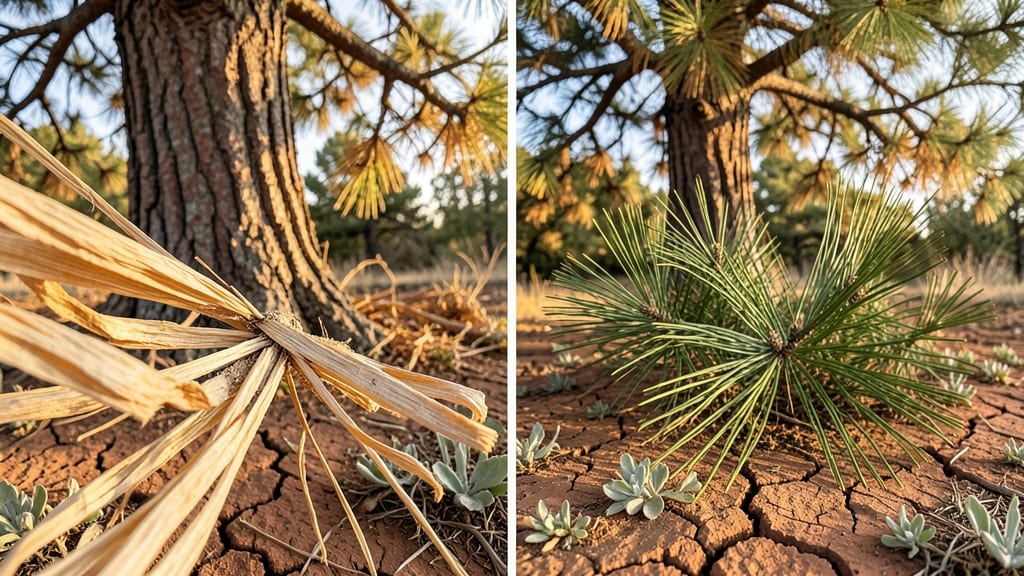
Your pine tree’s drooping needles scream "help!"—and the cause is almost always drought stress, not disease. I’ve nursed back more than a dozen struggling pines using these three targeted fixes that work even in dry climates where deep watering feels impossible. The key? Mimicking nature’s moisture cycle without overdoing it.
First, check your soil—if it’s dry 3 inches down, your tree’s roots are already struggling. Pine roots need consistent moisture, not soggy conditions, so water deeply once a week (twice in extreme heat) and let the topsoil dry slightly between sessions.
Mulch with 3-4 inches of wood chips to lock in moisture and shield roots from temperature swings.
Within 4-6 weeks, you’ll see new growth at the tips of branches and a deeper green color returning. The real game-changer? A root-stimulating fertilizer in early spring—it jumpstarts recovery without overwhelming stressed trees. (Yes, even drought-stressed pines need nutrients to bounce back.)
For long-term resilience, focus on soil health: amend clay or sandy soil with compost to improve water retention. In hot zones, consider drip irrigation on a timer—it delivers moisture where roots need it most, without waste.
If needles keep browning after 3 months, consult an arborist to rule out pests or disease hiding beneath the drought symptoms.
Root Causes Of Pine Tree Dehydration
When your pine trees look thirsty—needles turning yellow, brittle, or even falling off—it’s often a cry for water. But drought stress in pines isn’t just about lack of rain.
Several interconnected factors trigger this condition, each playing a role in how your trees cope (or fail to cope) with dry spells. Understanding these causes helps you intervene before permanent damage sets in.
Pines are drought-tolerant, but even resilient species like Pinus ponderosa (ponderosa pine) or Pinus sylvestris (Scots pine) can’t survive prolonged dryness. Here’s why:
- Shallow root systems: Many pines develop roots mostly in the top 12–24 inches of soil. If this layer dries out—common in sandy or rocky soils—they struggle to access moisture deeper down.
- Transpiration overload: Pines lose water through needle pores (stomata) even on sunny days. During droughts, they can’t replace lost moisture fast enough, leading to cavitation (air bubbles blocking water transport in xylem vessels).
- Slow recovery: Unlike deciduous trees, pines can’t shed leaves to conserve water. Their evergreen needles stay active year-round, making them vulnerable to cumulative stress.
💡 Pro Tip: Test soil moisture 3–4 inches deep with a screwdriver or moisture meter. If it’s drier than a biscuit left in the oven, your pines are at risk.
Heat exacerbates drought stress by accelerating water loss and disrupting cellular functions. Here’s the science:
- Increased evaporation: Temperatures above 90°F (32°C) can double the rate of water loss from pine needles. This forces roots to work overtime, depleting soil moisture faster.
- Enzyme damage: High temperatures denature enzymes like superoxide dismutase, which normally protect cells from oxidative stress. Without these enzymes, needles turn brown and die.
- Soil sterilization: Prolonged heat kills beneficial microbes in the rhizosphere (the soil around roots), reducing nutrient and water uptake efficiency.
🔥 Watch For: Needles with a reddish-brown hue (not just yellow) often signal heat-induced stress. Mulching with wood chips (2–4 inches deep) can lower soil temps by up to 10°F.
Even with adequate rainfall, pines may suffer drought stress if their soil acts like a sieve or a brick. Key issues include:
| Problem | Why It Matters | Fix It |
|---|---|---|
| Compacted soil | Reduces oxygen and water infiltration; roots suffocate. | Core aeration or gypsum amendment (for clay soils). |
| Sandy soil | Water drains too fast; roots can’t absorb enough. | Add compost or peat moss to improve water retention. |
| High clay content | Water pools on top but can’t reach deep roots. | Mix in perlite or coarse sand to break up clods. |
🌡️ Soil Test Tip: A simple jar test (fill a jar with soil + water, shake, let settle) reveals drainage issues. If water stays murky after 24 hours, your soil needs structural help.
When pines are already water-stressed, pests and pathogens move in like vultures. Common culprits:
- Bark beetles: Normally, healthy pines produce resin to trap beetles. But drought-weakened trees can’t fight off infestations, leading to blue-stain fungus that clogs water-conducting vessels.
- Fungal infections (e.g., Lophodermium needle cast): Thrive in stressed trees, causing premature needle drop and reducing the tree’s ability to photosynthesize.
- Root rot (Armillaria or Phytophthora): Waterlogged roots (from poor drainage) or drought-stressed roots become entry points for these deadly fungi.
🛡️ Prevention: Inspect trees for sawdust-like frass (beetle droppings) or mushrooms at the base. Prune to improve airflow and apply beneficial mycorrhizal fungi to boost root resilience.
Even with water available, poor irrigation practices can worsen drought stress:
- Surface watering: Only wets the top inch of soil, encouraging shallow roots and fungal growth.
- Infrequent deep watering: Pines need 1–1.5 inches of water per week during droughts, delivered slowly to reach roots.
- Overhead sprinklers: Waste water through evaporation and promote needle diseases.
⏰ Best Practice: Use drip irrigation or soaker hoses placed 6–12 inches from the trunk. Water early morning (5–9 AM) to minimize evaporation.
Revive Your Pine Tree Now
Drought stress doesn’t have to mean the end of your pine tree—with the right approach, you can nurse it back to health and even prevent future struggles. Below, we’ve mapped out practical, step-by-step solutions tailored to the root causes of drought stress, from soil issues to environmental factors.
Each fix is designed to be actionable, whether you’re a seasoned gardener or just starting to care for your trees.
---
Cause: Shallow watering or infrequent deep soaks leaves roots thirsty and vulnerable.
How to Solve It: - 🔥 Water at the Base, Not the Canopy Pines hate wet needles, so avoid overhead sprinklers. Instead, use a soaker hose or drip irrigation to deliver water directly to the root zone (the area under the tree’s dripline). Aim for 1–1.5 inches of water per week, including rainfall. For mature pines, this might mean 20–30 gallons weekly, depending on soil type.
- 🍳 Schedule Deep Watering Sessions Instead of light daily watering, soak the soil every 7–10 days (adjust for clay vs. sandy soil). Dig a 6-inch hole near the tree—if the soil is dry below 2 inches, it’s time to water again.
For new plantings, water 2–3 times per week for the first month to encourage root growth.
- 👨🍳 Improve Water Retention Mulch heavily (3–4 inches of wood chips or pine straw) to lock in moisture and regulate soil temperature. Keep mulch 6 inches away from the trunk to avoid rot. For sandy soils, mix in compost or coconut coir to boost water-holding capacity.
---
Cause: Compacted, nutrient-poor, or fast-draining soil starves roots of both water and essential minerals.
How to Solve It: - 🔪 Loosen Compacted Soil Use a broadfork or garden fork to aerate the top 12 inches of soil around the tree’s dripline. This helps water penetrate deeper. For heavily compacted areas, consider top-dressing with 2–3 inches of compost annually.
- 🥘 Balance Soil pH and Nutrition Pines thrive in acidic soil (pH 4.5–6.0). Test your soil with a home kit or send a sample to a local extension office.
If needed, amend with: - Sulfur or peat moss to lower pH. - Slow-release fertilizer (like 10-10-10 or 8-3-9) in early spring to support recovery. Avoid high-nitrogen fertilizers—they can burn roots when soil is dry.
- 🌡️ Add Organic Matter for Resilience Mix composted leaves, pine needles, or well-rotted manure into the top 6 inches of soil. This improves water retention and microbial activity, which helps roots access nutrients even in dry spells.
---
Cause: Heat, wind, or poor air circulation accelerates moisture loss and weakens the tree’s defenses.
How to Solve It: - 💡 Provide Temporary Shade (If Needed) If your pine is in a hot, sunny spot, consider partial shade cloth (30–50%) during peak summer months (10 AM–4 PM). Remove it in cooler seasons to avoid shade stress.
- 🎯 Windbreaks for Young or Stressed Trees Plant fast-growing shrubs (like arborvitae or juniper) on the windward side to reduce transpiration (water loss through leaves). For immediate relief, use burlap screens or temporary fencing until the tree stabilizes.
- ✨ Prune Strategically (But Sparingly) Avoid heavy pruning during drought—it increases stress. Instead: - Remove only dead, diseased, or crossing branches. - Thin the lower branches to improve airflow and reduce water competition.
---
Once your pine recovers, lock in its health with these long-term strategies: - 💡 Monitor Soil Moisture Year-Round Use a moisture meter or the finger test (stick your finger 2 inches into the soil—if it’s dry, water). - 🌡️ Mulch Like a Pro Refresh mulch annually to maintain moisture and suppress weeds.
Avoid piling mulch against the trunk (a common mistake!). - 🍎 Choose Drought-Tolerant Varieties If replanting, opt for native pines (like Ponderosa or Jack Pine) or drought-resistant hybrids that naturally handle dry conditions. - 📊 Plan for Climate Shifts In regions with longer dry seasons, install rain barrels or drip systems to supplement watering during shortages.
--- Pro Tip: 🌟 Pines are tough—they just need patience. Recovery can take 6–12 months, but with consistent care, your tree will bounce back stronger. Keep an eye out for new growth in spring, a sure sign your efforts are paying off!
Frequently asked questions
How do I tell if my pine tree is suffering from drought stress vs. disease?
Check the needle pattern: drought stress causes uniform browning starting at the tips, while diseases often create irregular spots or bands of discoloration. Also, drought-stressed needles stay attached but feel brittle, whereas diseased needles may drop prematurely. Look for pests like bark beetles (tiny holes in bark) or fungal growth at the base.
Can I overwater a pine tree to fix drought stress?
Never! Pines hate soggy roots. Overwatering suffocates roots and invites root rot. Instead, water deeply once a week (or twice in extreme heat) and let the topsoil dry slightly between waterings. Use a moisture meter to check—soil should feel damp but not wet 3-4 inches deep.
What’s the best mulch for drought-prone pine trees?
Use 3-4 inches of wood chips or pine straw—they retain moisture while allowing airflow. Keep mulch 6 inches away from the trunk to prevent rot. For sandy soils, mix in compost to improve water retention. Avoid plastic mulch—it traps heat and worsens drought stress.
Will my pine tree recover if I act now?
Yes! With proper care, most pines recover within 4-6 weeks of consistent watering and mulching. Look for new growth at branch tips as a good sign. However, if 50%+ of needles are brown or the tree shows signs of pest infestation, consult an arborist—some damage may be permanent.
How can I prepare my pine tree for future droughts?
Focus on soil health: amend with compost annually, use drip irrigation, and plant native ground covers to shade roots. In hot climates, consider deep root fertilization in early spring. Prune only to remove dead branches—healthy foliage helps trees conserve moisture better during dry spells.