
Pruning
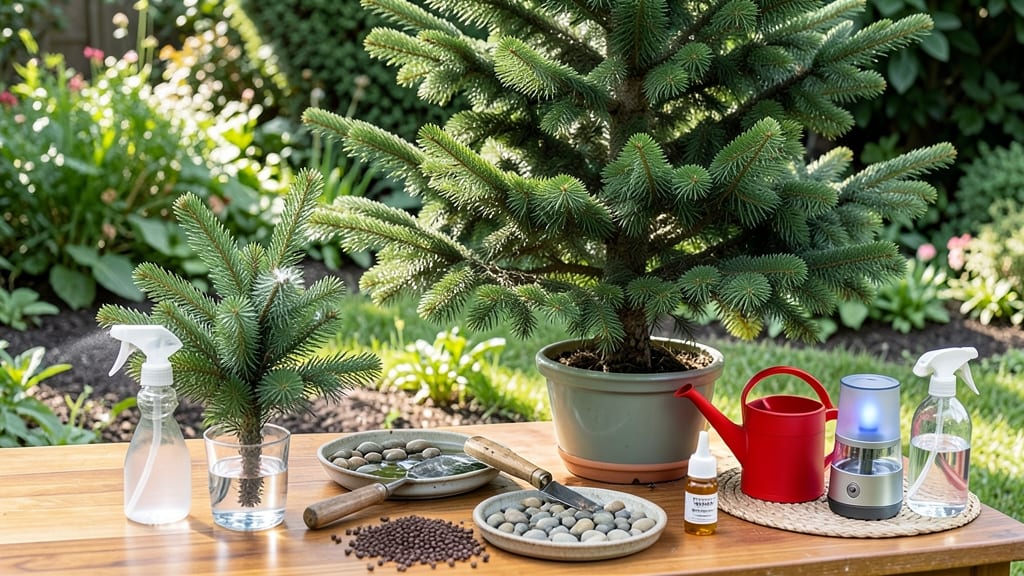
Keeping your Christmas tree 🎄 alive longer than a week isn’t just luck—it’s about understanding how water works with the tree’s natural needs.
Your Christmas tree’s needles dropping faster than presents under the tree? The secret to keeping it lush and green isn’t just water—it’s how you water it. Most people either drown the roots or let them dry out, both of which speed up needle loss.
Think of it this way: a real Christmas tree is still alive when you bring it indoors, and its roots are actively drinking water. But without the right setup, that water either pools at the bottom (rotting the roots) or evaporates too fast (stranding the top branches).
In this guide, I’ll walk you through the exact watering schedule that doubles needle retention, the tools that make it effortless, and the little tricks—like humidity hacks—that keep your tree looking fresh until New Year’s.
The science of watering Christmas trees: why most people fail
Real Christmas trees are living plants, not just decorations—yet most people treat them like cut flowers. The needle drop you see isn’t just from dry air; it’s a cry for help from a tree struggling to absorb water through its closed stomata.
When you bring a tree indoors, its roots can’t replenish moisture fast enough, and without proper watering, the needles dry out and fall like autumn leaves.
Understanding the water column concept is key. This invisible pathway—from roots to needles—must stay continuous. If air bubbles block it (from thirst or overwatering), the tree can’t transport nutrients or moisture. That’s why a tree that looks thirsty might actually be drowning in stagnant water.
Most people fail because they focus on how much to water, not how often or how effectively. A quick splash in the stand won’t cut it.
Christmas trees need a consistent water supply, like a drip irrigation system for your living room. The goal? Keep the root ball moist without waterlogging it.
Here’s the science: A tree’s roots are designed to absorb water from the soil, but once cut, they rely on capillary action to pull water upward. Without a steady water column, the tree’s sap flow slows, and needles turn brown at the tips—a classic sign of dehydration.
| Factor | Critical Detail | Why It Matters |
|---|---|---|
| Root System | Fine, fibrous roots | Maximizes water absorption but needs consistent moisture. |
| Water Column | Continuous moisture pathway | Blocks air bubbles that disrupt sap flow. |
| Stomata Behavior | Closes in dry air | Prevents water loss but stops nutrient uptake. |
| Needle Retention | 50-70% drop risk | Poor watering = faster needle loss (vs. 2-4 weeks with proper care). |
| Overwatering Risk | Mold/fungal growth | Stagnant water = root rot and needle drop. |
The root ball of a Christmas tree is like a sponge—it needs to stay damp but not soggy. When you first bring a tree indoors, its roots are still adjusting to the change.
If you don’t pre-soak the roots for 30 minutes before setting it in the stand, you’re starting with a hydration deficit that’s hard to recover from.
Another common mistake? Ignoring the tree’s size. A 7-foot tree needs about 1 gallon of water daily, while a 10-footer might require 1.5 gallons. The rule of thumb: 1 quart per inch of trunk diameter.
Measure the trunk at the base and adjust accordingly. Most people underestimate this need, leading to premature needle drop.
Temperature and humidity play a sneaky role too. Indoor heating dries the air, making it harder for the tree to absorb water. That’s why you’ll see more needle drop near heat vents or fireplaces.
The solution? Increase humidity around the tree—think pebble trays or a misting bottle—but never at the expense of proper watering.
Artificial trees, of course, don’t need watering, but real trees rely on a delicate balance. The sap flow in a healthy tree is like a river—it carries water, nutrients, and even antifreeze compounds that protect needles in cold weather.
Disrupt that flow, and the tree’s defenses weaken, leading to browning and drop.
Pro tip: Check the water level in the stand daily. If the tree is tilting or the stand feels light, it’s time to refill. A good stand should hold at least 1 gallon of water and have a reservoir design to keep the base submerged.
Without this, the roots can’t absorb enough moisture to sustain the tree’s massive needle surface area.
Finally, remember that Christmas trees are stressed by the moment they’re cut. Their natural defense mechanisms kick in to conserve water, which is why you’ll see the bottom needles drop first.
The goal isn’t to stop all needle loss—it’s to slow it down and keep the tree looking fresh for weeks, not days. 🎄💧
Step-by-step watering schedule to maximize needle retention
Keeping your Christmas tree hydrated isn’t just about pouring water—it’s about creating the right conditions for needle retention. Indoor air, especially near heaters, sucks moisture from needles faster than you think. The key is consistent hydration without drowning the roots.
Start by calculating your tree’s water needs based on size: a 6-foot tree typically needs 1 gallon of water daily, while an 8-footer may require 1.5 gallons. Always use room-temperature water to avoid shocking the roots.
Before you even water, check the stick test—insert a wooden skewer near the base. If it slides out clean, your tree’s thirsty. If sap clings, hold off. Overwatering causes root rot and mold, which can turn your tree’s base into a science experiment gone wrong.
Use a tree stand with a reservoir to automate hydration and prevent spills. These stands often include a water gauge to track moisture levels, so you’re never guessing.
Your Christmas Tree Watering Checklist
- Step 1: Fill the stand with 1 gallon (6ft tree) or 1.5 gallons (8ft+) of room-temperature water. Never reuse old water—it breeds bacteria.
- Step 2: Cut ¼ inch off the trunk before placing it in the stand. This refreshes the water uptake system.
- Step 3: Water in the morning (before 10 AM) to let needles dry slightly during the day, reducing mold risk.
- Step 4: Check water levels daily. Refill if the stand is empty—never let it run dry for more than 24 hours.
- Step 5: Add tree preservative (like Aspen Tree Preservative) to the water to slow needle drop and extend freshness.
- Step 6: Wipe down the base with a damp cloth weekly to remove sawdust and debris, which clog the trunk.
Yellowing needles? You’re likely dealing with thirst stress or overheating. Move your tree away from heat sources like vents or fireplaces, which can dry needles in 24 hours.
If you spot white mold on the water or base, dump the old water, scrub the stand with vinegar and water (1:1 ratio), and refill. Mold thrives in stagnant water, so daily changes are non-negotiable for trees taller than 7 feet.
For extra-large trees (9ft+)**, invest in a large-capacity stand (3+ gallons) and consider a humidifier nearby to combat dry indoor air. Place a tray of pebbles and water near the tree (not touching the base) to add moisture to the air.
This mimics the high humidity of a forest floor, where Christmas trees naturally grow. Just avoid over-saturating the pebbles—damp, not soggy is the goal.
Troubleshooting needle drop starts with the trunk’s health. If needles fall when you touch them, your tree is already stressed. Act fast: recut the trunk at a 45-degree angle, soak it in water for 10 minutes, then replant.
This reopens the xylem vessels, allowing better water absorption. For stubborn cases, a tree-specific fertilizer (like Miracle-Gro for Trees) can give it a nutrient boost—but use sparingly, as over-fertilizing burns roots.
Your Christmas tree’s lifespan hinges on these watering habits. Stick to this schedule, and you’ll see greener needles and fewer brown patches by day 10. The secret? Consistency beats volume every time. Now go enjoy your lush, hydrated holiday centerpiece—it’s earned its place under the lights! 🎄