
Trees
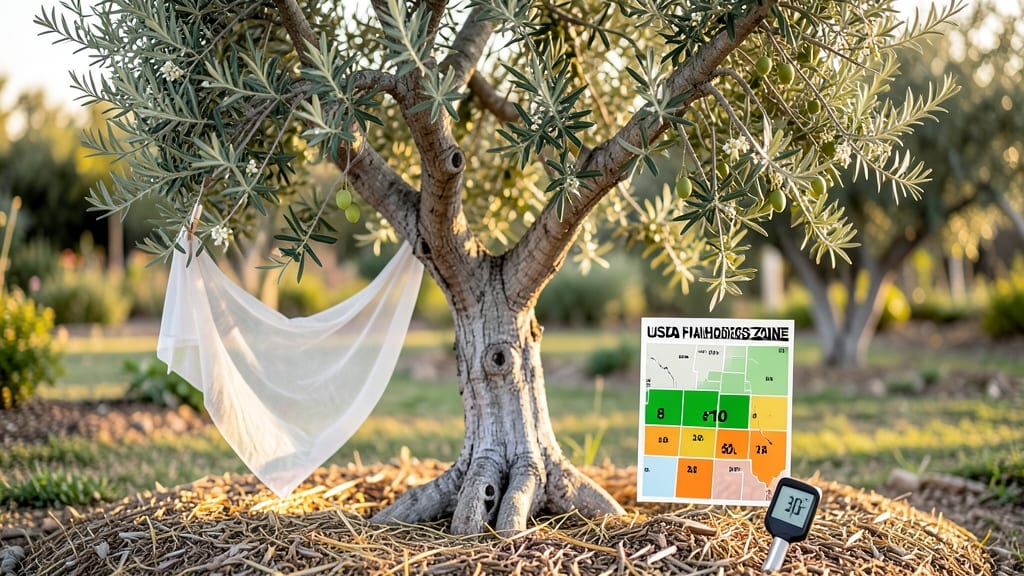
Determining the olive tree hardy zone is crucial for successful growth, as they thrive in USDA hardiness zones 8 through 11, with cold hardiness limits between 15°F and 25°F (-9°C to -4°C). Varieties like Arbequina tolerate cooler climates, while others need warmer winters for survival.
Understanding your local climate zone helps prevent winter damage that can kill olive trees. 🌱 The USDA zone system maps temperature ranges, and olives struggle below 15°F unless protected—even brief dips can cause irreversible harm.
I've seen Arbequina varieties survive in zone 7 with proper winter care, but most standard types need zone 8 minimum. Microclimates near buildings or slopes can push limits slightly higher, making location just as important as the official zone.
For gardeners in marginal zones, container growing with winter wraps or indoor overwintering extends the range. 💛 The key is matching the variety to your climate—some olives simply won't survive harsh winters no matter how well you prepare them. Always check your specific cultivar's cold tolerance before planting outdoors.
💡 In This Article
- How Cold Temperatures Affect Olive Tree Survival
- Best Olive Tree Varieties for Cold Climates
How cold temperatures affect olive tree survival
Olive trees are Mediterranean natives that evolved in climates where winter temperatures rarely drop below freezing. When exposed to cold below 25°F (-4°C), their cells begin to experience frost damage through a process called cryoinjury.
This occurs when ice crystals form in the cell walls, rupturing membranes and disrupting water transport systems. The roots are particularly vulnerable—even a brief dip to 15°F (-9°C) can kill root tips, severely limiting the tree's ability to absorb water and nutrients the following spring.
The tree's natural defense mechanism is dormancy, triggered by shortening daylight hours and cooler temperatures. However, this protective state only works within specific limits. Olive trees in USDA zones 8-11 experience mild winters where dormancy isn't extreme, allowing them to maintain metabolic activity at reduced levels.
In colder zones, the shock of sudden temperature drops can overwhelm this adaptation, causing cambial layer damage—the growth layer responsible for producing new wood and bark. This is why you'll see split bark or dead branches after harsh winters in marginal zones. 🌡️
Zone designations correlate directly with winter survival rates. Zone 8 (10-20°F / -12 to -7°C) represents the absolute minimum for most olive varieties, while zone 11 (40-50°F / 4-10°C) offers the most favorable conditions.
The difference between these extremes isn't just about temperature—it's about thermal fluctuation. Rapid temperature swings (like a 30°F / 17°C drop overnight) are more damaging than steady cold because they prevent the tree from acclimating gradually.
This explains why coastal areas often support olive growth in cooler zones—the ocean moderates temperature extremes.
Root sensitivity explains why container-grown olives often survive colder climates than in-ground plants. When roots are confined, they generate less biomass and require less water, reducing the tree's overall cold vulnerability.
However, this comes with trade-offs: containerized trees need daily winter protection (like frost blankets) because their root zones freeze more quickly than established in-ground systems. The science shows that even 6 hours of sub-freezing temperatures can kill olive roots if they're not properly insulated. 🥶
Microclimates create the most significant variations in survival rates within the same USDA zone. A south-facing slope might push your effective zone up by 2-3 degrees Fahrenheit compared to a north-facing valley.
This is why some gardeners in zone 7 successfully grow Arbequina olives—by planting them against a sun-exposed wall or using black plastic mulch that warms the root zone by 5-10°F.
The key physiological difference is that these microclimates maintain soil temperatures above 28°F (-2°C), which is the critical threshold where olive roots begin to suffer permanent damage.
What most people overlook is the secondary damage from winter stress. Even if a tree survives the cold, late spring frosts (below 28°F / -2°C) can kill new growth after buds have opened.
This two-stage vulnerability explains why some olives appear healthy in winter but fail to produce fruit the following season. The solution lies in timing: planting cold-hardy varieties that bloom 2-3 weeks later than standard types reduces exposure to these late frosts. 🌿