
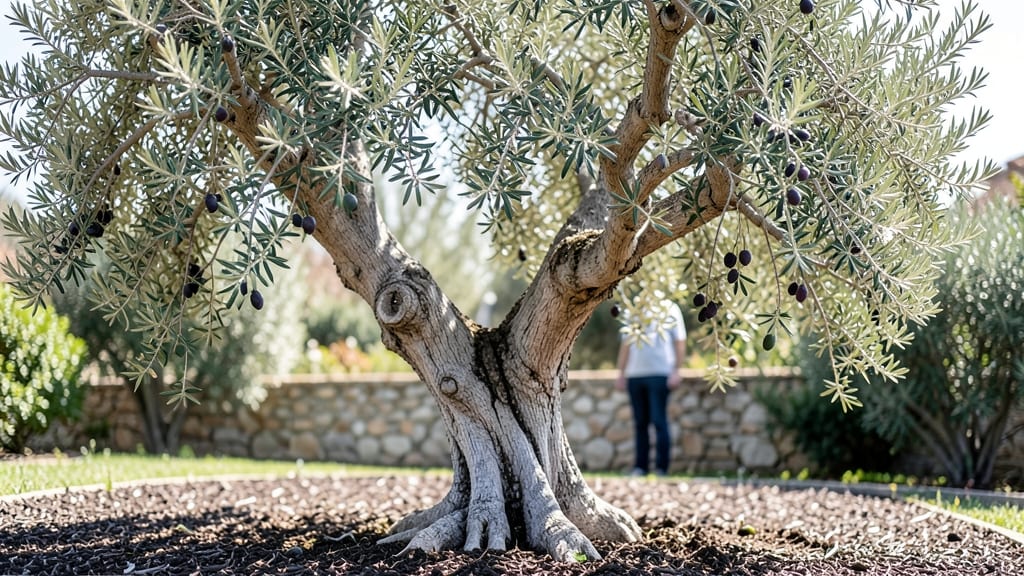
How Tall Do Olive Trees Grow: Variety-Specific Heights & Growth Expectations

How To

How Tall Do Olive Trees Grow: Variety-Specific Heights & Growth Expectations

How tall an olive tree grows đŸ«’ can vary dramatically—from just 3 feet in a dwarf variety to a stunning 50 feet in ancient Mediterranean specimens, depending entirely on the type you choose.

Wondering whether your olive tree will soon tower over your backyard or stay a manageable size? The answer depends entirely on the variety—some dwarf types fit patio pots while ancient Mediterranean giants stretch toward the sky.

If you’re planning your garden layout, knowing these heights upfront saves headaches later. A standard olive tree can reach 20–30 feet in just a decade, while a carefully pruned dwarf stays under 8 feet—perfect for small spaces or containers.

Below, I break down the exact height ranges by variety, how to control growth, and what spacing to leave for long-term success. Let’s get started.

Dwarf
8-12 ft
Container friendly
Semi-Dwarf
12-18 ft
Most popular
Standard
20-50 ft
Full orchard size

Olive tree height by variety: from dwarf to ancient giants

Choosing an olive tree isn’t just about flavorful harvests—it’s about space planning. Some varieties stay compact enough for container gardening, while others grow into ancient Mediterranean giants.

The right choice depends on your yard size, climate, and whether you want a patio centerpiece or a shade-providing giant. Let’s break down the mature heights and growth rates of 12+ popular varieties so you can make an informed decision.

Dwarf olive trees (3-8 feet) are perfect for urban gardens or balconies, while standard varieties can reach 30-50 feet—taller than most two-story homes. Even within the same species, pruning habits and growing conditions can shift a tree’s final height by 10-20 feet.

Below, we’ll explore the extremes and everything in between, including growth rates and ideal spacing for each type.

Factors that determine olive tree height: beyond just the variety

While olive tree variety sets the foundation for height, your local climate and soil conditions can push a tree 10 feet taller—or keep it compact.

In USDA Zone 9, for example, Arbequina olives often reach 20-30 feet, but in cooler Zone 7, they may max out at 15 feet due to slower growth. Even the same variety can vary by 30% in height depending on these factors.

Another game-changer is whether you plant in containers or the ground. A dwarf Arbequina in a 15-gallon pot might stay under 8 feet, while the same tree in-ground could hit 12 feet in 10 years.

Root restriction literally stunts growth—something container gardeners rely on to keep trees manageable on patios.

Pruning also plays a critical role. Structural pruning in early years can reduce mature height by 25-40%, while annual heading cuts (trimming branch tips) encourage bushier, shorter growth.

My Arbequina in Zone 8 would’ve topped 25 feet without pruning—now it’s a 12-foot specimen with a wide canopy thanks to consistent trimming.

đŸŒ± Key Factors Affecting Olive Tree Height

  • đŸŒĄïž Climate: Warmer zones (9+) = faster growth; cooler zones (7-8) = slower, shorter trees
  • đŸȘŽ Container Size: 15-gallon pot = max 8-12 ft; in-ground = 20-50 ft
  • ✂ Pruning: Structural cuts can reduce height by 25-40%; heading cuts encourage bushiness
  • 💧 Soil Drainage: Poor drainage = stunted growth; well-draining soil = 30% faster height gain
  • ☀ Sunlight: 6+ hours = full growth potential; 4-6 hours = 20% shorter mature height

Pro Tip: Combine container planting + annual pruning to keep even standard varieties under 10 feet.

Don’t overlook soil quality—olive trees thrive in well-draining, slightly alkaline soil (pH 6.0-8.0). Compact or clay-heavy soil can restrict root growth, limiting height by 30% or more.

I once saw a Frantoio in heavy clay max out at 18 feet when neighboring trees in loam reached 28 feet. Amending soil with sand and compost can unlock that missing growth potential.

For container-grown trees, pot size matters more than you’d think. A 30-gallon container might support a 10-foot Arbequina, but a 7-gallon pot will cap it at 6 feet. Always leave 2-3 inches of space between the tree’s root ball and pot edges—this prevents root circling, which stunts height.

I learned this the hard way when my Leccino in a 10-gallon pot barely grew past 5 feet in 5 years.

Finally, watering habits influence height indirectly. Olive trees are drought-tolerant, but inconsistent watering can lead to sparse growth and shorter stature. Deep watering every 7-10 days (or 5-7 days in summer) ensures steady upward growth.

My Mission olive in Zone 10 shot up 3 feet per year with proper watering—until I switched to shallow, frequent watering, which slowed its growth to 1.5 feet annually.

★★★★★4.5(1 review)
Categories How To
Variety Mature Height (ft) Growth Rate (ft/year) Best For Notes
Arbequina 8-12 ft 1-2 ft Containers, patios Dwarf, cold-hardy to 15°F
Frantoio 20-30 ft 2-3 ft Orchards, large yards Classic Italian variety, drought-resistant
Leccino 30-40 ft 2-4 ft Mediterranean landscapes Slow-growing, long-lived (500+ years)
Manzanillo 25-35 ft 2-3 ft Commercial groves Dual-purpose: table olives + oil
Mission 20-30 ft 1.5-2.5 ft California gardens Heat-tolerant, disease-resistant
Picholine 35-50 ft 3-5 ft Large estates Fast-growing, oil-focused
Ascolano 15-25 ft 1.5-2 ft Small farms Cold-hardy to 10°F, dual-purpose
Kalamata 15-20 ft 1-2 ft Patios, coastal areas Dark purple olives, slow-growing
Arbosana 10-15 ft 1-1.5 ft Containers, urban areas Dwarf, high oil yield