
Diseases
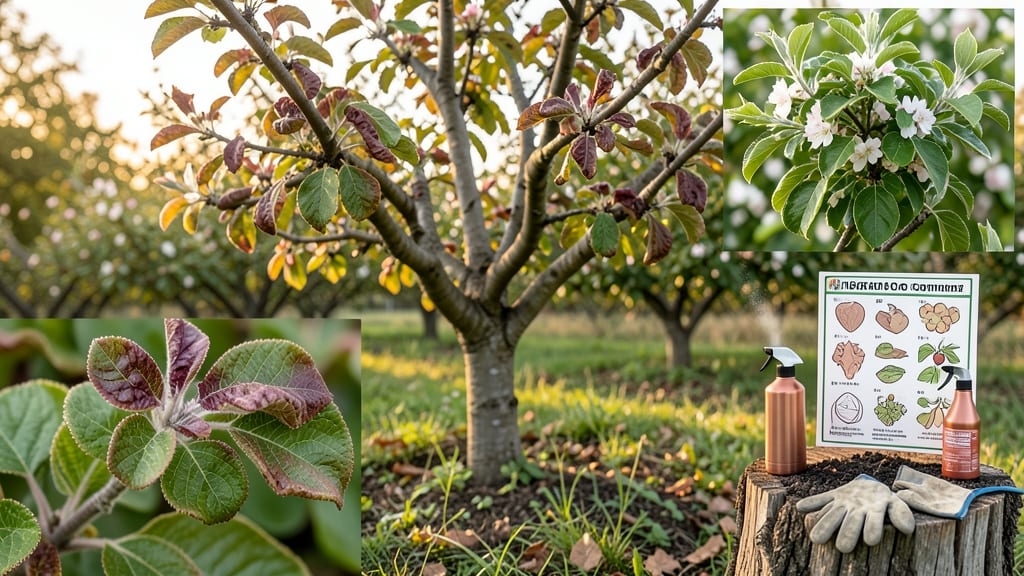
Apple trees with curled leaves look like they've been through a tornado—wrinkled, puckered, and struggling to photosynthesize. 🌿 Leaf curl disease is the most common apple tree ailment, and if you catch it early, you can save your tree from decline.
The key is understanding the symptoms, acting fast, and choosing the right treatment before the fungus spreads.
This disease thrives in wet springs, when fungal spores splash onto young leaves. Within weeks, you'll see leaves curling upward, then thickening and turning yellow or brown. The worst part? Infected leaves drop early, weakening the tree for next year's harvest.
The good news? Organic sprays like copper fungicide or neem oil can stop it in its tracks if applied at the right time.
By mid-summer, a properly treated tree will push out fresh, healthy leaves—and you'll notice fewer curled ones next spring. The secret is prevention: prune for airflow, clean up fallen leaves, and spray preventatively in early spring before buds swell.
Even if your tree shows signs, don't panic—most cases are manageable with consistent care.
When in doubt, consult a local arborist. Some advanced cases may need stronger fungicides or specialized pruning. The goal is to keep your tree productive for decades, not just one season. With the right approach, you can turn those curled leaves into lush, disease-free foliage by next year.
Root Causes Of Apple Leaf Curl
Apple leaf curl isn’t just a random quirk of nature—it’s a systematic response to environmental stressors and microbial invaders. Understanding the why behind this disease helps you stop it before it starts.
Below, we break down the key triggers, from microscopic pathogens to weather patterns that turn your orchard into a ticking time bomb. 🌡️⚡
Apple leaf curl is primarily caused by Taphrina deformans, a biotrophic fungus that thrives in apple trees. Unlike destructive fungi that rot tissue, Taphrina hijacks the tree’s cellular machinery to produce distorted, curled leaves. Here’s how it works:
- Spores Spread via Wind & Rain 🌬️💧 The fungus overwinters in bud scales or fallen leaves as dormant mycelium. When spring arrives, spores (called ascospores) shoot out from infected buds, carried by wind or splashing rain to healthy tissue.
- Ideal Conditions for Outbreaks Taphrina deformans loves:
- Cool, wet springs (50–60°F / 10–15°C) – Perfect for spore germination.
- High humidity (70%+) – Keeps spores active and moist.
- Young, tender leaves – New growth is highly susceptible to infection.
- Weakened Trees Are Easy Targets Trees under stress (from drought, poor soil, or prior disease) have lower defenses, making them prime hosts. Pro tip: 💡 Prune for airflow and fertilize with balanced NPK (10-10-10) to bolster resistance.
Leaf curl doesn’t just happen—it’s often triggered by specific weather events. Pay attention to these red flags:
| Weather Factor | How It Helps the Fungus | What You Can Do |
|---|---|---|
| Late Winter Rains | Softens bud scales, allowing spores to penetrate. | Apply dormant oil in late winter to smother spores. |
| Cold Snaps Followed by Warmth | Shock stresses trees, lowering immunity. | Mulch to insulate roots and avoid winter pruning. |
| Prolonged Spring Drizzle | Keeps leaves wet for days, ideal for spore germination. | Use fungicides (copper-based or sulfur) at bud swell. |
Fun fact: 🌡️ Leaf curl is rarest in dry, sunny springs—the fungus struggles to establish without moisture!
A stressed apple tree is like an open door for Taphrina deformans. These conditions weaken defenses:
- Nutrient Deficiencies 🍃
- Low nitrogen (N) = Stunted growth = fewer resources to fight pathogens.
- Zinc or magnesium deficits = Poor leaf structure = easier fungal entry. Fix it: Soil test and amend with compost or chelated micronutrients.
- Compacted or Waterlogged Soil 💦 Roots suffocate, starving the tree of water and nutrients. Taphrina capitalizes on this weakness. Fix it: Aerate soil with gypsum or organic matter (leaf mold, pine bark).
- Overhead Irrigation 💦🚫 Watering leaves (especially in the morning) creates perfect conditions for spore splash. Drip irrigation keeps foliage dry.
Sometimes, we give the fungus a helping hand. Avoid these common blunders:
- Ignoring Fall Cleanup 🍂 Leaving infected leaves on the ground = a spore reservoir for next year. Pro tip: 🔥 Rake and destroy debris (don’t compost it!).
- Delaying Pruning ⏳ Pruning in late winter or early spring (before bud break) exposes fresh tissue to spores. Time it right: dormant season (Nov–Feb).
- Skipping Fungicide Timing 🛡️⏰ The critical window is at bud swell (when buds are green but not open). Miss this, and you’re playing catch-up.
How to Treat and Prevent Apple Tree Leaf Curl
Apple tree leaf curl can be frustrating, but with the right approach, you can restore your tree’s health and prevent future outbreaks. Below are practical, step-by-step solutions tailored to each cause, along with prevention tips to keep your tree thriving.
If your tree shows early signs of leaf curl—like puckered or distorted leaves—act fast to stop the spread.
🍳 Prune Infected Branches
- Identify affected areas: Look for branches with curled, discolored, or deformed leaves.
- Use sterilized tools: Disinfect pruning shears with rubbing alcohol (70% or higher) or a 10% bleach solution to prevent spreading pathogens.
- Cut 6–12 inches below the damage: Remove the entire branch or section where symptoms appear. Avoid leaving stubs, as fungi/bacteria can linger.
- Dispose properly: Bag and trash infected branches off-site (not in your compost pile).
👨🍳 Apply Fungicide or Bactericide
- For fungal leaf curl (e.g., Venturia inaequalis):
- Spray with a copper-based fungicide (like Copper Sulfate) or a synthetic option (e.g., Myclobutanil).
- Best timing: Apply before bud break (late winter/early spring) and repeat every 10–14 days during wet seasons.
- For bacterial leaf curl (less common but possible):
- Use a copper fungicide (bacteria can be resistant to some chemicals).
- Avoid overhead watering to reduce bacterial spread.
🌡️ Improve Tree Health
- Water deeply but infrequently: Keep soil consistently moist (1–2 inches deep) but avoid waterlogging.
- Mulch properly: Use 2–4 inches of organic mulch (wood chips, straw) to regulate soil temperature and retain moisture.
- Fertilize in early spring: Use a balanced fertilizer (10-10-10) to boost immunity.
If your tree is heavily curled, defoliated, or showing dieback, it may need aggressive treatment.
⏰ Deep Cleaning & Soil Treatment
- Remove all fallen leaves/debris: Rake up and burn or bag (do not compost) to eliminate fungal spores.
- Sanitize the soil (if needed): - Apply beneficial microbes (e.g., Trichoderma fungus) to outcompete pathogens. - For severe cases, consider soil solarization (covering soil with clear plastic for 4–6 weeks in hot sun).
- Reapply fungicide: Use a systemic fungicide (like Propiconazole) for deep-root absorption.
🌱 Prune for Airflow & Light
- Thin out dense branches to improve air circulation (fungi thrive in humid, shaded areas).
- Remove crossing or rubbing branches to reduce stress and entry points for pathogens.
💡 Prevention for Next Season
- Plant resistant varieties: Consider Liberty, Enterprise, or Akane apples, which are less susceptible to leaf curl.
- Monitor weather: Fungal spores spread in wet, cool springs—plan fungicide sprays accordingly.
- Test soil pH: Aim for 6.0–7.0; adjust with lime (to raise pH) or sulfur (to lower pH) if needed.
Even after treatment, proactive care keeps leaf curl at bay:
| Tip | How to Do It |
|---|---|
| 🌿 Early fungicide spray | Apply dormant oil + fungicide in late winter (before buds swell). |
| 🍂 Fall cleanup | Remove all fallen leaves and debris by October to starve overwintering spores. |
| 💧 Smart watering | Water early in the day to let foliage dry quickly. |
| 🌡️ Mulch ring | Keep mulch 3–4 inches deep but 6 inches away from the trunk to prevent rot. |
| 🐞 Beneficial insects | Encourage ladybugs and lacewings (natural predators of fungal vectors). |
If your tree:
- Shows oozing cankers (sign of bacterial infection).
- Has extensive dieback despite treatment.
- Is young or valuable (e.g., heirloom variety).
A certified arborist can assess the damage and recommend targeted treatments (e.g., injection fungicides).
Final Note: Patience is key—some trees recover fully in 1–2 seasons with consistent care. Stay vigilant, and your apple tree will bounce back healthier than ever! 🍏🌿
Frequently asked questions about apple tree leaf curl
What do apple tree leaves look like with leaf curl?
Infected leaves start with a puckered, wrinkled appearance, then curl upward like a wave. They often thicken, turn yellow or reddish-brown, and may drop prematurely. Look for distorted new growth in spring—this is the classic sign of Taphrina deformans at work.
Can leaf curl kill my apple tree?
While rarely fatal, severe leaf curl weakens trees over time by reducing photosynthesis and fruit production. Chronic infections can lead to stunted growth or dieback, but most trees recover fully with proper treatment. The key is acting fast—don't wait until summer when damage is already done.
What's the best time to treat leaf curl?
Apply fungicides at bud swell (when buds are green but not open) in late winter/early spring. This stops spores before they infect new leaves. For organic growers, dormant oil in late winter + copper spray at bud swell works best. Repeat every 10-14 days during wet springs.
Will removing infected branches stop the spread?
Yes, but only if you remove all affected branches 6-12 inches below the damage. Sterilize your tools with 70% alcohol or bleach solution, and dispose of pruned material off-site (never compost it). This prevents spores from reinfecting your tree.
Are there apple tree varieties resistant to leaf curl?
Yes! Liberty, Enterprise, and Akane varieties show good resistance. For existing trees, consider grafting resistant scions onto your current tree. Even susceptible varieties can be managed with proper fungicide timing and cultural practices like improved airflow through pruning.