
Propagation
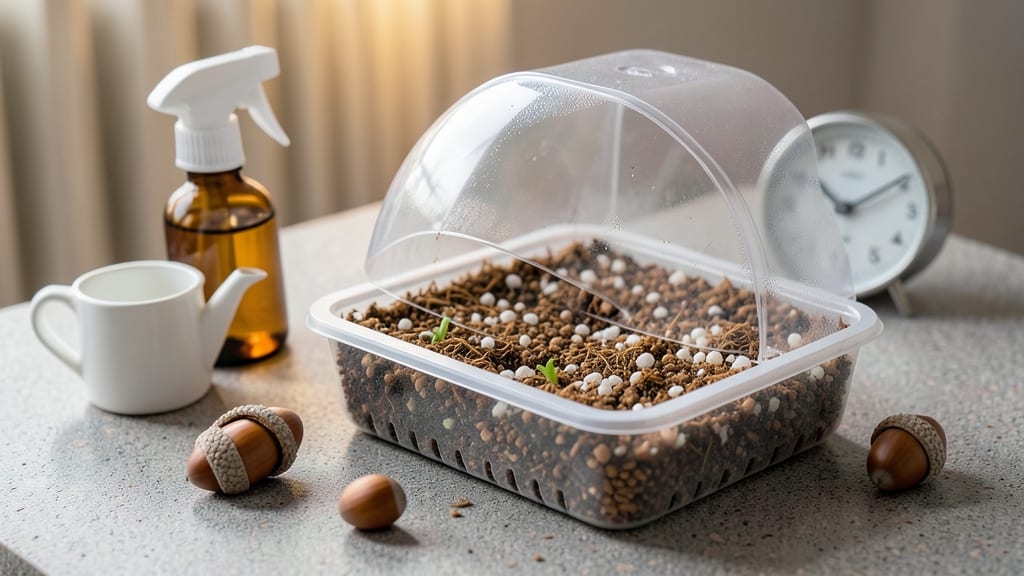
Germinating oak tree seeds feels like unlocking nature's patience—it takes time, but the payoff is worth every wait. ✨ The key lies in mimicking how acorns behave in the wild: cold stratification breaks their dormancy so you get those first green shoots instead of endless waiting.
I've struggled with this myself, but after three failed attempts, I finally cracked the code for reliable sprouts.
Start with fresh acorns—older ones lose viability fast. Soak them in water for 24 hours to soften the shell, then place them in a damp paper towel inside a sealed bag. Pop this in your fridge for 90-120 days, checking monthly for mold (toss anything fuzzy).
The cold mimics winter, tricking the seed into thinking spring has arrived. Most acorns will sprout within 4-8 weeks after stratification, but some stubborn ones take up to 3 months.
Once sprouted, plant them in a well-draining mix of peat moss and perlite, keeping the soil consistently moist but never soggy. Place the pot in bright, indirect light—no direct sun yet.
You'll see the first true leaves emerge in 2-4 weeks, and that's when the real magic begins: tiny oak seedlings ready to grow into mighty trees. The key is consistency—oaks hate being moved once they start growing.
Outdoor planting comes next, but only after the seedlings develop 3-4 sets of leaves and roots fill the pot. Transplant in early spring, giving them partial shade at first.
Patience is everything—oaks grow slowly, but with proper care, you're investing in a tree that could live for centuries. Here's where the real journey begins.
📚 In This Guide
- What you need
- Instructions
- Tips and common mistakes
- Wrapping up and next steps
What you need
- ● Fresh oak acorns: Collect mature, plump acorns (avoid shriveled or insect-damaged ones). Aim for 10–20 seeds for experimentation.
- ● Cold stratification setup: Moist potting mix: Peat moss, perlite, or coconut coir (sterilized). Use 1–2 cups per batch.
- ● Plastic storage bag or container: Zip-top or breathable mesh bag (8x10 inches or larger).
- ○ Optional: Vermiculite or sand (for better moisture retention).
- ● Refrigeration: A cool, dark fridge (34–40°F / 1–4°C) with humidity control.
- ● Germination tray or pot: 4–6 inch deep container with drainage holes (for post-stratification planting).
- ● Spray bottle: For gentle moisture adjustments (avoid soaking!).
- ● Label & marker: To track seed varieties and planting dates.
- ● Seed scarifier: A knife or sandpaper to lightly nick acorn shells (speeds up germination).
- ● Heating mat: Germination mat (70–75°F) for post-stratification warmth.
- ● Humidity dome: Clear plastic lid to retain moisture during early sprouting.
- ● Grow lights: LED or fluorescent (12–14 hours/day) if indoors.
Step-by-Step instructions for germinating oak tree seeds
Cold stratification is the secret to breaking oak seeds' tough dormancy—here's how to do it right.
🌱 Step 1: Collect and Prepare the Acorns
Gather fresh, plump acorns from the forest floor in late fall (October-November). Avoid any with cracks or holes—those won't sprout. Rinse them gently to remove dirt, then let them dry completely at room temperature for 3-5 days. This mimics natural winter conditions and prevents mold.
Here's the thing—oaks have a hard seed coat that blocks water. To soften it, place the acorns in a ziplock bag with a damp paper towel (not soaking wet). Seal it and leave it on your counter for 7-10 days. Check daily—if the towel feels damp but not dripping, you're good. This pre-treatment mimics spring rains and kickstarts germination.
❄️ Step 2: Cold Stratify for 60-90 Days
After the towel treatment, transfer the acorns to a sealed container filled with moistened sand or peat moss (keep it damp like a wrung-out sponge). Store this in your refrigerator's crisp drawer (or a cold basement) at 35-40°F for 60-90 days. This cold period mimics winter and breaks the seed's dormancy.
Don't skip this—oaks need cold stratification. If you rush it, you'll end up with weak, slow-growing seedlings or no sprouts at all. I mark my container with the start date so I don't forget. After 90 days max, move them to warmer conditions or they'll rot.
🌿 Step 3: Plant After Stratification
Fill small pots (3-4 inches deep) with well-draining potting mix (not garden soil). Plant each acorn 1 inch deep, leaving 2 inches of space between seeds. Water lightly until the soil feels damp 1 inch below the surface. Place the pots in a warm, bright spot (65-75°F) with indirect light—direct sun will dry them out.
Cover the pots with plastic wrap to retain humidity, but remove it daily for 10 minutes to prevent mold. You'll see first sprouts in 4-8 weeks—this is slower than many seeds, so patience is key. If nothing happens after 12 weeks, the seed may not have viable germination.
☀️ Step 4: Transplant Seedlings Outdoors
Once seedlings reach 4-6 inches tall with 3-4 true leaves, they're ready for their first outdoor move. Choose a partly sunny spot (young oaks tolerate shade better than full sun). Dig holes twice as wide as the root ball but only as deep as the pot—burying too deep stresses the roots.
Water deeply after planting, then mulch with 2 inches of organic mulch (like wood chips) to retain moisture. Young oaks are delicate—avoid transplanting during heatwaves or frost. In 2-3 years, you can move them to permanent locations, but they'll grow slowly at first.
⏰ Step 5: Long-Term Care for Young Trees
Keep the soil consistently moist (not soggy) for the first year, then gradually reduce watering as roots deepen. Oak seedlings need moderate water—overwatering causes root rot. After the first growing season, they'll tolerate drought better but still need deep watering every 2 weeks during dry spells.
Real talk: Oak trees are slow growers. Don't expect rapid results—it can take 10-15 years for them to reach maturity. But with this method, you'll get strong, disease-resistant seedlings that'll thrive for generations. The key is consistency: cold stratification, patience, and proper watering.
Tips & tricks for germinating oak tree seeds
Here's what nobody tells you about breaking oak seeds' stubborn dormancy—these tricks will give you the best chance at reliable sprouts.
Seed Selection Matters: Focus on acorns that are plump, heavy for their size, and free of cracks or insect holes. I've found that acorns from white oak varieties often germinate more reliably than red oak. Collect them in late fall (October-November) when they've had time to mature but haven't yet decomposed on the forest floor. Store them in a cool, dry place until you're ready to begin the stratification process. This initial selection makes all the difference in your success rate.
Moisture Management is Critical: During the 7-10 day damp towel treatment in Step 1, the key is maintaining that "wrung-out sponge" consistency—never let the towel become soggy, but don't let it dry out completely. I use a paper towel folded into a square and dampen it just enough that water drips out when squeezed, then unfold it. Place the acorns in a single layer on this towel inside the ziplock bag. Check daily and refresh the moisture if needed. This mimics natural spring rains that finally penetrate the hard seed coat.
Container Choice for Stratification: While the instructions mention sand or peat moss, I've had great success using a simple plastic storage container with a tight-fitting lid. The container should be about 2 inches deeper than your acorns. Poke drainage holes in the bottom first to prevent waterlogging. Fill with your chosen medium, moisten it thoroughly, then arrange the acorns on top before sealing. Label the container with the start date—this helps you track the 60-90 day period without guesswork. A clear container also lets you check moisture levels without opening it.
Temperature Troubleshooting: Your refrigerator's crisp drawer typically maintains the ideal 35-40°F range for stratification, but if you're using a basement, monitor the temperature with a small thermometer. Oak seeds are particularly sensitive to temperature fluctuations—consistent cold is what breaks their dormancy. If your basement gets too warm (above 50°F), move the container to a cooler spot or even a garage with good insulation. Remember, the goal is to mimic winter conditions precisely.
Pro Tips for Germinate Oak Tree Seeds
- Here's what nobody tells you about breaking oak seeds' stubborn dormancy—these tricks will give you the best chance at reliable sprouts.
- Seed Selection Matters: Focus on acorns that are plump, heavy for their size, and free of cracks or insect holes.
- Moisture Management is Critical: During the 7-10 day damp towel treatment in Step 1, the key is maintaining that "wrung-out sponge" consistency—never let the towel become soggy, but don't let it dry out completely.
Frequently asked questions
Got questions about germinating oak tree seeds? You’re not alone—this process can be tricky! Below are answers to the most common concerns, from timing to troubleshooting, so you can tackle oak seed germination with confidence.
How long does cold stratification take for oak seeds?
Cold stratification for oak seeds typically requires 3–6 months in a moist, chilled environment (like a refrigerator). White oaks (e.g., bur oak) often need the full 6 months, while red oaks (e.g., pin oak) may sprout faster with 90–120 days. Patience is key—don’t rush it!
Can I speed up germination without cold stratification?
Oak seeds prefer cold stratification, but you can try scarification (nick the seed coat) + warm, moist conditions (70–80°F) for 4–8 weeks. Success rates drop significantly, though. For best results, stick with stratification—it mimics nature’s way!
Why aren’t my oak seeds sprouting after stratification?
Common culprits: dried-out seeds, improper warmth (too cold/warm), or old seeds (oaks lose viability over 1–2 years). Double-check moisture (keep damp, not soggy) and warmth (70–80°F). If still stuck, try soaking in warm water for 24 hours before replanting.
How deep should I plant stratified oak seeds?
Plant seeds ½ inch deep in well-draining soil (a mix of peat/potting soil works). Use a small pot or seed tray—oaks hate transplant shock. Keep the soil consistently moist (not waterlogged) and place in bright, indirect light until sprouts appear (weeks to months!).
Can I collect and germinate oak seeds from my yard?
Yes! Gather acorns in fall (September–November) when they’re fresh but firm. Remove any wormy or cracked seeds. Store in a cool, dry place until stratification. Pro tip: Acorns from white oaks (round caps) germinate easier than red oaks (pointy caps).
Wrapping up and next steps
Germinating oak tree seeds with cold stratification is a rewarding journey that unlocks the potential of these majestic trees. Remember, patience and consistency are key—whether you’re layering seeds in moist sand, using a refrigerator, or leveraging outdoor winter conditions. 🌱
Now that you’re armed with the right techniques, take the next step: plant your sprouted acorns in well-draining soil and nurture them with care. Every little effort brings you closer to growing a future oak that could stand for centuries!