
Transplanting
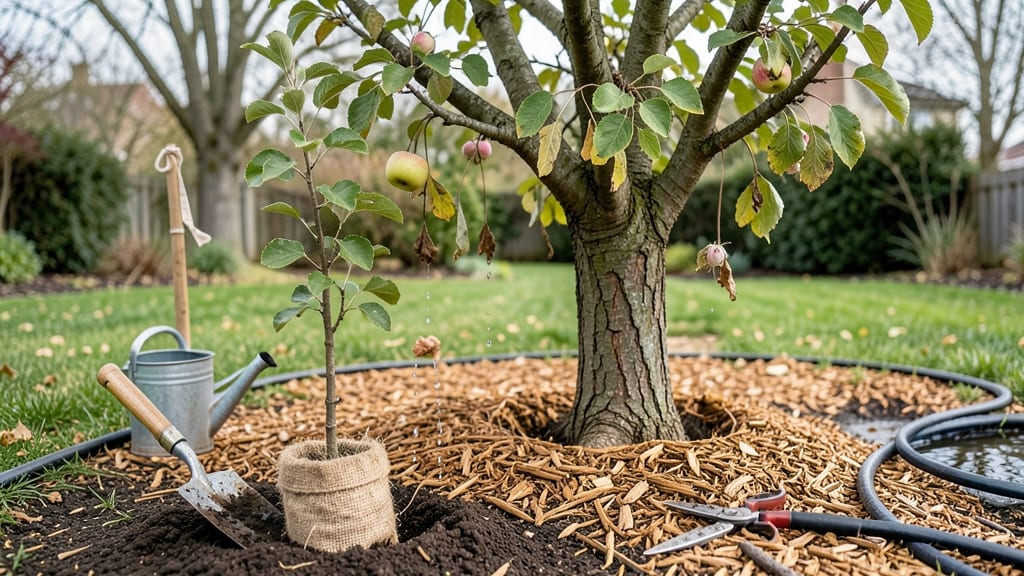
Apple tree transplant shock can turn a thriving orchard tree into a wilting mess overnight—but I’ve learned the exact recovery steps that bring them back to life. 🌳 The key isn’t just replanting; it’s understanding how roots handle stress and what your tree actually needs to bounce back stronger than before.
Most gardeners focus on the wrong things: pruning too much or watering on a schedule. The real secret is gentle root care—keeping soil moist but not soggy, shielding roots from sunburn, and avoiding heavy pruning until new growth appears.
I’ve seen trees that looked dead within weeks fully recover using these simple adjustments.
Within 4-6 weeks, you’ll notice fresh leaves pushing from the branches, and by next spring, your tree will be more resilient than before the move. The trick is patience and consistency—no shortcuts, just steady care that mirrors what the tree would get in its natural habitat.
This works for any apple variety, whether you’re moving a young sapling or an established tree. The same principles apply to other fruit trees too—once you master root recovery, you’ll never fear transplanting again.
Root Stress Behind Transplant Trauma
When you move an apple tree, its roots experience a kind of physiological shock—like a plant version of whiplash. This isn’t just about the physical act of digging; it’s a cascade of biological responses triggered by disrupted root zones, water imbalance, and sudden environmental changes.
Let’s break down the real culprits behind transplant shock in apple trees, so you can mitigate the damage before it starts.
Apple trees rely on a vast network of fine roots—called feeder roots—to absorb water and nutrients. When you uproot a tree, even with a root ball, these delicate roots get severed or compressed, leading to:
- Reduced water uptake: Damaged roots can’t absorb moisture efficiently, causing wilting even in moist soil. Think of it like cutting off a straw—water can’t reach the tree’s mouth.
- Nutrient starvation: Mycorrhizal fungi (beneficial soil partners) cling to feeder roots. When roots are torn away, the tree loses its natural nutrient pipeline.
- Root desiccation: Exposed roots dry out quickly, especially in wind or sun. This is why bare-root transplants need immediate replanting or hydration.
💡 Pro Tip: Always dig a wide, shallow root ball (2–3 times the tree’s trunk diameter) to minimize root loss. Use a transplant spade to score roots gently, not chop them.
An apple tree’s leaves keep transpiring (releasing water vapor) even after transplanting, but the roots can’t keep up. This creates a hydraulic mismatch, where:
- Wilting occurs: The tree’s vascular system struggles to pull water from damaged roots, causing leaves to droop—even if the soil is damp.
- Air pockets form: If roots aren’t properly backfilled with moist soil, air gaps trap roots, preventing water absorption (like a clogged hose).
- Osmotic shock: Sudden changes in soil salinity or pH can disrupt the tree’s ability to regulate water intake, leading to leaf scorch or root rot.
🌡️ Actionable Fix: Water deeply before transplanting to hydrate roots, then keep soil consistently moist (not soggy) for 4–6 weeks post-transplant. Use a root stimulator to boost water absorption.
Apple trees are sensitive to temperature swings and wind exposure after transplanting. Here’s how it backfires:
| Factor | How It Harms the Tree |
|---|---|
| 🌡️ Extreme heat | Increases transpiration rates, drying out roots faster than they can recover. Leaves may curl or yellow from heat stress. |
| 💨 Wind exposure | Accelerates water loss and can physically damage newly planted trees, especially if roots aren’t anchored. |
| ❄️ Cold snaps (if transplanted late) | Slows root regrowth and can cause freeze damage to new root tips, stalling recovery. |
✨ Smart Strategy: Transplant on a cool, overcast day to reduce stress. Use windbreaks (like burlap screens) for the first 2 weeks, and avoid heavy pruning—it increases water loss.
The soil around an apple tree’s roots is a living ecosystem of bacteria, fungi, and beneficial microbes. When you transplant, this balance gets thrown off:
- Loss of mycorrhizae: These fungi form symbiotic relationships with roots, aiding nutrient absorption. Disturbing them forces the tree to rebuild its microbial network from scratch.
- Soil pH/salinity shifts: If the new planting site has drastically different soil chemistry (e.g., clay vs. sandy), the tree’s root zone may reject the new environment.
- Pathogen invasion: Freshly disturbed roots are vulnerable to root rot or fungal infections if the new soil isn’t sterile or amended properly.
🔥 Soil Prep Hack: Amend the planting hole with compost and a mycorrhizal inoculant to jumpstart the root-soil relationship. Avoid fresh manure—it can burn roots.
Revive Your Tree: Step-by-Step Recovery
Transplant shock in apple trees doesn’t have to mean the end of your orchard dreams—with the right care, your tree can bounce back stronger than ever. The key is acting quickly and addressing the root causes with targeted solutions.
Below, we’ll break down practical fixes for the most common issues, plus prevention tips to keep future transplants thriving.
Cause: Rough handling, circling roots, or improper pruning during transplanting can sever or crush roots, disrupting water and nutrient uptake.
How to Solve It:
- 🔪 Prune damaged roots carefully – Use sterilized pruners to trim any blackened, mushy, or excessively long roots (beyond 6–12 inches). Focus on clean cuts at a 45-degree angle to prevent further stress.
- 💧 Hydrate the roots immediately – Soak the root ball in a bucket of water for 10–15 minutes before replanting to rehydrate damaged tissues. Add a rooting hormone (like mycorrhizal fungi or a commercial powder) to encourage regrowth.
- 🌿 Mulch heavily – Apply 3–4 inches of organic mulch (wood chips, straw) around the base (but not touching the trunk) to retain moisture and protect roots from temperature swings.
💡 Prevention Tip: Before digging, gently loosen the soil around the root ball with a spade to avoid tearing roots. If repotting, use a root pruning technique 6–12 months ahead to encourage a denser root system.
Cause: Transplant shock often stems from sudden shifts in moisture—either drought stress or waterlogged roots. Apple trees hate extremes!
How to Solve It:
- 💦 Deep watering schedule – Water slowly and deeply (1–2 inches per week) for the first 4–6 weeks, ensuring the soil is moist but not soggy. Use a soaker hose or drip irrigation to avoid surface runoff.
- ⚠️ Check for edema – If leaves appear puffy or translucent, your tree is overwatered. Let the top 2 inches of soil dry out slightly before watering again.
- 🌊 Improve drainage – If your soil is clay-heavy, amend it with compost or perlite to prevent compaction. For container-grown trees, ensure pots have drainage holes and elevate them slightly.
💡 Prevention Tip: Test your soil’s moisture level with a finger—if the top 1–2 inches are dry, it’s time to water. A moisture meter can also help avoid guesswork.
Cause: Moving a tree from shade to full sun (or vice versa) without acclimation can cause leaf scorch, wilting, or even sunburn. Temperature swings—especially hot days or cold nights—worsen stress.
How to Solve It:
- 🌿 Gradual sun exposure – If transplanting from shade, dapple the tree with shade cloth (30–50%) for the first 2–3 weeks, then slowly reduce coverage over 2 weeks.
- 🌡️ Protect from extremes – On hot days, mist leaves lightly in the early morning to reduce heat stress. For cold snaps, wrap the trunk with burlap and use frost blankets if temperatures drop below freezing.
- 🍃 Trim sun-exposed leaves – If leaves show brown patches or curling, prune the most affected ones to redirect energy to root recovery.
💡 Prevention Tip: Choose a transplant window when temperatures are mild (spring or early fall). Avoid moving trees during heatwaves or frost periods.
Cause: Transplanting depletes stored nutrients, and new roots struggle to absorb enough nitrogen, phosphorus, or potassium for recovery.
How to Solve It:
- 📊 Fertilize lightly but strategically –
- First 2 weeks: Use a balanced, slow-release fertilizer (10-10-10) at half strength to avoid burning roots.
- After 4 weeks: Switch to a phosphorus-heavy formula (5-10-5) to boost root growth.
- Organic option: Mix compost tea or worm castings into the soil for a gentle nutrient boost.
- 🍎 Avoid nitrogen overload – Too much nitrogen (like grass clippings) can delay root establishment. Stick to low-nitrogen fertilizers until new roots form.
💡 Prevention Tip: Before transplanting, side-dress the tree with compost or a mycorrhizal inoculant to jumpstart root colonization.
Cause: Stressed trees attract aphids, spider mites, or fungal infections (like powdery mildew), which further drain the tree’s energy.
How to Solve It:
- 🛡️ Inspect leaves daily – Look for yellowing, sticky residue (aphids), or white powder (mildew). Act fast!
- 🌿 Natural remedies first –
- Pests: Spray with neem oil or soapy water (1 tsp mild dish soap + 1 quart water).
- Fungi: Apply baking soda spray (1 tbsp baking soda + 1 quart water + a drop of oil) weekly.
- 🚫 Avoid harsh chemicals – Systemic pesticides can stress roots further. Opt for organic or targeted sprays instead.
💡 Prevention Tip: Keep your orchard clean—remove fallen leaves and debris where pests hide. Beneficial insects (like ladybugs) can also help control outbreaks naturally.
Once your tree shows signs of stabilizing (new leaves, firm stems), keep these habits to ensure strong, shock-free growth: ✅ Monitor growth – Measure trunk diameter monthly.
A healthy tree grows 0.2–0.4 inches per year. ✅ Prune strategically – Remove dead, crossing, or weak branches in late winter to reduce stress. ✅ Mulch annually – Refresh mulch in spring to maintain moisture and suppress weeds. ✅ Test soil every 2 years – Adjust pH (ideal: 6.0–7.0 for apple trees) with lime (to raise pH) or sulfur (to lower it).
🎯 Final Pro Tip: Patience is key! Apple trees can take 1–2 years to fully recover from transplant shock. Celebrate small wins—like new leaf growth or buds forming—and avoid over-tinkering. Your tree’s resilience will surprise you!
Frequently asked questions
How long does it take for an apple tree to recover from transplant shock?
Most apple trees show initial signs of recovery within 4-6 weeks, with new leaf growth appearing as roots begin establishing. Full recovery—where the tree regains normal vigor—typically takes 1-2 years, depending on the tree's age and care during recovery. Patience is key: focus on consistent moisture and minimal stress during this period.
Can I prune my apple tree immediately after transplanting?
No, avoid heavy pruning for at least 4-6 weeks after transplanting. Pruning removes leaves that help generate energy for root recovery. Instead, remove only dead or damaged branches and wait until new growth appears before doing any structural pruning. This helps the tree redirect energy to root establishment.
What's the best time of year to transplant an apple tree to minimize shock?
The ideal windows are late fall (after leaf drop) or early spring (before bud break), when trees are dormant. Avoid transplanting during heatwaves or frost periods. In mild climates, early fall can also work well. The goal is to give roots time to establish before the tree faces seasonal stress.
Why are my apple tree's leaves turning yellow after transplanting?
Yellowing leaves (chlorosis) often signals nutrient deficiency, poor drainage, or root stress. Check soil moisture—yellow leaves on the top can indicate overwatering or poor drainage, while yellowing on lower leaves may mean underwatering or nutrient issues. Test soil pH (ideal: 6.0-7.0) and consider a chelated iron supplement if needed.
Should I use root stimulator products on my transplanted apple tree?
Yes, they can help! Products containing mycorrhizal fungi or rooting hormones (like Seaweed Extract) promote root growth and reduce transplant stress. Apply them when replanting by mixing with soil or dipping roots before planting. Organic options like compost tea also work well. Just avoid synthetic chemicals that could harm beneficial microbes.