
Size
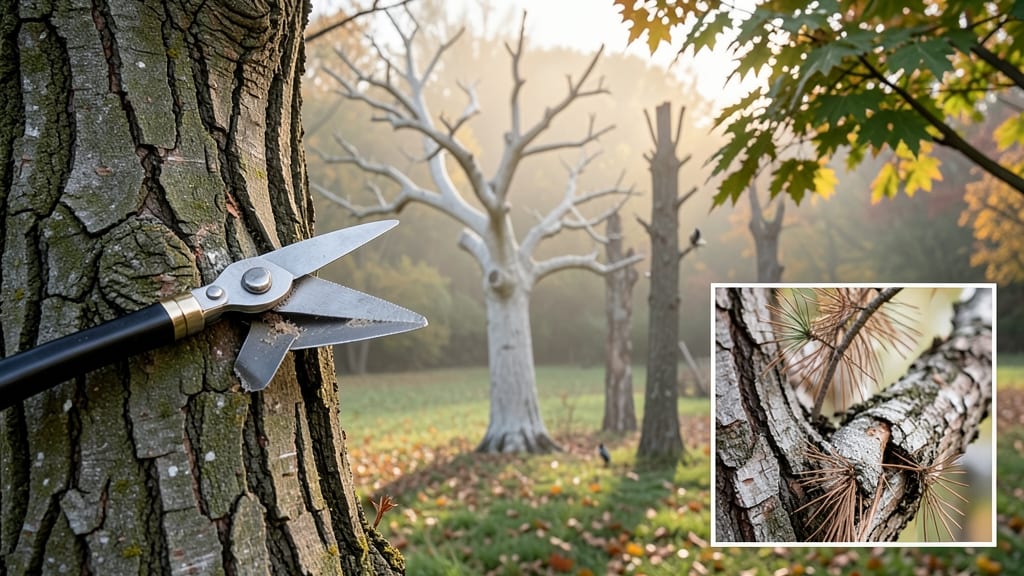
How can you tell when a tree is dead? If you can't find a single leaf or needle this summer, your tree might be gone. 🌳 I've stared at enough dying trees to know the difference between dormancy, distress, and true death—and the clues are often right in front of you, no ladder required.
The bark is your first clue: if it's cracked, peeling, or oozing dark sap, that's a red flag. Healthy bark stays firm and intact. Then check the branches—tap them with your knuckles.
A dead branch sounds hollow; living wood has a solid thud. And if you see mushrooms growing at the base, that's nature's way of saying "game over."
No leaves in spring? That's a major warning sign. Even deciduous trees should show fresh buds by early May. The scratch test works too: scrape a small patch of bark.
Green underneath means life; brown means the tree has given up. These signs add up to one conclusion—it's time to decide whether to cut your losses or try revival.
Safety first: never climb or lean on a tree you suspect is dead. Branches can snap without warning. If you're unsure, call an arborist—they'll confirm with tools and expertise.
Sometimes the answer is removal; other times, a little care can bring it back to life. Either way, you'll know for sure after checking these five signs.
Root Causes Of Tree Death
Trees don’t just "give up" on life—they die due to a mix of biological, environmental, and human-induced factors. Understanding these root causes helps you spot early warning signs and prevent irreversible damage. Here’s why trees lose their vitality, broken down into the most common culprits.
Fungi and pathogens are silent assassins of trees. These microscopic invaders disrupt the tree’s ability to transport water and nutrients, leading to decay and eventual death. Some of the most destructive offenders include:
- Heart Rot Fungi: Invades the tree’s core, weakening structural integrity. Fomes fomentarius (the "tinder fungus") is a classic example—it turns wood to mush over time, making branches brittle and prone to snapping.
- Dutch Elm Disease: Spread by bark beetles, this fungal infection clogs a tree’s vascular system, causing wilting even when soil moisture is adequate. Elm trees are especially vulnerable, but other species can fall prey to similar vascular diseases.
- Root Rot (Phytophthora spp.): Thrives in waterlogged soil, suffocating roots and cutting off nutrient uptake. Oak wilt and pine wilt nematodes also exploit weakened trees, turning them into hollow husks.
💡 Pro Tip: If you notice mushrooms growing at the base of a tree or oozing sap from cracks, it’s a red flag—fungi are already feasting on its insides.
Trees are resilient, but extreme or prolonged stress pushes them past their breaking point. Climate-related factors can accelerate death by disrupting photosynthesis, respiration, or water regulation.
| Stressor | How It Kills | Signs to Watch For |
|---|---|---|
| Drought | Dehydrates leaves, causing them to curl and drop. The tree’s roots shrink, and it can no longer sustain its canopy. | Bark splitting, premature leaf fall, and a "thirsty" appearance (leaves turning brown at the edges). |
| Frost or Freezing Temperatures | Ice crystals form in cells, rupturing them. Evergreens suffer most because they retain needles year-round. | Needles turning gray or brown, twigs dying back, and a "frost-bitten" look on foliage. |
| Extreme Heatwaves | Overheats leaves, causing protein denaturation. Roots may also bake in shallow, dry soil. | Scorched leaf edges, wilting despite moisture, and a "sunburnt" canopy. |
| Pollution (Ozone, Acid Rain) | Damages leaf stomata, reducing gas exchange. Weakens the tree’s immune system over time. | Stippling (tiny white/yellow spots), yellowing between leaf veins, and stunted growth. |
⚠️ Warning: Trees in urban areas often die faster due to a combo of pollution, compacted soil, and heat island effects. Mulching and proper watering can mitigate some damage.
Humans are the number-one cause of premature tree death—whether intentionally or not. Here’s how we accelerate the process:
- Root Compaction: Heavy foot traffic, construction, or parking on roots restricts oxygen flow, suffocating the tree. Compacted soil also prevents water absorption.
- Girdling: When roots or vines wrap around the trunk (or when humans install fences/lights too tightly), they cut into the phloem—the tree’s "food pipeline." This strangles the tree over months or years.
- Improper Pruning: Cutting too close to the trunk or removing too many branches at once disrupts the tree’s energy balance. Never top a tree—it invites disease and weakens the structure.
- Herbicide Drift or Over-Fertilization: Salt buildup from de-icing or lawn chemicals burns roots. Even "tree-safe" fertilizers can harm if overapplied.
🔨 Actionable Fix: If you suspect girdling, gently peel back mulch or bark near the base. Look for a "ridge" of living tissue—if it’s broken or missing, the tree is in danger.
Insects and borers don’t just nibble—they tunnel into the heartwood, creating pathways for fungi and bacteria. Some pests are so aggressive they can kill a tree in a single season.
- Emerald Ash Borer: Larvae carve S-shaped tunnels under the bark, disrupting nutrient flow. Infested ash trees often sprout epicormic shoots (sudden vertical branches) as a last-ditch effort to survive.
- Gypsy Moth Caterpillars: Defoliate entire trees in weeks. Without leaves, the tree can’t photosynthesize and starves to death.
- Squirrel and Rabbit Damage: Gnawing on bark strips away protective layers, exposing the tree to disease. Young trees are especially vulnerable.
- Termites: While they prefer softwood, they’ll attack stressed trees, hollowing out trunks and turning them into brittle shells.
🐜 Tell-Tale Sign: Look for frass (insect poop) at the base of the tree or sawdust-like shavings near the trunk. If you see woodpecker holes, they’re likely pecking at pests—but the tree may already be doomed.
Most tree deaths are preventable with early intervention. Now that you know the why, you can spot the how before it’s too late.
Revive or Remove Dead Trees
Now that you’ve identified the signs of a dying or dead tree, it’s time to take action—whether that means giving it a fighting chance or safely removing it to protect your property.
Below, we’ll break down practical solutions based on the most common causes of tree death, along with prevention tips to keep your trees healthy long-term.
If your tree is still clinging to life—maybe it’s lost some leaves but hasn’t fully succumbed—try these targeted fixes before assuming the worst.
💧 Cause: Root Rot or Poor Watering
Fix It: - 🔥 Assess the soil: Dig a small hole (6–12 inches deep) near the base to check for soggy, foul-smelling soil (root rot) or bone-dry conditions.
If the soil is compacted or waterlogged, drainage is the issue. - 👨🍳 Improve drainage: Amend the soil with compost or organic matter (like peat moss) to loosen heavy clay.
For severe cases, consider French drains or swales (shallow trenches) to redirect water away from the roots. - 🥘 Adjust watering habits: - Overwatered? Let the soil dry between waterings—stick your finger 2 inches deep; if it’s damp, wait. - Underwatered? Water deeply 1–2 times per week (depending on climate) during dry spells.
Use a soaker hose to deliver moisture slowly to the roots. - ⏰ Monitor progress: Healthy new growth (leaves, buds) in 4–8 weeks is a good sign. If nothing changes, the tree may be beyond saving.
💡 Pro Tip: Mulch 3–4 inches deep (but keep it 6 inches away from the trunk) to retain moisture and regulate soil temperature.
🍂 Cause: Pest or Disease Infestation
Fix It: - 🔪 Prune infected/damaged areas: Use sterilized pruners to remove dead branches, cankers, or sawdust-like frass (sign of borers).
Cut 6–12 inches below the damage to ensure you’ve removed the infestation. - 🌡️ Apply targeted treatments: - Fungal diseases (e.g., anthracnose, powdery mildew): Spray with copper fungicide or neem oil (follow label instructions).
Remove fallen leaves to prevent reinfection. - Boring insects (e.g., emerald ash borer, bark beetles): Use systemic insecticides (like imidacloprid) or invite natural predators (birds, ladybugs) with diverse landscaping. - 🎯 Quarantine if needed: If the tree is in a high-risk area (e.g., ash trees in regions with emerald ash borer), consult a certified arborist for professional treatment.
✨ Prevention Tip: Inspect trees twice a year (spring and fall) for early signs of pests or disease. Healthy trees are far less susceptible to infestations!
⚡ Cause: Environmental Stress (Drought, Storm Damage, or Soil Issues) Fix It:
- 🌡️ Mitigate stress factors:
- Drought: Water deeply once a week (or more in extreme heat) and mulch heavily to retain moisture.
- Storm damage: Remove hanging or broken branches with a clean cut (use a bypass pruner for small limbs, a chain saw for larger ones).
Seal wounds with pruning sealant (optional for large cuts). - Soil nutrient deficiency: Conduct a soil test (available at extension offices) and amend with slow-release fertilizer (like 10-10-10) if needed. - 🏡 Provide temporary support: If the tree is leaning dangerously, install tree stakes and cables (avoid girdling the trunk) to stabilize it while it recovers.
💡 Pro Tip: Mature trees (10+ years old) are more resilient—focus on young trees (under 5 years) for extra care during stress periods.
If your tree is fully dead (no green leaves, hollow trunk, or extensive decay), removal is the safest and most practical solution. Here’s how to handle it:
🔥 Step-by-Step Removal Process
- 👨🍳 Assess the risk: Is the tree leaning, cracked, or near structures? If yes, hire a professional arborist—dead trees are heavy and unpredictable.
- 🔪 Plan the cut: - Small trees (<30 ft): Use a chain saw and ropes to guide it down. - Large trees: Call an arborist—they’ll use cranes or rigging for safe removal.
- 🥘 Remove the stump (optional): - Chemical stump remover: Drill holes and pour stump killer (potassium nitrate), then cover with soil.
Regrowth takes weeks to months. - Manual removal: Rent a stump grinder ($100–$200/day) for a clean, fast solution. - Natural decay: Leave it—over time, it’ll break down, but avoid planting near it (fungal risks).
💡 Post-Removal Care
- 🌱 Replace wisely: If the tree was shade-providing or ornamental, choose a native, disease-resistant species (e.g., oak, maple, or crepe myrtle).
- 🏡 Check for hazards: Remove the tree at least 10 feet away from your home or power lines to prevent future risks.
Keep your trees thriving with these simple, proactive steps:
| Prevention Strategy | How to Do It | Best Time to Act |
|---|---|---|
| 🌱 Proper planting | Dig a hole twice as wide as the root ball; avoid planting too deep. | Fall or early spring |
| 💧 Consistent watering | Deep water once a week (not daily). Use a rain gauge to track moisture. | Spring–fall (drought-prone areas) |
| 🍄 Mulch correctly | Apply 2–4 inches of mulch; keep it 6 inches from the trunk. | Spring (after planting) |
| 🔍 Regular inspections | Check for cracks, holes, or unusual growth every 6 months. | Spring & fall |
| 🌡️ Prune strategically | Remove dead, crossing, or weak branches in late winter/early spring. | Late winter (dormant season) |
| 🚫 Avoid soil compaction | Use permeable pavers or grass alternatives near tree roots. | During landscaping projects |
Final Thought: A little early intervention can save your tree—and your sanity! Whether you’re reviving a struggling specimen or removing a hazard, acting quickly ensures your yard stays safe, beautiful, and tree-friendly. 🌳💚
Frequently asked questions about identifying dead trees
Why do some trees lose leaves in winter but are still alive?
Deciduous trees naturally shed leaves in autumn as part of their dormancy cycle. A healthy tree will regrow fresh foliage in spring—check for buds forming along branches. If no buds appear by early May or the bark feels soft under the scratch test, the tree is likely dead.
Can a tree be saved if it's completely leafless in summer?
Possibly, but it depends on the species and cause. Evergreens should never be bare—if they are, they're likely dead. For deciduous trees, test for moisture by scraping bark (green underneath = alive) and check for new growth in spring. If the tree shows no signs of recovery after 2-3 years of leaflessness, removal may be necessary.
What should I do if I find mushrooms growing at the base of a tree?
Mushrooms indicate advanced decay—this is a clear sign the tree is dead or dying. These fungi thrive on dead wood, breaking it down further. If the tree is near structures or poses a safety risk, contact an arborist immediately for professional removal. Never attempt to remove large dead trees yourself.
How can I test a tree's health without damaging it?
Try the tap test: knock on branches with your knuckles. Living wood produces a solid sound, while dead branches create a hollow echo. For bark, use the scratch test—scrape a small area. Green beneath means the tree is alive; brown indicates death. Avoid testing during extreme temperatures when results may be misleading.
Is it safe to plant new trees near a recently removed dead tree?
Not immediately. Dead trees often leave behind fungal spores and decaying roots that can harm new plantings. Wait at least 6-12 months and remove all remaining stumps or roots. Plant new trees 10-15 feet away from the original location to avoid contamination.