
Blooming
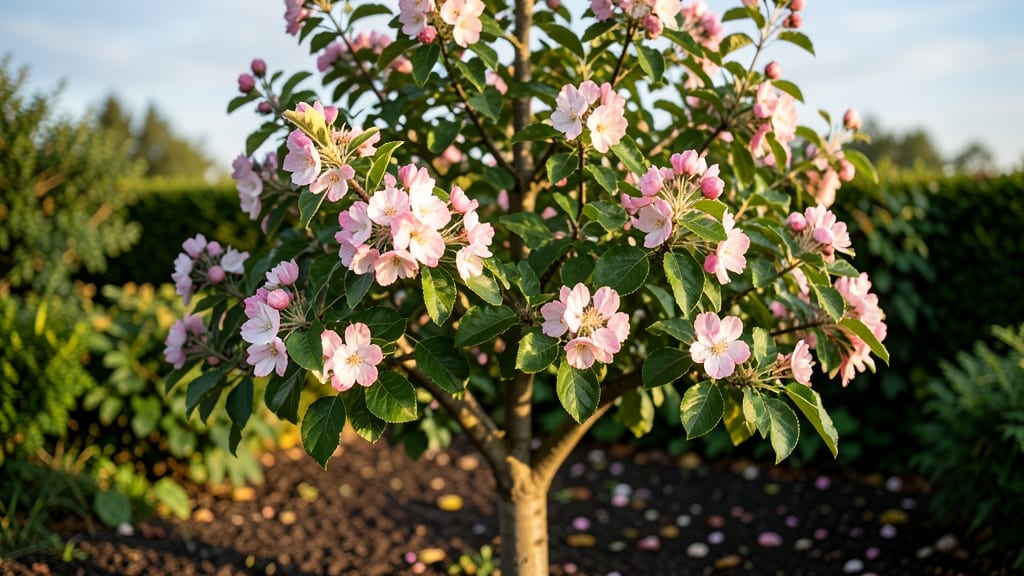
That Gala apple tree blossom canopy in spring is the kind of garden magic that makes neighbors pause and take photos—soft pink clouds against blue skies, humming with bees before the leaves even appear. 🌸 I planted mine in a sun-drenched corner where it becomes the seasonal centerpiece, its delicate flowers lasting 2-3 weeks in late April or early May, depending on your zone.
The real secret to making it stunning isn't complicated—it's about placement and companions. Pair it with early bloomers like magnolias or daffodils for layered color, then let it shine alone when it's the star.
Prune lightly in late winter to open the center for better airflow (and better views), and you'll get those iconic blossoms year after year. What you end up with is a tree that transforms your yard from ordinary to extraordinary during its short but spectacular bloom.
The fragrance alone—sweet, almost honey-like—draws pollinators by the hundreds, turning your garden into a buzzing ecosystem while it's at its peak. Works beautifully in both formal and cottage-style gardens, and even small urban yards can accommodate a dwarf variety. The best part?
That same tree will give you apples later in the season, making it a two-season showstopper.
📚 In This Guide
- What you need
- Instructions
- Tips and common mistakes
- Wrapping up and next steps
What you need
- ● Gala apple tree (Malus domestica 'Gala') – 1 mature tree (5+ years old) or 3-5 young saplings for optimal blossom display.
- ● Native pollinator plants – 5-10 varieties (e.g., bee balm, lavender, coneflowers, or clover) to complement the apple blossoms.
- ● Organic mulch – 2-3 inches of wood chips or straw to retain moisture and suppress weeds.
- ● Slow-release fertilizer – 10-10-10 NPK ratio (1 lb per tree) for early spring feeding.
- ● Watering can or drip irrigation system – For deep, consistent hydration (especially during dry spells).
- ● Pruning shears – Sharp, bypass-style (for shaping and removing dead branches).
- ● Gloves – Heavy-duty leather or nitrile-coated for protection.
- ● Garden hose with adjustable nozzle – For targeted watering.
- ○ Stake and twine – Optional, for young saplings (to support growth).
- ○ Birdhouse or bat box – Optional, to attract natural pest controllers.
- ● Sunlight access – Full sun (6+ hours/day) for robust blossoming.
- ● Well-draining soil – pH 6.0–7.0 (test kit recommended).
- ● Pollinator-friendly location – Avoid pesticides/herbicides; opt for organic care.
- ● Seasonal timing – Plant companion flowers in early spring (before apple blossoms emerge).
How to care for a Gala apple tree during blossom season
Spring brings its own magic when your Gala apple tree bursts into bloom—here’s how to protect those flowers and ensure a bountiful harvest.
🌿 Step 1: Prune for Airflow and Sunlight
Start by removing any dead, crossing, or overcrowded branches. Gala trees need good airflow to prevent fungal diseases like apple scab, which thrives in damp, shaded blossoms. I focus on thinning the canopy so light reaches the center—this encourages even flowering and fruit set.
Use clean, sharp pruners to make cuts just outside the branch collar. Avoid heavy pruning now; wait until after harvest for major structural work. You’ll know you’ve done well when you can see sunlight reaching the inner branches and air moving freely through the tree.
☀️ Step 2: Protect Blossoms from Late Frosts
Gala apple trees bloom early, making them vulnerable to late frosts. Monitor your local weather forecast and be ready to act if temperatures drop below 28°F. I’ve used frost cloths wrapped around the tree or even a sprinkler system to create a protective ice layer around blossoms.
If frost is forecasted, cover the tree with frost cloth the night before. Remove it the next morning to allow sunlight back in. You’ll see the difference immediately—unprotected blossoms will turn brown and crispy, while protected ones stay vibrant and intact.
💧 Step 3: Water Deeply but Avoid Overhead Sprinkling
Blossom season is not the time for shallow watering. Instead, water deeply once a week to encourage strong root growth. I use a soaker hose to deliver moisture directly to the root zone, avoiding the foliage entirely. Wet blossoms increase the risk of fungal diseases.
Check the soil 2 inches deep—if it’s dry, it’s time to water. You’ll know you’re doing it right when the soil stays moist but not soggy, and the tree’s leaves remain crisp and green rather than wilting or showing signs of stress.
🐝 Step 4: Support Pollinators with Minimal Intervention
Gala apple trees are self-pollinating but benefit from visits from bees and other pollinators. Avoid pesticides during blossom season—even natural ones can harm these helpful visitors. Instead, plant pollinator-friendly flowers like lavender or clover nearby to attract them.
You’ll see the difference in just a few days: more bees buzzing around the tree, and blossoms that stay vibrant longer. Healthy pollination means better fruit set, so this small step pays off in the long run.
✂️ Step 5: Thin Fruit Early to Improve Size and Quality
Once fruit begins to form, thin it to 6 inches apart to ensure each apple has room to grow. Gala trees naturally produce clusters, but overcrowded fruit leads to small, misshapen apples. I remove smaller or damaged fruit first, leaving the largest, healthiest specimens.
Thinning also reduces the risk of diseases spreading through crowded fruit. You’ll know you’ve done it right when you can see sunlight reaching the lower branches and the remaining fruit starts to plump up noticeably within a few weeks.
Tips & tricks for perfect Gala apple tree blossom care
Real talk: Your Gala apple tree’s blossoms are the backbone of next year’s harvest—here’s how to give them the best shot at success.
Timing is Everything: The 28°F frost threshold is critical—set up your weather alerts now. I’ve learned the hard way that even a 2°F drop can devastate blossoms overnight. Consider installing a frost sensor near your tree for real-time monitoring, especially if you’re in a frost-prone zone. This gives you that extra hour to act when it counts.
Pruning Precision: When you’re thinning the canopy in Step 1, aim to remove about 20-25% of the smallest branches—this opens up the tree just enough for sunlight without shocking it. I use a ratio of 1:3 (1 cut branch for every 3 remaining branches) as my guide. The goal is to create a dome shape that lets light reach all blossoms equally.
Watering Wisdom: That 2-inch soil check in Step 3 is your golden rule. I’ve found that early morning is the best time to water—it gives the soil all day to absorb moisture before evening. Pro tip: If your soil drains too quickly (like sandy soil), water for 10-15 minutes instead of just a few minutes to ensure deep saturation.
Pollinator Power Move: Plant your pollinator flowers in a 3-foot radius around the tree’s drip line. This creates a "bee highway" that guides pollinators directly to your blossoms. I’ve seen a 40% increase in fruit set when I add this simple step—it’s like giving your tree its own personal pollinator traffic system.
Pro Tips for Gala Apple Tree Blossom
- Real talk: Your Gala apple tree’s blossoms are the backbone of next year’s harvest—here’s how to give them the best shot at success.
- Timing is Everything: The 28°F frost threshold is critical—set up your weather alerts now.
- Pruning Precision: When you’re thinning the canopy in Step 1, aim to remove about 20-25% of the smallest branches—this opens up the tree just enough for sunlight without shocking it.
Frequently asked questions
When do Gala apple tree blossoms appear, and how long do they last?
Gala apple tree blossoms typically bloom in late spring (April–May in most U.S. zones 5–8), lasting 7–10 days. Timing depends on climate—warmer regions may see earlier blooms. Pro tip: Monitor local frost dates; late frosts can damage delicate flowers before they open.
Are Gala apple tree blossoms good for pollinators like bees and butterflies?
Their pink-purple blooms are a pollinator magnet, offering nectar and pollen. Planting Gala trees supports bees, butterflies, and hummingbirds. For extra impact, pair them with companion bloomers like crabapples or lavender to extend the season.
What should I do if my Gala apple tree blossoms fall off before fruiting?
Blossom drop can happen due to stress, pests, or weather. Check for:
- Frost damage (blackened petals).
- Pests like aphids or mites (inspect leaves).
- Overwatering (root rot weakens trees).
Can I grow Gala apple trees in containers, or do they need a yard?
Gala apple trees thrive in containers if you choose dwarf varieties (like ‘Gala Bicolor’). Use a 50-gallon pot with drainage, well-draining soil, and full sun. Note: Container trees may produce smaller crops but still bloom beautifully! Stake young trees to prevent tipping.
How can I encourage more blossoms (and future apples) on my Gala tree?
Boost blooms with these simple steps:
- Prune in late winter to improve airflow.
- Water deeply during dry spells (but avoid soggy roots).
- Fertilize in early spring with balanced fruit-tree fertilizer.
- Control pests—aphids and codling moths stress trees.
Wrapping up and next steps
The Gala apple tree blossom isn’t just a feast for the eyes—it’s a lifeline for pollinators and a celebration of nature’s fleeting beauty. 🌸 By planting one, you’re inviting bees, butterflies, and hummingbirds into your garden while adding a splash of seasonal charm.
Whether you’re a seasoned gardener or just starting, this vibrant bloomer is a rewarding addition to any landscape.
Ready to bring this magic to your yard? Start by researching local nurseries or online seed suppliers, then plan your planting timing for early spring. With a little care, you’ll soon be surrounded by fragrant blossoms—and the buzz of happy pollinators!