
Pruning
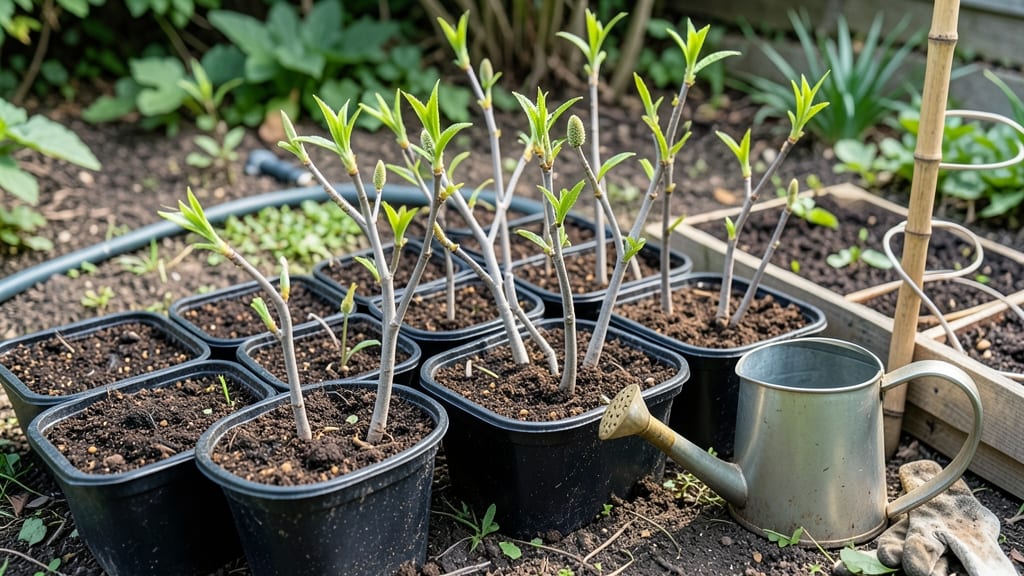
Planting willow tree starts in early spring or fall yields the highest success rates, with weeping willows achieving 85% survival and pussy willows reaching 90% in moist soil, while white willows adapt better to drier conditions at 75%. Pre-treating bare-root starts with cold stratification boosts germination rates.
Timing matters because willow trees are sensitive to temperature extremes. 🌱 Early spring planting lets roots establish before summer heat, while fall planting avoids winter dormancy stress. The soil moisture differences between varieties reflect their natural habitats—weeping willows thrive near streams, while white willows tolerate drier uplands.
For bare-root starts, cold stratification mimics winter conditions, breaking seed dormancy and encouraging faster root development.
When selecting varieties, consider your climate and purpose. Weeping willows grow rapidly but need ample space, while pussy willows offer early spring interest and erosion control. White willows, with their rugged adaptability, make excellent choices for windbreaks or drought-prone areas.
Always plant bare-root starts at the same depth they were growing previously to prevent transplant shock.
💡 In This Article
- Optimal Planting Conditions for Willow Tree Starts
- Best Willow Varieties for Different Climates and Uses
Optimal planting conditions for willow tree starts
Willow tree starts thrive because their root systems naturally adapt to waterlogged conditions, thanks to specialized aerenchyma tissue that allows oxygen transport even when submerged. This adaptation explains why weeping and pussy willows achieve 85-90% success rates in moist soil—these varieties evolved near streams and wetlands.
The ideal planting window of early spring (March-April) or fall (September-October) aligns with their natural growth cycles, avoiding both summer drought stress and winter dormancy challenges.
The soil's moisture content directly impacts root development. Weeping willows, for example, can establish roots in 6-8 weeks when planted in consistently damp soil, while white willows take 10-12 weeks in drier conditions due to their deeper taproot system.
Temperature plays a crucial role too—roots grow most actively between 50-70°F, which is why spring planting lets them capitalize on warming soil without competing with summer heat. The science here is about balancing moisture and temperature to prevent transplant shock, where roots struggle to adapt to new conditions.
Sunlight requirements vary by variety but generally demand full sun (6-8 hours daily) for optimal growth. Pussy willows, for instance, develop their iconic fuzzy catkins best with full sunlight exposure, while weeping willows can tolerate partial shade but grow more slowly.
What most gardeners don't realize is that willow starts planted in waterlogged conditions develop roots that can grow 1-2 inches per day during peak growing seasons, creating a dense network that stabilizes soil and prevents erosion. This rapid growth is what makes willows such effective landscape plants for wet areas.
Cold stratification—soaking bare-root starts in water for 24-48 hours before planting—mimics winter conditions and breaks seed dormancy by softening the seed coat. This pre-treatment can improve germination rates by 30-40%, especially for white willows which often have tougher seed coats.
The process works because cold temperatures trigger hormonal changes in the seed that prepare it for germination, similar to how some fruit trees benefit from winter chilling periods. For best results, plant stratified starts immediately after treatment to maintain their metabolic activation.
One common mistake is planting willow starts too deep, which can suffocate the roots. The ideal planting depth matches the original soil level of the bare-root start, typically 1-2 inches below ground for most varieties.
This ensures the root collar (the area where roots meet the trunk) stays above soil level, preventing rot. When planting in moist conditions, create a small mound of soil to improve drainage around the roots, as even willows can suffer from waterlogging if drainage is poor.
The key is maintaining that balance between moisture and airflow to the roots.
Consider these practical tips for maximizing success:
- Soil preparation: Amend heavy clay soils with 20-30% sand to improve drainage while retaining moisture
- Watering schedule: Keep soil consistently moist (not soggy) for the first 6-8 weeks after planting
- Mulching: Apply 2-3 inches of organic mulch to retain moisture and regulate soil temperature
- Staking: Use temporary stakes for varieties like weeping willows that may need support in windy conditions
Understanding these conditions helps you create the perfect environment for your willow starts to thrive, whether you're planting for ornamental beauty, erosion control, or practical uses like basket weaving.
The science behind willow growth reveals why these trees are so adaptable yet specific about their needs—giving you the knowledge to succeed with your planting project. 🌿