
Companion Plants
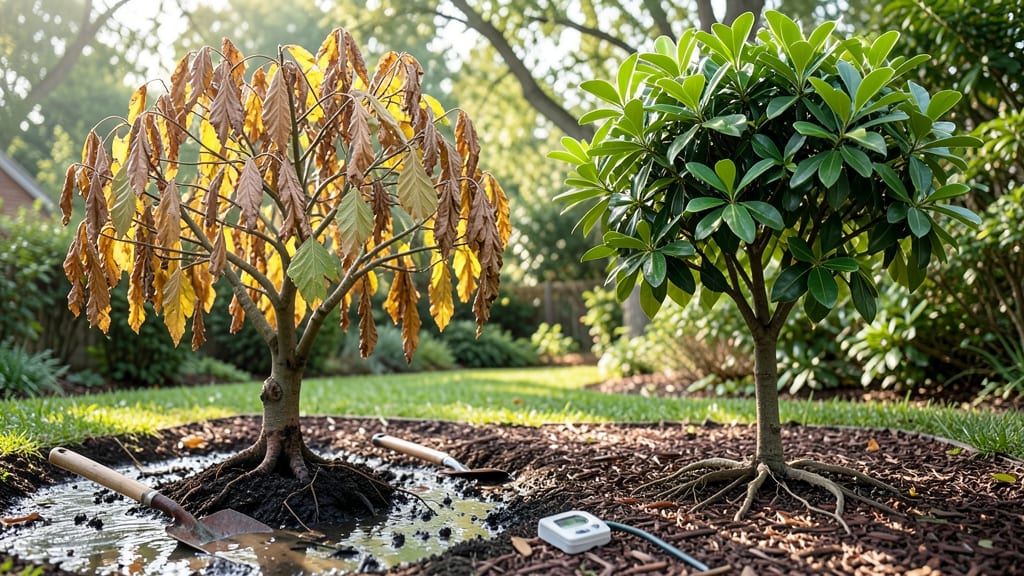
An overwatered tree might recover if you catch it early, but once root rot sets in, it often becomes fatal. Cut off all water immediately, improve soil drainage, and trim damaged roots to give your tree a fighting chance.
Overwatering creates a suffocating environment for roots, starving them of oxygen and inviting fungal infections that rot the wood from the inside out. 🌱 The longer you wait to act, the worse the damage becomes—some trees like willows or poplars can handle brief soggy spells, but others, such as oaks or maples, are far more sensitive.
What saves most trees isn't just stopping water, but also loosening compacted soil and mixing in organic matter to restore airflow.
Think of it like treating a burn: immediate action makes all the difference. If the bark feels soft or mushy when you probe with a clean knife, the rot has likely spread too far.
But if you catch it early—within a few days of overwatering—you can often nurse the tree back to health with proper care and patience.
💡 In This Article
- How Overwatering Damages Tree Roots and Trunk
- Step-by-Step Recovery Plan for Overwatered Trees
How overwatering damages tree roots and trunk
Overwatering creates a silent killer for trees by triggering a two-pronged attack: oxygen deprivation and fungal invasion. When soil stays saturated for more than 48 hours, roots suffocate because water fills the air pockets they need for respiration.
This forces roots to switch to anaerobic metabolism, producing toxic ethanol—similar to how your muscles feel after intense exercise without oxygen. 🌱 Meanwhile, excess moisture creates the perfect breeding ground for pathogens like Phytophthora and Pythium, which feast on root tissues and spread through microscopic water films.
The damage escalates when these pathogens reach the trunk. Healthy tree bark has a protective layer called the rhytidome, but prolonged moisture weakens it, allowing pathogens to penetrate. You'll often see dark, water-soaked streaks under the bark—this is the fungus consuming the xylem (the tree's water transport system).
Some species, like willows or bald cypress, tolerate brief waterlogging better due to specialized root adaptations called aerenchyma, but most trees lack this defense. 🌳 A 1-inch diameter root can rot completely in just 7-10 days under ideal fungal conditions.
What makes this especially dangerous is how silently it progresses. The first visible signs—yellowing leaves or wilting branches—appear only after 30-50% of the root system has already been compromised. By then, the tree has lost its ability to absorb water and nutrients efficiently, even if you stop overwatering.
The trunk may develop cankers (sunken, discolored areas) where the bark has died back, making the tree structurally unstable. 🌳 This is why species like oaks or maples show dramatic decline within weeks of chronic overwatering, while tougher natives like hickories or black walnuts may hold on longer.
Soil chemistry plays a hidden role too. Overwatered soil becomes anaerobic, causing essential nutrients like nitrogen and phosphorus to leach away or transform into unusable forms. The pH can drop below 5.0, creating acidic conditions that further stress roots.
This nutrient starvation accelerates the tree's decline, even if the physical damage from rot isn't yet visible. 🌱 The combination of these factors explains why some trees appear "fine" for months after overwatering—until one day, they simply collapse from internal rot.
Here's what's happening at the cellular level: Fungal hyphae (thread-like structures) penetrate root cells, breaking down their walls and releasing enzymes that turn complex carbohydrates into simple sugars the fungus absorbs.
Meanwhile, the tree's natural defenses—like phenolic compounds—become overwhelmed, leaving roots defenseless. 🌱 This process mirrors how athletes develop "overtraining syndrome" when their bodies can't recover between stress cycles. For trees, there's no recovery period—they're either adapting or dying.