
Companion Plants
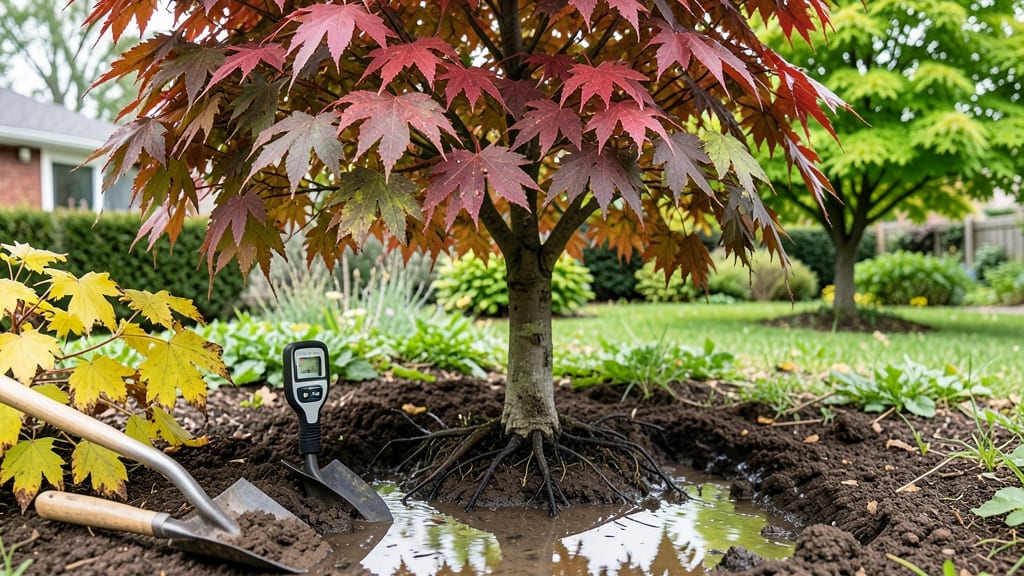
An overwatered maple tree looks like it’s drowning in its own soil—yellowing leaves, soggy roots, and a drooping canopy that won’t bounce back. 🌳 I’ve seen it happen after weeks of heavy rain or when well-meaning gardeners keep watering even when the ground stays soaked.
The first sign? Leaves that turn yellow or brown at the edges, then curl inward like they’re trying to hide from the excess moisture.
Digging just an inch below the surface usually reveals the problem: soil that stays clumpy and dark, not crumbly and brown. Roots might look grayish or mushy instead of firm and white, and a foul smell can mean fungal growth has taken hold.
The tree’s branches may sag, and new growth often appears weak or stunted—like it’s struggling to breathe underwater.
Fixing it starts with cutting back on water until the soil dries out, then improving drainage with organic matter like compost or sand. Aerating compacted soil helps roots access oxygen, and pruning dead branches gives the tree a fighting chance.
Within weeks, you’ll see healthier leaves and a stronger structure if the damage isn’t too severe.
Prevention is easier than cleanup: water only when the top 2-3 inches of soil feel dry, and mulch to keep moisture balanced. Maple trees hate soggy feet—once you spot the signs, act fast to save your tree before the roots rot for good.
Root Causes Of Overwatering
Overwatering your maple tree isn’t just about giving it too much water—it’s often a mix of environmental, soil, and human factors that create the perfect storm for root stress.
Understanding these causes helps you fix the problem before it’s too late. Let’s break down the science behind why your maple tree might be drowning in its own moisture.
Maple trees thrive in well-draining soil, but if your garden has clay-heavy, compacted, or poorly amended soil, water pools around the roots instead of draining away. Here’s why this happens:
- Clay Soil: Tiny particles pack tightly, blocking water flow. Even after rain or watering, excess moisture lingers, suffocating roots. - Lack of Organic Matter: Soil without compost, mulch, or sand retains water like a sponge.
Roots can’t breathe, leading to anaerobic conditions (low oxygen), which triggers rot. - Low Elevation or Flat Terrain: Water naturally collects in depressions, creating a "bathtub" effect for your tree’s roots.
💡 Pro Tip: Test your soil’s drainage by digging a 12-inch hole, filling it with water, and timing how long it takes to drain. If it takes more than 6 hours, your soil is too dense.
Even well-meaning gardeners can overdo it. Maple trees are drought-tolerant once established (after 2–3 years), but frequent shallow watering keeps the topsoil soggy while deeper roots stay dry. Common mistakes include:
- Watering on a Schedule: Assuming your tree needs water every few days, regardless of weather. Check soil moisture first—stick your finger 2–3 inches deep.
If it’s damp, wait. - Using Sprinklers or Hose Streams: These saturate the surface but fail to penetrate deeply, encouraging shallow root growth. - Ignoring Rainfall: Watering after a heavy rain doubles the moisture, drowning roots already struggling to dry out.
⏰ Actionable Fix: Water deeply but infrequently—aim for 1–1.5 inches per week (including rain) and let the top 3 inches of soil dry between waterings.
Sometimes, Mother Nature herself is the culprit. Heavy rainfall, poor site selection, or even urban heat islands can trap moisture around your tree’s roots.
- Excessive Rainfall: Prolonged downpours (especially in spring or fall) can overwhelm even healthy soil.
Maple trees in low-lying areas or near gutters are at higher risk. - Impermeable Surfaces: Pavement, concrete, or thick mulch layers act like a tarp, preventing water evaporation and trapping humidity near the roots. - High Humidity + Poor Airflow: In humid climates, water evaporates slowly, keeping the soil damp longer. Thick canopies or surrounding vegetation can also block airflow, increasing fungal risks.
🔥 Quick Solution: Improve airflow by thinning dense shrubs around the base and ensuring mulch is 2–4 inches thick (never piled against the trunk).
If your maple tree’s roots are constricted, girdled, or damaged, they can’t absorb water efficiently—and excess moisture becomes toxic. Causes include:
- Transplant Shock: Newly planted maples with circumscribed roots (roots growing in a circle) struggle to spread, leading to waterlogging in small root zones.
- Construction or Soil Compaction: Heavy machinery or foot traffic can crush roots, reducing their ability to transport water and oxygen.
- Root Rot or Fungal Infections: Overwatering weakens roots, making them vulnerable to Phytophthora or Armillaria fungi, which thrive in soggy conditions.
🎯 Prevention: When planting, avoid root circling by pruning spiral roots before transplanting. For established trees, aerate compacted soil with a garden fork.
Many gardeners wait until yellow leaves, wilting, or mushroom growth appear before acting.
By then, root damage may be irreversible. Key overlooked triggers: - Over-mulching: Mulch deeper than 4 inches can smother roots and trap moisture. - Drip Irrigation Gone Wrong: Low-flow emitters left on for hours can create waterlogged pockets. - Seasonal Swings: Spring thaws or monsoon seasons can suddenly flood roots unprepared for excess moisture.
🌡️ Monitor & Adjust: Use a moisture meter to track soil conditions and adjust watering before symptoms appear.
When roots sit in waterlogged soil, they can’t respire properly. Here’s the chain reaction: 1. Oxygen Depletion: Roots need oxygen to break down sugars for energy. Without it, they switch to fermentation—a process that produces ethanol, toxic to cells.
- Fungal & Bacterial Growth: Anaerobic conditions invite pathogens like Pythium or Erwinia, which rot roots and block nutrient uptake.
- Nutrient Lockout: Waterlogged soil binds essential nutrients (like nitrogen and phosphorus), starving the tree even as it drowns.
Result? Your maple’s leaves yellow (chlorosis), edges scorch, and the canopy wilts—classic signs of overwatering stress.
Now that you know why it happens, the next step is how to fix it. Stay tuned for actionable solutions—from soil amendments to smart watering techniques—to revive your maple’s health!
Revive Your Maple Tree Now
Overwatering can stress your maple tree, but the good news is that with the right steps, you can nurse it back to health. The key is to act fast—the sooner you adjust care, the better the recovery.
Below, we break down the most common causes of overwatering and the practical fixes to turn things around, plus tips to keep your tree thriving long-term.
Signs: Yellowing leaves, wilting branches, a foul smell near the base, or soft, mushy roots when checked.
How to Fix It:
- 🔥 Stop Watering Immediately
- Let the soil dry out completely before watering again. Overwatering worsens root rot, and soggy soil suffocates roots.
- 👨🍳 Improve Drainage
- Raise the soil level by adding a 2–3 inch layer of organic mulch (wood chips, bark) or gravel around the base (but not touching the trunk).
- If the tree is in a container, drill drainage holes if missing and use a pot with larger drainage holes.
- 💧 Adjust Your Watering Routine
- Water deeply but infrequently—maples prefer 1–1.5 inches of water per week (including rain). Use the "finger test": Stick your finger 2–3 inches into the soil; if it’s damp, wait.
- Water at the base, not overhead, to prevent fungal growth.
- ⚕️ Treat Root Rot (If Severe)
- Prune affected roots (sterilize tools with rubbing alcohol first) to remove mushy, blackened sections.
- Apply a fungicide (like copper-based or mycorrhizal treatments) to prevent further spread.
- Aerate compacted soil with a garden fork to help roots breathe.
💡 Pro Tip: If root rot is advanced, consult an arborist—they can assess whether the tree is salvageable or needs removal.
Signs: Slow growth, yellow leaves, or water pooling around the base after rain.
How to Fix It:
- 🔪 Loosen the Soil
- Use a garden fork or tiller to break up compacted soil 6–12 inches deep around the root zone. Avoid damaging roots—work gently!
- 🌿 Amend the Soil
- Mix in compost, peat moss, or perlite to improve drainage and aeration. Aim for a 50/50 blend of native soil and amendments.
- 🌳 Mulch Properly
- Spread 2–4 inches of organic mulch (avoid piles against the trunk—keep it 3–4 inches away).
- Replenish mulch annually to maintain soil health.
✨ Prevention Tip: Test your soil’s drainage before planting—if water pools after 30 minutes, amend it before issues arise.
Signs: Waterlogged soil, even after light rain; leaves curling or dropping prematurely.
How to Fix It:
- 🏗️ Slope the Ground Away
- Create a gentle slope (1–2 inches per foot) away from the tree’s base to redirect water. Use a shovel or landscape rake.
- 🚰 Install a French Drain (For Severe Cases)
- Dig a trench (12–18 inches deep) 3–4 feet from the tree, fill it with gravel, then top with landscape fabric and a perforated pipe to channel water away.
- 🌧️ Redirect Rainwater
- Reroof gutters to drain away from the tree (at least 5 feet).
- Use swales (shallow ditches) in your yard to guide water flow.
🎯 Long-Term Fix: If your yard is naturally low-lying, consider planting maples on a mound or in raised beds for better drainage.
Signs: Moldy mulch, a "wet sock" smell, or roots growing into the mulch layer.
How to Fix It:
- 🧹 Remove Excess Mulch
- Pull back mulch to expose the soil line—it should never touch the trunk or pile higher than 2–3 inches.
- 🌬️ Fluff the Soil
- Gently rake the top layer to improve airflow and prevent moisture buildup.
- 🔄 Replace Old Mulch
- If mulch is compacted or decomposing, remove it completely and replace with fresh, coarse wood chips.
💡 Pro Tip: Mulch breaks down over time—refresh it every 6–12 months to maintain effectiveness.
Once you’ve addressed the root cause, give your maple tree time to bounce back with these steps:
- 🍃 Prune Dead Branches (sterilize tools to avoid disease).
- 💧 Water Deeply but Less Often—let the soil dry between waterings.
- 🌿 Fertilize Lightly (if needed) with a balanced, slow-release fertilizer in early spring.
- ☀️ Monitor Sunlight—overwatered trees may need more light to recover; thin nearby shade if possible.
⏰ Recovery Timeline:
- Mild cases: 4–6 weeks to see improvement.
- Severe root rot: 3–6 months (or longer for large trees).
🌟 Final Thought: Overwatering is reversible, but prevention is easier than a cure. Now that you’ve fixed the issue, adjust your watering habits and check soil drainage regularly to keep your maple tree happy and healthy!
Frequently asked questions
Can an overwatered maple tree recover if the roots are already rotting?
Early-stage root rot can often be reversed with immediate action: stop watering, improve drainage, and prune affected roots. However, if more than 30% of the root system is mushy or blackened, recovery becomes unlikely. In severe cases, consult an arborist—they may recommend partial removal of infected roots or even tree removal if the rot has spread extensively.
Why do maple leaves turn yellow first when overwatered, not brown?
Yellowing (chlorosis) appears first because overwatering disrupts the tree’s ability to absorb nutrients—especially iron and nitrogen—from waterlogged soil. The roots can’t transport these essential elements, causing leaves to lose their green pigment. Brown edges or crispy leaves usually come later when the stress damages leaf cells directly.
How can I tell if my maple tree needs less water or more?
Check the soil 2-3 inches deep—if it’s damp, your tree has enough water. For maples, wilting leaves that don’t perk up after watering or yellowing between veins are classic overwatering signs. Underwatering shows as crispy brown edges and dry soil that crumbles easily. Always water deeply but only when the topsoil is dry.
Will adding sand to clay soil fix drainage problems for my maple?
Mixing sand into clay soil can help, but it’s not a magic fix—use coarse sand or perlite (up to 20% of the soil mix) to improve drainage. The key is amending with organic matter too (like compost or peat moss) to create a balanced, crumbly texture. Test drainage first: if water pools after 30 minutes, more amendments are needed.
Can I save a maple tree if mushrooms keep growing at its base?
Mushrooms indicate advanced fungal decay from overwatering or compacted soil. Remove the mushrooms and any soft, blackened roots you find. Improve airflow by thinning surrounding plants, reduce mulch depth to 2-3 inches, and water only when the soil is dry. If the tree’s canopy continues to decline, root rot may have progressed too far for recovery.