
Flowers
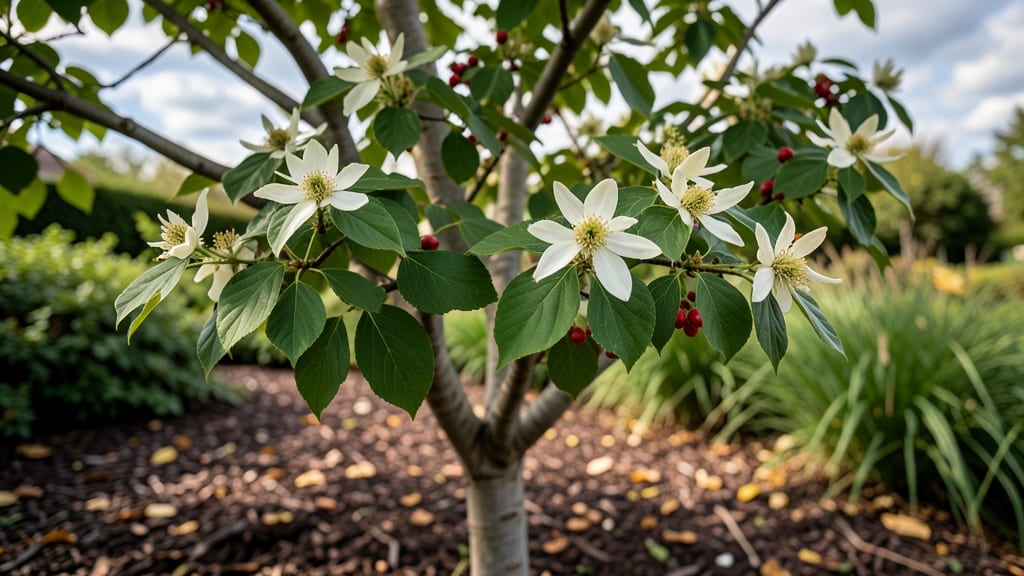
Trees with red berries and white flowers don’t just look stunning—they turn your garden into a four-season show. 🌸 I’ve planted these beauties in my backyard, and they’ve become the star of every season, from spring blooms to winter berries that birds adore.
The best part? They fit perfectly in small spaces, whether as a focal point or a low-maintenance hedge.
Dogwoods, crabapples, and serviceberries top the list for their bold contrast of white blossoms and fiery berries. Plant them where they’ll get morning sun and afternoon shade—they thrive near patios, along walkways, or as a mixed border with shrubs like hydrangeas or azaleas.
Their compact size makes them ideal for urban gardens too, where space is limited but drama is always welcome.
By late summer, those white flowers fade into clusters of glossy red berries that last through winter, feeding birds and adding color to gray days. The best designs layer these trees with evergreens for year-round interest, or pair them with spring bulbs like daffodils for extra pops of color.
It’s a foolproof way to create a garden that feels alive in every season.
For the best results, choose a spot with well-draining soil and mulch to keep roots happy. Prune lightly after flowering to shape them, and watch as they become the neighborhood’s most talked-about trees. Whether you’re designing a formal garden or a wild, natural look, these trees deliver effortless elegance.
Behind The Blooms And Berries
The striking contrast of red berries against white flowers on a single tree isn’t just a visual spectacle—it’s a fascinating interplay of biology, seasonality, and environmental cues. Understanding why this happens reveals the tree’s survival strategies and the delicate balance of nature at work.
Let’s break down the key factors that turn an ordinary shrub into a year-round garden star.
Most trees with white flowers followed by red berries (like Pyracantha or Callicarpa) follow a biennial flowering cycle, meaning their blooms and fruit don’t appear in the same year. Here’s how it works:
- Spring/Summer: The tree produces white flowers (often fragrant) to attract pollinators like bees and butterflies. Successful pollination leads to the formation of tiny, unripe fruit—not yet red or showy.
- Fall/Winter: The fruit ripen, turning vibrant red (or orange) as sugars and pigments develop. This timing ensures animals eat the berries, dispersing seeds far from the parent plant.
- Next Year’s Delay: The tree focuses energy on root and branch growth rather than flowering immediately. This dormancy period is crucial for storing nutrients for the next bloom cycle.
💡 Pro Tip: If your tree isn’t producing berries after flowering, it may be over-fertilized with nitrogen (promoting leafy growth over fruit). Switch to a balanced 10-10-10 fertilizer in early spring to encourage flowering.
White flowers rely on pollinators, but poor pollination can mean no berries—or tiny, deformed ones. Common culprits include:
| Cause | Solution |
|---|---|
| Lack of Bees/Butterflies (pesticide use, urbanization) | Plant bee-friendly companions like lavender or marjoram nearby. Avoid neonicotinoid pesticides. |
| Timing Mismatch (late frost killing flowers) | Choose early-blooming varieties (e.g., Pyracantha ‘Lalandei’) or protect flowers with frost cloth. |
| Wind Pollination Issues (some trees need cross-pollination) | Plant two compatible varieties (e.g., Callicarpa bodinieri + Callicarpa dichotoma) for better fruit set. |
⚠️ Warning: If your tree has flowers but no berries, check for pests like aphids (they suck nectar, preventing pollination). Spray with neem oil if needed.
When trees face drought, poor soil, or extreme heat, they may prioritize berries over flowers—or vice versa. Here’s how stress affects the process:
- Water Scarcity: Drought forces trees to conserve energy, often delaying or reducing flowering. Deep watering (1–2 inches per week) keeps roots happy.
- Compacted or Poor Soil: Nutrient deficiencies (especially phosphorus and potassium) can lead to smaller flowers or no fruit. Test soil and amend with compost or bone meal.
- Extreme Heat/Cold: Temperatures outside the tree’s optimal range (50–85°F) can stunt pollination. Mulch heavily in summer to insulate roots.
🔥 Quick Fix: If your tree is leafing out but not blooming, it may be root-bound. Gently loosen roots or repot (for container-grown trees) to stimulate new growth.
The red berries and white flowers aren’t random—they’re evolutionary adaptations:
- White Flowers: Highly reflective, they attract pollinators from a distance (bees see UV patterns invisible to humans).
- Red Berries: Bright color signals ripeness to birds and mammals, ensuring seed dispersal. The high sugar content makes them irresistible.
- Berry Persistence: Some trees (like Pyracantha) keep berries through winter, providing food when other sources are scarce.
🌡️ Science Note: The red pigment in berries (anthocyanins) also acts as sunscreen, protecting seeds from UV damage while ripening.
Even the hardiest trees can fail if cultural practices go wrong. Common human errors include:
- Over-Pruning: Cutting flower buds (formed in late summer) removes next year’s blooms. Prune after flowering (late winter/early spring).
- Too Much Nitrogen: Lush green growth outcompetes flowering. Use low-nitrogen, high-phosphorus fertilizers (e.g., 5-10-10) in early spring.
- Ignoring Pests/Diseases: Scale insects or powdery mildew weaken trees, reducing fruit. Treat early with horticultural oil or fungicides.
✨ Expert Trick: For heavier berry production, hand-pollinate flowers with a soft brush if pollinators are scarce. Dust flowers lightly in the morning for best results.
Revive Your Blooming Shrubs
If your tree with red berries and white flowers is struggling—whether from pests, disease, or environmental stress—don’t panic! With the right approach, you can bring it back to its vibrant best.
Below, we’ve mapped out practical solutions tailored to common issues, from quick fixes to long-term care. Follow these steps to restore health and prevent future problems.
If your shrub’s roots are waterlogged or soil is compacted, it can’t thrive. Here’s how to drain the damage:
- 🔪 Dig and aerate: Use a garden fork to loosen soil around the roots, creating channels for water to escape. Mix in perlite or coarse sand (1 part to 3 parts soil) to improve drainage.
- ⏰ Adjust watering: Water deeply once a week (or when the top 2 inches of soil are dry) instead of daily shallow sessions. Early morning is ideal to reduce evaporation.
- 🌱 Raise the bed (if needed): For chronically soggy spots, mound soil to elevate roots slightly or plant in a raised bed with well-draining mix.
Chewed leaves, sticky residue, or wilting branches? Pests like aphids, spider mites, or scale insects are likely culprits. Try these non-toxic fixes:
| Pest | Signs | Solution |
|---|---|---|
| 🐜 Aphids | Curled leaves, sticky honeydew, ants (they farm aphids!) | 💦 Spray with soapy water: Mix 1 tsp mild soap in 1 quart water. Spray directly on pests (early morning/evening to avoid burning leaves). Repeat every 3–5 days. |
| 🕷️ Spider Mites | Yellow stippling on leaves, fine webbing | 🌿 Neem oil treatment: Mix 1 tbsp neem oil + 1 tsp mild soap in 1 quart water. Spray undersides of leaves weekly until gone. Increase humidity with a nearby tray of water. |
| 🐝 Scale Insects | Bumpy, shell-like spots on stems/leaves | 🧼 Scrub + prune: Wipe infested areas with a damp cloth dipped in rubbing alcohol (70% isopropyl). Prune heavily affected branches and dispose of them in sealed bags. |
💡 Pro Tip: Encourage natural predators like ladybugs or lacewings by planting companion flowers (e.g., marigolds, dill) nearby.
Powdery mildew or root rot? Fungi thrive in damp conditions. Act fast with these remedies:
- 🍄 For powdery mildew:
- Prune infected leaves and dispose of them (don’t compost!).
- Spray with a baking soda mix: 1 tbsp baking soda + 1 tsp soap + 1 gallon water. Apply every 7–10 days.
- Improve airflow by thinning dense foliage or spacing plants.
- 🌱 For root rot:
- Stop watering immediately and let soil dry out.
- Repot in fresh, sterilized soil (bake soil in oven at 200°F for 30 mins to kill fungi).
- Add mycorrhizal fungi (available at nurseries) to boost root health.
Too much sun, wind, or cold can shock your shrub. Adjust its environment with these tweaks:
- 🌞 Shield from harsh sun: If leaves scorch, provide afternoon shade with a lightweight fabric shade cloth (30–50% coverage).
- 💨 Protect from wind: Plant near a windbreak (e.g., a fence or taller shrubs) or stake young plants to prevent uprooting.
- ❄️ Winterize for cold snaps:
- Mulch heavily (3–4 inches of wood chips or straw) to insulate roots.
- Wrap the trunk with burlap or tree wrap to prevent sunscald.
Keep your shrub thriving with these low-effort habits:
- 📅 Prune strategically:
- Trim dead or crossing branches in late winter/early spring to encourage airflow.
- Avoid heavy pruning after summer—it stresses the plant before winter.
- 🌿 Feed the soil: Apply a slow-release fertilizer (10-10-10 or organic options like composted manure) in early spring. Avoid high-nitrogen fertilizers—they promote leafy growth over flowers/berries.
- 🚫 Monitor moisture: Use a moisture meter or the "finger test" to check soil depth. Most shrubs prefer moderately moist but not soggy soil.
- 🐝 Support pollinators: Plant nearby bee-friendly flowers (e.g., lavender, coneflowers) to ensure healthy berry production.
With these solutions, your red-berried, white-flowering shrub should bounce back stronger than ever. Start with the issue that matches your plant’s symptoms, and soon you’ll be enjoying its dramatic beauty year-round! 🌸🍒
Frequently asked questions
Which trees have white flowers that turn into red berries?
The most popular options are dogwood (with its iconic four-petaled blooms), crabapple varieties like 'Adams' or 'Royalty', and serviceberry (also called shadblow). Other standouts include pyracantha (firethorn) and callicarpa (beautyberry), though beautyberry typically has purple berries. All thrive in similar conditions and add seasonal interest.
Can these trees grow in small yards or containers?
Most varieties stay compact—dogwoods typically reach 15-25 feet tall, while pyracantha and serviceberry often max out at 8-12 feet. Dwarf crabapples like 'Sargent' grow just 10-15 feet. For containers, choose serviceberry or pyracantha—they adapt well to 15-20 gallon pots with proper drainage and winter protection.
Do the berries attract wildlife I don't want?
While these berries primarily feed birds (like robins and waxwings), they rarely attract pests like squirrels or raccoons. The berries are small and not particularly appealing to mammals. If you're concerned, simply remove spent berries in late winter before new growth appears. The trade-off is watching birds enjoy your garden's winter buffet!
How do I get more flowers and berries next year?
Focus on three key factors: pollinators, pruning timing, and nutrients. Plant bee-friendly flowers nearby, prune after flowering (never in late summer), and use a low-nitrogen fertilizer (like 5-10-10) in early spring. Avoid heavy pruning—it removes next year's flower buds formed in late summer.
What's the best companion planting for these trees?
Pair them with hydrangeas (for summer color contrast), heuchera (for foliage texture), or spring bulbs like daffodils. For pollinator support, add lavender, coneflowers, or butterfly bush. Evergreens like boxwood or inkberry holly create beautiful year-round backdrops that highlight the seasonal berries.