
Pruning
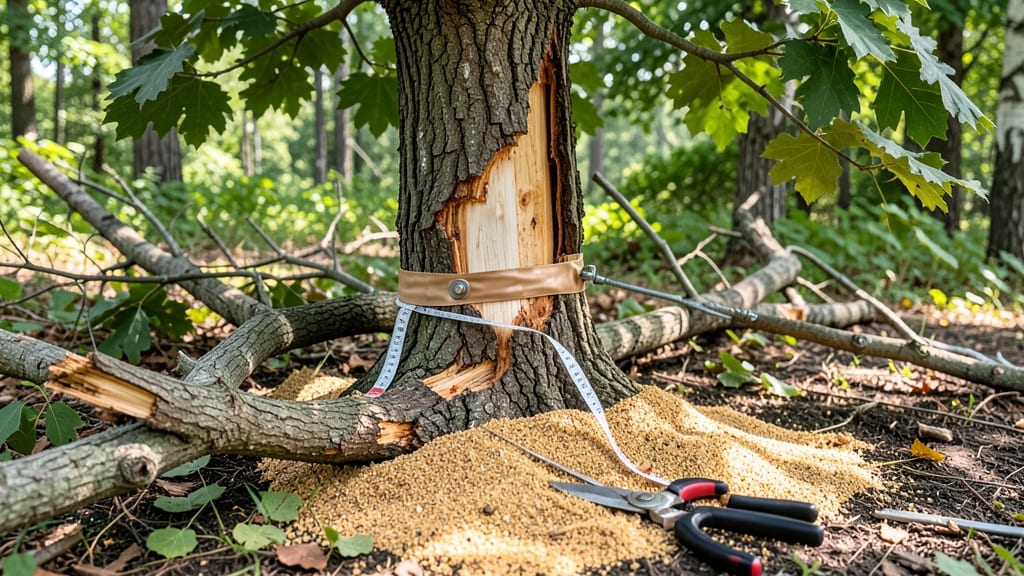
A tree broke in half and now you're staring at a split trunk—this isn't the end. Fast action can save your tree, and I'll walk you through the exact steps to stabilize it before calling in the pros.
The first 24 hours are critical, so let's start with assessing the damage while it's still fresh. You'll need basic tools: rope, pruners, and a sturdy ladder (or call someone to help).
Look for clean breaks—those have the best chance of recovery—while jagged tears mean the tree's structural integrity is already compromised. If the break is less than half the trunk's diameter, you might still save it with proper support.
Once stabilized, you'll monitor for new growth at the break point, which can signal recovery. Keep the area watered but not soggy, and avoid heavy pruning until you're sure the tree is stabilizing. The goal is to give it time to heal while preventing further stress.
Even with the best efforts, some trees won't make it—but many do with quick, careful care. Here's how to decide whether to fight for it or let it go naturally.
Root Causes Behind Tree Splits
When a tree suddenly snaps in half, it’s rarely a random act of nature—there’s usually a mix of environmental stress, structural weaknesses, and external forces at play. Understanding these causes can help you prevent future damage or assess whether a tree is at risk.
Here’s why trees split, broken down into the most common culprits.
Wind, ice, and storms are the #1 reason trees break in half. Here’s how they do it:
- High winds: Trees with shallow root systems or weak wood are especially vulnerable. Wind creates torque (twisting force), and if the roots can’t anchor the tree, the trunk may snap at the weakest point—often where branches fork or the wood is hollow.
- Ice accumulation: Heavy ice buildup (like during an ice storm) adds dead weight to branches and trunks. When the ice melts unevenly, the sudden shift in weight can cause a tree to split vertically along its grain.
- Lightning strikes: A direct hit can cause internal wood expansion due to extreme heat, leading to explosive splits. Even nearby strikes can weaken a tree’s structural integrity over time.
Actionable tip: 🌡️ Prune weak branches before storm season to reduce wind resistance, and remove trees near power lines if they’re prone to splitting.
Not all trees are built to last. Some have inherent flaws that make them prone to snapping:
- Co-dominant stems: When two (or more) main trunks grow upward in competition, they create a V-shaped crotch that’s a natural weak point. Over time, this area can rot internally or fail under stress.
- Hollow or decayed wood: Fungal infections (like heart rot) or insect damage (e.g., termites, carpenter ants) weaken the trunk’s structural integrity. A hollow tree can snap with minimal force—even a strong gust of wind.
- Poor pruning history: Topping (cutting the top off a tree) or making poor pruning cuts (too close to the trunk) creates stub wounds that invite decay. Over time, these wounds compromise the tree’s ability to support its own weight.
Pro tip: ✨ Inspect trees annually for signs of decay (mushrooms at the base, cracked bark, or oozing sap) and consult an arborist to assess structural risks.
A tree’s roots are its foundation—and if they’re compromised, the whole structure becomes unstable. Here’s how root issues lead to splits:
- Shallow root systems: Trees planted too deeply or in compacted soil develop shallow roots that can’t grip the ground. This makes them top-heavy and prone to snapping in high winds.
- Root rot or disease: Fungal infections (like Armillaria root rot) or poor drainage can kill roots, leaving the tree unsupported. Even healthy-looking trees may hide extensive root damage.
- Soil erosion or construction damage: Digging near a tree’s root zone or grading soil away from the trunk disrupts its stability. Roots need at least 12–18 inches of soil to anchor properly.
Key insight: 💡 Mulch properly (2–4 inches deep, kept away from the trunk) and avoid heavy machinery near root zones to preserve stability.
Sometimes, the cause is directly tied to human (or animal) activity:
- Improper pruning or trimming: Removing too much foliage at once (over-pruning) stresses the tree, while poor cuts (e.g., leaving stubs) invite decay.
- Physical damage: Cars, lawnmowers, or even vandalism (e.g., carving into the trunk) can create entry points for pests and disease, weakening the wood.
- Animal activity: Beavers, deer, or even woodpeckers can gnaw on bark or roots, compromising structural integrity. Large animals (like cows) rubbing against trees can also cause girdling (damage to the bark that kills the tree over time).
Warning sign: 🚨 If a tree has large scars, deep grooves, or missing bark, it’s at higher risk of splitting—especially if the damage is near the base or major branches.
While some causes (like weather) are unavoidable, many can be mitigated with proper care. The next step? Learning how to stabilize a snapped tree to prevent further damage or safety hazards.
Fixing a Split Tree Safely
A snapped tree is an urgent situation that requires quick action to prevent further damage, injuries, or property loss.
Whether the break happened due to storm damage 🌪️, weak wood 🌳, or poor pruning practices ⚠️, knowing how to stabilize and repair it can save time, money, and stress.
Below are practical, step-by-step solutions tailored to the most common causes—plus prevention tips to keep your trees strong for years to come.
🔧 Immediate Steps to Stabilize:
- Assess the Risk 🚨
- If the tree is still standing but unstable, do not climb or lean against it. Call a professional arborist if the break is near power lines, buildings, or walkways.
- If the tree is hanging by a thread, it may fall suddenly—evacuate the area and notify emergency services if needed.
- Temporarily Support the Tree 🪵 - Use sturdy wooden stakes or metal braces to prop up the broken section. Angle them outward to distribute weight. - Wrap the break with a tree cabling system (if available) to hold the two halves together.
A tree repair clamp (like a split-rail brace) can also work as a temporary fix. - Do NOT use ropes or chains—they can cut into the bark or snap under pressure.
- Call an Arborist for Permanent Fixes 📞
- Storm-damaged trees often need professional cabling, bracing, or removal. A certified arborist can determine if the tree can be saved or if it’s safer to remove it.
💡 Prevention Tip:
- Prune dead or weak branches before storm season to reduce wind resistance.
- Plant trees with strong branch unions (avoid narrow V-shaped crotches, which are prone to splitting).
- Mulch and water regularly to keep the root system healthy and resilient.
🔧 How to Strengthen and Repair:
- Remove Severely Damaged Sections ⚰️
- If the break reveals rotten, hollow, or fungus-infected wood, the safest option is partial or full removal.
- Use clean cuts (sterilize pruning tools with rubbing alcohol) to prevent spreading disease to other trees.
- Reinforce Healthy Trees with Cabling 🪛
- For structurally weak but otherwise healthy trees, an arborist can install steel cables to support heavy branches.
- This is common in large oak, maple, or pine trees where natural splits are likely.
- Fertilize and Care for Recovery 🌱
- Apply a balanced fertilizer (high in nitrogen, phosphorus, and potassium) to help the tree heal.
- Water deeply (1–2 inches per week) to encourage new growth in the damaged area.
💡 Prevention Tip:
- Inspect trees annually for signs of decay, cracks, or fungal growth (like conks or shelf fungi).
- Avoid over-pruning—never remove more than 25% of the canopy in one season.
- Thin out crowded branches to improve air circulation and reduce stress.
🔧 Correcting Mistakes and Future-Proofing:
- Identify the Pruning Error 🚫
- Topping (heading back) a tree leaves large, weak stubs that are prone to splitting.
- Over-pruning weakens the tree’s structure, making it vulnerable to wind or snow.
- Make an undercut 6–12 inches from the branch collar.
- Cut outside the branch bark ridge.
- Finish with a final cut just outside the undercut. - Avoid flush cuts—always leave a branch collar intact to prevent decay.
- Support Weak Branches with Bracing 🛠️
- If a branch is too heavy for its attachment, an arborist can install dynamic cables to share the weight.
- Never use nails or spikes—they can damage the tree’s vascular system.
💡 Prevention Tip:
- Hire a certified arborist if you’re unsure about pruning large trees.
- Prune in late winter or early spring when the tree is dormant (avoid summer pruning, which stresses the tree).
- Follow the "1/3 Rule"—never remove more than one-third of the foliage at once.
Sometimes, no amount of repair can save a severely split tree.
Signs it’s time to remove: ✅ The break is near the trunk (high risk of total collapse). ✅ The tree is leaning dangerously (45° or more). ✅ There’s extensive rot or hollow sections (unsalvageable). ✅ It’s near structures, power lines, or high-traffic areas.
🔧 Safe Removal Steps:
- Call a professional—DIY removal is dangerous and often illegal without permits.
- Check for underground utilities before digging.
- Ask about stump grinding if you want the area cleared completely.
🌟 Final Thought: A split tree doesn’t always mean the end—with the right care, many can recover and thrive. But speed and proper technique are key.
Whether you’re stabilizing a storm victim or fixing a pruning mistake, act fast, assess carefully, and when in doubt, call an expert. 🌳💪
Frequently asked questions
Can a tree survive if it breaks in half?
Some trees can recover if the break is clean and less than half the trunk's diameter. The key is acting fast—within 24 hours—to stabilize it with proper supports. Look for signs of new growth at the break point, which indicates healing. However, if the break is jagged, near the base, or reveals rot, the tree may not survive.
What’s the best way to temporarily stabilize a snapped tree?
Use wooden stakes or metal braces angled outward to support the broken section. Wrap the break with a tree cabling system or a split-rail brace to hold the halves together. Avoid ropes or chains—they can cut into the bark. Always call an arborist for permanent fixes.
When should I remove a broken tree instead of trying to save it?
Remove it if the break is near the trunk, the tree leans 45° or more, or there’s extensive rot or hollow sections. Also remove it if it’s near structures, power lines, or high-traffic areas. Never attempt DIY removal—call a professional arborist for safety.
How can I prevent my trees from splitting in the future?
Prune weak branches before storm season, avoid topping trees (cutting the top off), and mulch properly to keep roots strong. Inspect trees annually for decay, cracks, or fungal growth. Plant trees with strong branch unions and avoid over-pruning (never remove more than 25% of foliage at once).
Will a split tree grow back together?
Trees won’t fuse like bones, but they can heal by forming callus tissue around the break. With proper stabilization and care, some trees develop new growth that bridges the gap over time. The success depends on the tree’s species, health, and how quickly you act.