
Trees
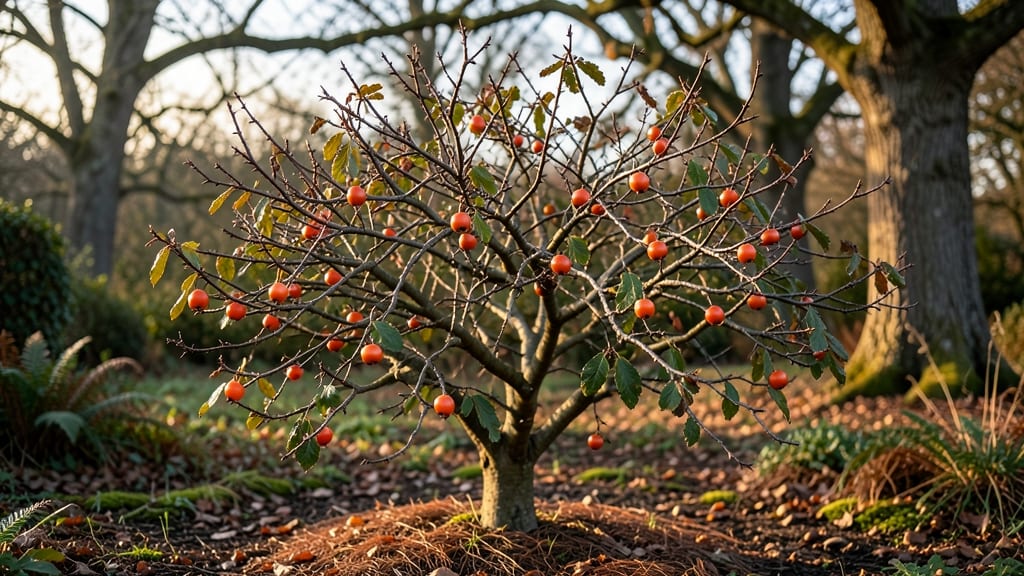
That thorn tree with yellow fruit isn't just pretty—it's the hawthorn that thrives in cold climates and keeps color year-round. 🌿 I planted mine last spring, and now it's covered in thorny branches and clusters of golden berries that last from fall into winter.
The thorns might look intimidating, but they're nature's way of protecting these hardy trees from deer and rabbits. Hawthorns love full sun and adapt to almost any soil, from rocky slopes to clay gardens. They're happiest in zones 3-8, making them perfect for northern gardens where other fruit trees struggle.
Just give them space—they can grow 15-30 feet wide, so plant them 20-30 feet apart from other trees or structures. The fruit isn't just for show—birds and pollinators adore it, and while it's not typically eaten fresh (it needs winter frost to soften), you can make jelly or ferment it.
The real magic happens in fall when the leaves turn brilliant red and the fruit glows against the changing landscape. Fair warning: those thorns are sharp, so wear gloves when pruning.
But the trade-off is worth it for a tree that gives you color, wildlife benefits, and a piece of wild beauty in your yard. Here's how to make one thrive in your space!
Behind The Golden Mystery
If you’ve spotted a thorny tree bursting with bright yellow fruits—whether in your garden, a local park, or even a wild landscape—you might be wondering why nature paints these trees in such vivid hues.
The answer lies in a mix of evolutionary biology, environmental cues, and the tree’s survival strategies. Let’s break down the science behind those eye-catching yellow fruits.
The most common reason for yellow fruits is animal attraction. Nature has perfected the art of luring creatures to spread seeds, and bright yellow is a universal "eat me" signal. Here’s how it works:
- Color contrast: Yellow stands out against green foliage, making fruits visible to birds, mammals, and even insects. Think of it like a neon sign in a forest—high visibility = high chance of being eaten.
- Ripeness indicator: Many yellow fruits (like those of the Hawthorn or Crabapple) signal peak ripeness. Birds and animals rely on color cues to identify nutritious, ready-to-eat food.
- Seed survival tactic: After ingestion, the fruit’s flesh is digested, but the seeds pass through intact—often in a new location. This is how trees like the Yellowhorn (a thorny relative) expand their range.
Pro tip: 💡 If you’re growing a thorny tree for fruit, choose varieties with highly visible yellow fruits (like Crataegus species) to attract pollinators and seed dispersers naturally.
Yellow fruits aren’t just about looks—they’re also a response to environmental conditions. Here’s how climate and soil play a role:
| Factor | How It Affects Fruit Color | Example Trees |
|---|---|---|
| Sunlight exposure | More direct sun = deeper yellow pigments (like carotenoids) in fruits. Shady spots may produce paler or green-tinged fruits. | Hawthorn (Crataegus), Mountain Ash (Sorbus) |
| Temperature shifts | Cooler nights or early frosts can enhance yellow hues by slowing sugar breakdown in fruits, preserving vibrant colors longer. | Yellowhorn (Xanthoceras sorbifolium), Crabapple (Malus) |
| Soil pH and minerals | Acidic soils (low pH) may reduce chlorophyll in fruits, making yellow more dominant. High potassium levels can also boost carotenoid production. | Serviceberry (Amelanchier), Wafer Ash (Pyrus) |
Actionable tip: 🌡️ To encourage brighter yellow fruits in your thorny tree:
- Plant in full sun (6+ hours daily).
- Test soil pH—aim for slightly acidic to neutral (6.0–7.0).
- Fertilize with potassium-rich amendments (like wood ash or banana peel compost) in early spring.
Thorny trees with yellow fruits often have a dual survival strategy: repel herbivores and attract seed spreaders. Here’s the breakdown:
- Thorns as deterrents: The sharp spines discourage large mammals (like deer) from munching on leaves or bark. But they can’t stop birds or small animals—hence the bright, edible fruits as a trade-off.
- Toxin dilution: Some yellow fruits contain mild toxins (e.g., cyanogenic glycosides in hawthorn) that deter overconsumption. The yellow color may signal, "Eat a few, but don’t gorge!"
- Timing is everything: Fruits ripen when fewer predators are active (e.g., late summer/fall for birds migrating south). This maximizes seed dispersal chances.
Fun fact: 🎯 The Yellowhorn tree’s thorns are so effective at defense that its fruits are rarely targeted by pests—yet their vibrant color still draws birds for seed dispersal.
Next time you see a thorny tree adorned with golden fruits, remember: it’s not just pretty—it’s a highly strategic survival masterpiece. 🌟
Quick fixes for thorn tree troubles
Revitalizing your thorn tree with yellow fruit doesn’t have to be a mystery—even when problems arise. Below, we’ll tackle common issues with practical, step-by-step solutions, from nutrient deficiencies to pest attacks. Plus, we’ll share prevention tips to keep your tree thriving year-round.
If your tree’s leaves are turning pale or yellow, it’s often a sign of nutrient starvation. Thorn trees (like Hawthorn or Crataegus varieties) need balanced care to produce vibrant fruit and lush foliage.
H3: 🔥 Step 1: Soil Test First Before guessing, test your soil’s pH and nutrient levels. Most thorn trees prefer:
- pH 6.0–7.0 (slightly acidic to neutral)
- Rich in nitrogen, phosphorus, and potassium (NPK)
- Micronutrients like iron, magnesium, and zinc
💡 Pro Tip: Use a DIY soil test kit (available at garden centers) or send a sample to a local extension office for precise results.
H3: 🍳 Step 2: Amend the Soil If the test reveals deficiencies:
- Low nitrogen? Add composted manure or a balanced 10-10-10 fertilizer in early spring.
- Magnesium deficiency (yellow edges on leaves)? Sprinkle Epsom salt (magnesium sulfate) around the base (1 tbsp per gallon of water, applied monthly).
- Iron chlorosis (yellow leaves with green veins)? Use chelated iron or apply iron sulfate granules to the soil.
H3: 🌡️ Step 3: Mulch for Retention Spread 2–3 inches of organic mulch (wood chips, straw) around the tree (but keep it 6 inches away from the trunk to prevent rot). This locks in moisture and slowly releases nutrients.
Pests like aphids, scale insects, or fungal diseases (like powdery mildew) can drain your tree’s energy, reducing fruit production.
H3: 🔪 Step 1: Identify the Culprit Check for:
- Sticky residue on leaves? → Aphids or scale insects
- White powdery coating? → Powdery mildew
- Holes in leaves or fruit? → Japanese beetles or borers
H3: 🚿 Step 2: Manual & Natural Removal
- For soft-bodied pests (aphids, mites):
- Blast them off with a strong spray of water.
- Apply neem oil (1 tsp per quart of water) or insecticidal soap every 7–10 days.
- For fungal diseases (powdery mildew):
- Spray with a baking soda solution (1 tbsp baking soda + 1 tsp dish soap + 1 gallon water).
- Improve air circulation by pruning dense branches.
H3: 🛡️ Step 3: Prevent Future Infestations
- Encourage beneficial insects (ladybugs, lacewings) by planting marigolds or dill nearby.
- Prune regularly to remove dead/diseased branches.
- Avoid overhead watering (water at the base instead to keep foliage dry).
If your tree struggles in winter, freeze-thaw cycles can cause leaf scorch or fruit failure. Cold-hardy varieties (like Crataegus phaenopyrum) still need protection.
H3: 🔥 Step 1: Winterize Before Frost
- Mulch heavily (4–6 inches) around the base in late fall.
- Wrap the trunk with burlap or tree guard if temps drop below 10°F (-12°C).
- Avoid pruning in late winter—wait until early spring to let the tree recover.
H3: 🌿 Step 2: Post-Winter Recovery
- Fertilize lightly in early spring with half-strength fertilizer to avoid shocking roots.
- Water deeply if the ground is dry (thorn trees need 1–2 inches of water weekly in growing season).
- Monitor for sunscald (brown patches on south-facing bark)—apply white tree paint if needed.
Want to avoid problems entirely?
Follow these easy maintenance habits: - Water deeply but infrequently (drought stress = poor fruit set). - Prune in late winter/early spring to remove dead wood and improve sunlight. - Rotate fertilizer types (don’t overdo nitrogen—it reduces fruit quality). - Monitor for pests weekly during growing season (catch issues early!).
By addressing issues quickly and correctly, your thorn tree will reward you with vibrant yellow fruit, lush foliage, and years of low-maintenance beauty. 🌳✨
Frequently asked questions
What are the most common types of thorn trees with yellow fruit?
The most well-known varieties include hawthorn (Crataegus), yellowhorn (Xanthoceras sorbifolium), and crabapple (Malus) trees. Hawthorns are especially popular for their cold-hardiness and vibrant yellow berries that persist through winter. Yellowhorn, native to China, produces large yellow fruits that resemble walnuts.
Are the yellow fruits on these trees edible?
Most yellow fruits from thorn trees are not eaten fresh due to their tartness or mild toxicity when raw. However, they're perfect for making jelly, fermenting into wine, or drying for tea. Hawthorn berries, for example, need frost to soften before they're palatable—birds know this and help disperse the seeds!
How do I safely handle the thorns when pruning?
Always wear heavy-duty gardening gloves and long sleeves when pruning. Use long-handled loppers to avoid reaching into thorny branches. After pruning, clean your tools with rubbing alcohol to prevent spreading any potential diseases between cuts. The thorns are most concentrated on younger branches, so focus pruning on older wood.
Can these trees grow in containers or do they need ground planting?
Dwarf varieties like 'Cockspur' hawthorn can thrive in large containers (at least 24-inch diameter), but most thorn trees prefer ground planting due to their extensive root systems. If container-grown, use well-draining soil and repot every 2-3 years to accommodate growth. Remember, these trees need full sun—place containers in south-facing locations.
What wildlife benefits do these trees provide?
Thorn trees with yellow fruit are ecological powerhouses! They provide food for birds, squirrels, and insects while the thorns offer shelter for small animals. The persistent winter berries feed migrating birds, and the flowers attract pollinators in spring. Planting one supports biodiversity—just be prepared for some fruit theft from your feathered neighbors!