
Pruning
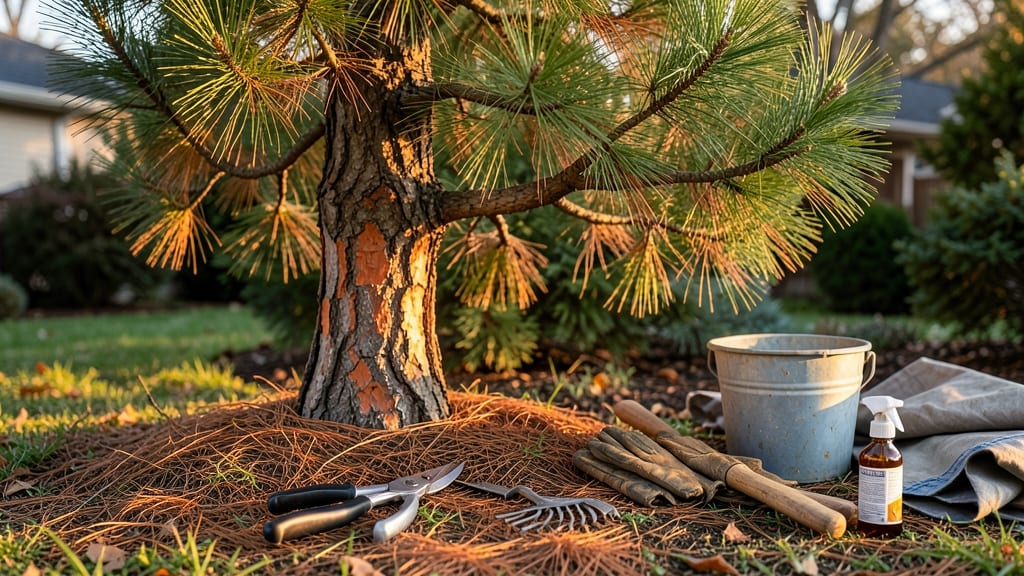
Your pine tree’s dead lower branches aren’t just unsightly—they’re a sign your tree is struggling to breathe. 🌲 After losing three lower branches to fungal rot last winter, I learned how to diagnose the problem and prune with precision to revive growth from the top down.
The key? Understanding whether your tree is fighting disease, pests, or simply aging naturally.
Dead branches often start with brown, brittle needles that crumble at the touch, followed by peeling bark or sawdust-like frass (a sign of bark beetles). If the issue is fungal, you’ll see white or orange growth at the base of branches.
The good news? Pines are resilient—removing dead wood safely can redirect energy to healthier growth, often within a single growing season.
Start by cutting 6–12 inches above the branch collar (the swollen area where the branch meets the trunk) using clean, sharp pruners. For larger branches, make a notch on the underside first to prevent tearing.
Seal cuts only if the tree is diseased, using pruning paint—but skip it for natural dieback, as fresh cuts heal faster.
Prevent future loss by improving air circulation around the base, mulching lightly, and watering deeply during droughts. A healthy pine should show new growth within 3–6 months of proper pruning. The transformation is worth the effort—your tree’s crown will look fuller, and it’ll stand stronger for years to come.
Root Causes Behind Dying Pine Branches
Understanding why your pine tree’s lower branches are dying is the first step to saving it. Pines are resilient, but specific stressors can weaken or kill their lower limbs.
Below, we break down the most common culprits—each with a clear scientific explanation and actionable insights to help you diagnose the issue.
Pine trees thrive in specific climate conditions, and when those conditions shift abruptly, lower branches often bear the brunt. Heat and drought cause cellular dehydration in needles, leading to browning and death. Meanwhile, freeze damage (especially in late winter) can rupture cell walls, cutting off nutrient flow to lower limbs.
Key signs:
- Needles turn grayish-brown (drought) or black and mushy (freeze damage).
- Branches remain dry and brittle even after watering.
What to do:
- Water deeply during droughts (1–2 inches per week, especially for young pines).
- Mulch around the base (2–4 inches of organic mulch) to retain moisture and insulate roots.
- Avoid winter pruning—wait until late spring to trim damaged branches.
Fungi like Armillaria root rot or Diplodia tip blight thrive in moist, crowded conditions, attacking pine trees from the ground up. Lower branches, closer to the soil, are often the first to show symptoms because fungal spores spread upward through the vascular system.
Key signs:
- Reddish-brown needles that fall prematurely.
- White, fan-like fungal growth at the base of the trunk (a red flag for Armillaria).
- Cankers (sunken, discolored patches) on branches.
What to do:
- Remove infected branches 6–12 inches below the damage (fungi can linger in dead wood).
- Improve airflow by thinning dense foliage around the tree.
- Apply copper fungicide (early spring) if fungal growth is visible.
Insects like pine bark beetles, sawflies, or spider mites target stressed pines, drilling into branches and disrupting nutrient transport. Lower branches are often the first to show signs because pests start at ground level and work their way up.
Key signs:
- Sawdust-like frass (beetle droppings) near branch bases.
- Needles turning yellow or orange (mite activity).
- Small holes in bark or chewed needles.
What to do:
- Blast off pests with a strong hose (for beetles/sawflies) or neem oil spray (for mites).
- Invite natural predators—ladybugs and birds help control mites and beetles.
- Avoid over-fertilizing—healthy trees repel pests better.
Improper pruning—like topping (cutting too close to the trunk) or over-shearing—stresses pines, leading to dead lower branches. Pines rely on their lower limbs for photosynthesis and nutrient storage, so aggressive cuts can starve them.
Key signs:
- Stubs or large wounds on branches.
- New growth stunted or absent below cuts.
- Branches dying in a "sheared" pattern.
What to do:
- Use the "3-cut method" for large branches:
- Undercut 12–18 inches from the trunk.
- Top-cut just outside the branch collar.
- Clean up remaining stubs.
- Never remove more than 25% of foliage in one season.
- Prune in late spring/early summer when the tree is actively growing.
Pines need nitrogen, phosphorus, and micronutrients (like manganese) to stay healthy. If the soil lacks these, lower branches—farthest from the root system—suffer first.
Key signs:
- Yellow needles (nitrogen deficiency).
- Purple or red tint on new growth (phosphorus deficiency).
- Needles falling early (micronutrient lack).
What to do:
- Test your soil (pH should be 5.0–7.0 for pines).
- Apply slow-release fertilizer (10-10-10 ratio) in early spring.
- Use pine-specific amendments like sulfur or iron chelates if deficiencies persist.
Pro Tip: 💡 If multiple causes are present (e.g., drought + fungal infection), address the environmental stress first—healthy trees fight pests and diseases better!
Revive Your Tree With Smart Trimming
Now that you know why your pine tree’s lower branches are dying, it’s time to take action! The good news? Most issues can be fixed—or at least slowed—with the right pruning techniques and a little extra care.
Below, we’ll break down targeted solutions based on the most common causes, along with prevention tips to keep your tree healthy long-term.
Problem: Dense growth or blocked airflow leads to fungal infections, pests, or branch death. Solution: ✅ Thin Out the Canopy – Remove selective branches (not just the dead ones) to improve airflow. Focus on:
- Crossing or rubbing branches (they weaken the tree).
- Branches growing inward (they compete for sunlight and nutrients).
- Overly dense clusters (cut back by 20-30% to reduce stress).
🔪 How to Cut Properly:
- Use clean, sharp pruners (sterilize with rubbing alcohol to prevent disease spread).
- Make cuts just outside the branch collar (the swollen area where the branch meets the trunk).
- Avoid "topping" (cutting back to a stub)—this invites decay.
💡 Pro Tip: If your tree is heavily overgrown, prune in stages over 2-3 years to avoid shocking it.
Problem: Dark, mushy branches or sawdust-like frass (pest droppings) signal infection. Solution: ✅ Remove Infected Branches Immediately – Cut 6-12 inches below the visible damage to ensure the pathogen doesn’t spread. ✅ Apply Fungicide – Use a copper-based fungicide (like Bordeaux mixture) or a neem oil solution (1 tsp neem oil + 1 quart water) every 2-4 weeks during wet seasons.
🌡️ Prevention Tips:
- Water at the base (avoid wetting foliage to reduce fungal spores).
- Improve drainage (pine trees hate "wet feet"—ensure soil isn’t compacted).
- Mulch properly (2-3 inches of organic mulch, not touching the trunk).
Problem: Chewed needles, sap oozing, or tiny eggs on branches mean pests are to blame. Solution: ✅ Handpick or Blast Off Pests –
- For sawfly larvae, spray with soapy water (1 tsp mild dish soap + 1 quart water).
- For pine beetles, use kaolin clay (a natural repellent) or pesticide bait stations.
🔥 Severe Cases? Call a Pro – If the tree is heavily infested, a certified arborist can assess whether insecticide injections or removal is needed.
🎯 Prevention:
- Encourage natural predators (birds, ladybugs) by planting nearby flowers.
- Inspect trees annually (especially in spring/summer when pests are active).
Problem: Yellowing needles or slow growth means your pine isn’t getting enough light or nutrients. Solution: ✅ Prune to Improve Light Exposure –
- Remove shading branches (like overhanging trees or structures).
- Thin the lower canopy to let sunlight reach the inner branches.
💪 Boost Nutrients Naturally:
- Test your soil (pH should be 5.0-7.0 for pines).
- Add slow-release fertilizer (like 10-10-10 or pine-specific formula) in early spring.
- Use compost around the drip line (not the trunk).
Some issues require professional help, such as:
- Large-scale disease (like pine wilt or blight).
- Structural damage (cracks, major limb dieback).
- Tree is over 30 feet tall (safety risk for DIY pruning).
💡 Pro Tip: If your tree is over 50% dead, removal may be the safest option—pines can’t regenerate heavily damaged limbs.
To keep your pine tree thriving: ✔ Prune in late winter/early spring (before new growth starts). ✔ Water deeply but infrequently (1-2 inches per week, more in drought). ✔ Avoid heavy pruning in summer (stresses the tree). ✔ Monitor for pests/disease every 3-6 months.
Final Thought: Most pine trees are resilient—with the right cuts and care, you can revive dead branches and prevent future issues. Start small, stay consistent, and your tree will thank you with lush, green growth for years to come! 🌿✨
Frequently asked questions
How can I tell if my pine tree's lower branches are truly dead?
Gently bend a branch—if it snaps easily and doesn't bend, it's dead. Check for brittle needles that crumble when touched and peeling or cracked bark. Healthy branches should bend slightly and have green needles. If you see white fungal growth or sawdust-like frass, that's a sign of infection or pests.
Is it safe to prune dead branches in winter?
Prune during dormant season (late fall/winter) is fine, but avoid freezing temperatures below 20°F. The best time is late winter/early spring (before new growth starts). Never prune in summer heat—it stresses the tree. Sterilize your tools with rubbing alcohol to prevent disease spread.
Should I seal pruning cuts on my pine tree?
Only seal cuts if the tree is diseased—otherwise, leave them open to heal naturally. Use pruning paint (like Tanglefoot Tree Wound Pruning Seal) only for large wounds (>2 inches) or fungal infections. For healthy trees, fresh cuts heal faster without sealant. Always cut just outside the branch collar (the swollen area where the branch meets the trunk).
Can I save a pine tree with mostly dead lower branches?
Yes, but it depends on how much is dead. If less than 30% of the tree is affected, targeted pruning and proper care can revive it. For over 50% dead, removal may be safest—pines can't regenerate heavily damaged limbs. Focus on removing dead wood, improving airflow, and addressing root issues (like compacted soil or poor drainage).
What's the difference between natural dieback and disease in pine trees?
Natural dieback happens gradually from aging or shading, with brown needles that fall cleanly. Disease shows sudden spread, mushy branches, or unusual growths (like white fungus). Check for sawdust-like frass (pests) or cankers (sunken, discolored patches). If in doubt, consult a local arborist for a diagnosis.