
Diseases
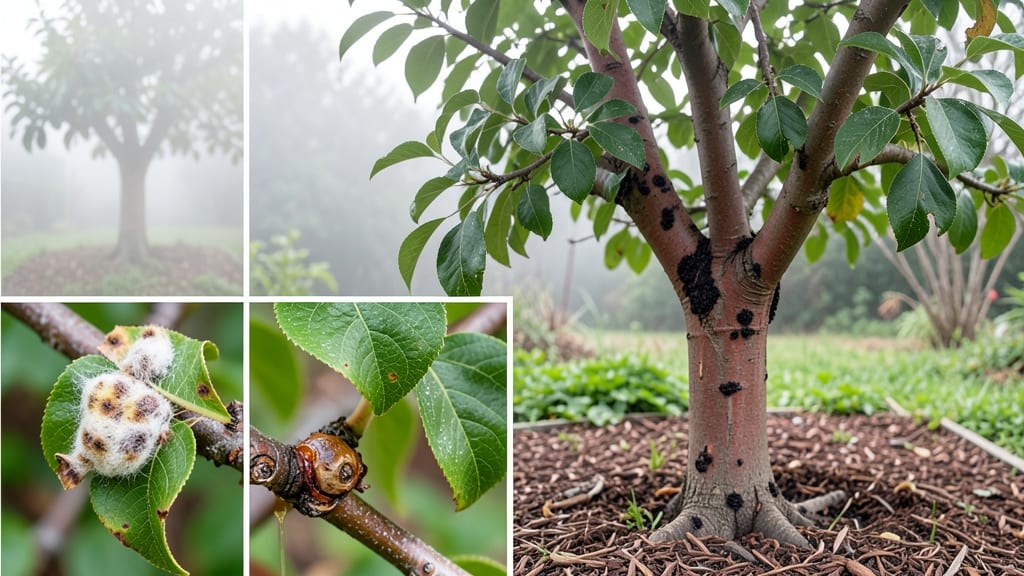
The moment you spot dark, sunken spots on peach leaves, you're likely staring at a fungal infection—but pictures of peach tree diseases can help you confirm the exact threat before it spreads. 🌿 These diseases don’t just ruin the look of your tree—they can kill your harvest if ignored.
I've battled brown rot, leaf curl, and bacterial spot firsthand, and I'm sharing exactly how to spot them early, before they spread.
Most of these problems start with wet spring weather or crowded branches that don’t dry properly. The good news? A few simple steps—like pruning for airflow, applying fungicides at the right time, or even just cleaning up fallen fruit—can stop them in their tracks.
I'll show you how to tell these diseases apart using just a few key symptoms.
By the end, you'll recognize the warning signs faster than I did on my worst year. Think dark, twisted leaves? Brown, mushy fruit? Or maybe those weird white powdery patches? Each one has a specific fix, and I'll walk you through them all with clear visual clues.
This isn't just about saving your harvest—it's about keeping your peach tree healthy for years. Early detection means you can prevent these issues before they become full-blown problems. Let's get started with the most common fungal threats and exactly how to tackle them.
Root Causes of Tree Ailments
Understanding why peach trees develop diseases is the first step toward prevention and treatment. These issues rarely arise from a single factor but are usually the result of a combination of environmental, biological, and cultural stressors.
Below, we break down the key reasons your peach tree might be falling victim to fungal infections, along with the science behind them.
---
Fungal spores thrive in humid, stagnant environments—think of them like tiny, invisible invaders waiting for the perfect opportunity to strike. When peach trees are planted too closely together or surrounded by dense foliage, air fails to circulate properly.
This creates a microclimate where moisture lingers, providing ideal conditions for pathogens like Cladosporium (leaf spot) or Monilinia (brown rot).
- Why it matters: High humidity (above 75%) and prolonged leaf wetness (more than 9 hours) dramatically increase infection rates. - Actionable fix: Prune trees to open the canopy, space new plantings 15–20 feet apart, and avoid mulching too heavily around the trunk (keep mulch 2–3 inches away).
---
Peach trees need water, but too much of a good thing can drown roots and invite fungal invaders. Overhead irrigation (like sprinklers) wets leaves and fruit, creating a perfect breeding ground for spores. Additionally, poor drainage in the soil leads to waterlogged roots, weakening the tree’s defenses.
- Key culprits: - Frequent leaf wetness (e.g., morning dew + no airflow). - Compacted or clay-heavy soil that doesn’t drain well. - Overwatering (trees need 1–1.5 inches of water per week, including rainfall). - Pro tip: 🌡️ Water deeply but infrequently—use drip irrigation or soaker hoses to deliver moisture at the roots, not the leaves.
Test soil drainage by digging a hole: if water pools after 6 hours, amend with compost or sand.
---
Fungal diseases don’t just appear out of nowhere—they’re already in your garden, waiting for the right conditions to spread. Spores from infected leaves, fallen fruit, or even neighboring plants can overwinter in the soil or on tree bark, ready to reinfect the following season.
- How it spreads: - Wind and rain carry spores to healthy trees. - Insects or tools (pruners, shoes) transfer pathogens between plants. - Infected plant debris (e.g., mummified fruit from last year’s brown rot) acts as a spore reservoir. - Prevention strategy: Sanitize tools with a 10% bleach solution (1 part bleach to 9 parts water) between cuts. Remove and destroy (don’t compost!) infected leaves, fruit, and twigs in fall and spring.
---
Peach trees are sensitive to temperature swings, and sudden changes—whether late frosts, heatwaves, or cold snaps—can weaken their immune system.
For example: - Late spring frosts damage blossoms, reducing fruit set and leaving trees vulnerable to Leucostoma (silver leaf fungus). - High summer heat (above 90°F) combined with drought stress makes trees more susceptible to Cercospora (target spot).
- What to watch for: - Rapid temperature drops (e.g., 80°F to 40°F in 24 hours). - Prolonged drought followed by heavy rain (stress + moisture = fungal feast). - Solution: Use row covers for frost protection, mulch to regulate soil temperature, and drought-resistant varieties if your climate is extreme.
--- A malnourished peach tree is like a person with a weak immune system—it’s an easy target. Deficiencies in nitrogen, phosphorus, or micronutrients (like zinc or magnesium) stunt growth, thin the bark, and reduce disease resistance.
- Common deficiencies linked to fungal issues: - Nitrogen (N) deficiency: Leads to yellowing leaves and poor vigor, making trees more prone to Taphrina (peach leaf curl). - Potassium (K) deficiency: Weakens cell walls, making them easier for pathogens to penetrate. - Zinc or iron deficiency: Causes poor fruit set and thin bark, inviting Venturia (scab fungus). - How to fix it: - Soil test first!
Know your pH and nutrient levels (ideal pH for peaches: 6.0–6.5). - Balanced fertilizer: Use a 10-10-10 or 5-10-10 formula in early spring, with a potassium boost in late summer. - Organic amendments: Compost, bone meal (for phosphorus), and greensand (for potassium) can help.
--- Some pests don’t cause disease directly, but their damage opens doors for fungi.
For example: - Peach tree borers weaken the tree by tunneling into the bark, creating entry points for Nectria (canker fungus). - Aphids and mites feed on sap, stressing the tree and making it more susceptible to sooty mold (a secondary fungal growth on honeydew).
- Pest-disease connections: - Borers → Cankers (weakened bark = fungal invasion). - Japanese beetles → Leaf damage → More surface area for Cladosporium spores. - Defense plan: - Monitor for pests regularly (check undersides of leaves and bark crevices). - Use beneficial insects (ladybugs for aphids, nematodes for borers). - Apply horticultural oil in early spring to smother overwintering pests.
--- Some locations are naturally more prone to peach tree diseases due to: - High humidity (e.g., Southeastern U.S.). - Cool, wet springs (ideal for Monilinia spores). - Poorly drained soils (e.g., river valleys or low-lying areas).
- How to mitigate risk: - Choose disease-resistant varieties (e.g., ‘Redhaven’ for brown rot resistance, ‘Elberta’ for leaf curl tolerance). - Avoid planting in low spots where cold air and moisture collect. - Elevate soil in problem areas with mound planting (raise the root zone slightly).
How to Fix Peach Tree Fungal Foes
Peach trees are resilient, but fungal diseases can turn their vibrant green leaves into a sad, spotted mess—fast! 🌿💔 The good news? Most issues are treatable with the right approach. Below, we map common symptoms to solutions, so you can rescue your tree before it’s too late.
Think of this as your peach tree first-aid kit—practical, step-by-step, and designed to work even for beginners.
---
Symptoms: Dark, rotting fruit; brown, circular leaf spots; mummified peaches. Why it happens: Monilinia fungus thrives in wet, humid conditions—especially after spring rains.
#### How to Treat It ✅ Remove infected fruit and debris 🍑🚮 - Pick up all fallen or rotting peaches (even if they’re still on the tree). Toss them in the trash—not the compost! - Prune branches with brown rot lesions 6–12 inches below the damage.
Sterilize pruners with 70% rubbing alcohol or bleach water (1 part bleach to 3 parts water).
✅ Apply fungicide at the right time 🌱💊 - Preventive spray: Use a copper fungicide or myclobutanil-based spray (like Immunox or Daconil) before bloom and again after harvest. - Post-infection treatment: Switch to a bactericide-fungicide combo (e.g., Serenade ASO + Captan) to stop spread.
✅ Improve airflow and sunlight 🌞🌬️ - Thin out dense branches to reduce humidity near the canopy. - Water at the base (not overhead) to keep leaves dry.
💡 Pro Tip: Sanitize your tools after pruning—fungus spores hitchhike on dirty blades!
---
Symptoms: Thick, puckered, red/purple leaves; premature leaf drop; stunted growth. Why it happens: Taphrina deformans overwinters on buds and erupts when wet, cool springs arrive.
#### How to Treat It ✅ Dormant season spray ❄️🍯 - Best time to act: Late winter/early spring before buds swell (February–March in most zones). - Spray with fixed copper fungicide (like Cueva or Kocide) or lime sulfur (follow label rates—it’s strong!).
✅ Summer cleanup 🧹🌿 - Remove all infected leaves (even after treatment) to prevent spore buildup. - Rake up fallen leaves and dispose of them—do not compost.
✅ Choose resistant varieties 🌱🔍 - If leaf curl is chronic, plant resistant cultivars like ‘Redhaven’ or ‘Elberta’ (check with local nurseries).
💡 Pro Tip: Avoid overhead irrigation in spring—wet leaves = fungus party!
---
Symptoms: Tiny, water-soaked yellow/brown spots with halos; leaf scorch; premature defoliation. Why it happens: Xanthomonas bacteria spreads via rain splashes and contaminated tools.
#### How to Treat It ✅ Prune and dispose aggressively ⚰️🌳 - Cut out severely infected branches and sterilize tools between cuts. - Burn or trash (not compost) infected leaves/branches—bacteria survive composting!
✅ Copper bactericide sprays 💧🛡️ - Spray copper hydroxide (like Kocide 3000) every 7–14 days during wet periods. - Add a surfactant (like Dyne-Amic) to help the spray stick.
✅ Adjust watering habits 💦🌧️ - Water deeply but infrequently—keep soil moist but avoid soggy conditions. - Water in the morning so leaves dry quickly.
💡 Pro Tip: Rotate copper products to prevent resistance—alternate between copper sulfate and copper oxychloride.
---
Symptoms: White, powdery patches on leaves; stunted growth; distorted new shoots. Why it happens: Podosphaera leucotricha loves shady, humid spots and weak trees.
#### How to Treat It ✅ Neem oil or sulfur spray 🌿🍯 - Mix 1 tbsp neem oil + 1 tsp baking soda + 1 tsp horticultural oil per gallon of water. - Spray every 7–10 days until symptoms disappear (best in early morning/evening to avoid burning leaves).
✅ Boost airflow and sunlight 🌞🌬️ - Thin the canopy to let light and air circulate. - Space trees 15–20 feet apart if replanting.
✅ Preventative mulching 🌱🍂 - Apply 2–3 inches of organic mulch (straw or wood chips) to reduce soil splashes onto leaves.
💡 Pro Tip: Avoid wetting leaves when watering—use drip irrigation instead!
---
Want to keep your peach tree healthy long-term? Follow this year-round routine:
| Season | Task | How to Do It | |------------------|-----------------------------------|--------------------------------------------------| | Winter | Dormant spray | Apply copper fungicide before buds swell. | | Spring | Prune & sanitize | Remove dead wood; sterilize tools with bleach. | | Summer | Monitor & spray | Check leaves weekly; spray neem oil if needed. | | Fall | Cleanup | Rake up all debris; compost only healthy leaves. | | Year-Round | Soil health | Test soil pH (6.0–7.0 ideal); amend with compost. |
--- Final Thought: 🌟 An ounce of prevention is worth a pound of cure! Catching fungal issues early and staying consistent with care will keep your peach tree fruitful and flourishing for years. Now grab those shears and fungicide—your tree’s waiting! 🍑✨
Frequently asked questions
How can I tell if my peach tree has brown rot just by looking at it?
Look for dark, sunken spots on fruit that turn brown and mushy, often with a white fungal growth in the center. Leaves may develop circular brown spots with yellow edges, and infected fruit often mummifies on the tree. Check for these signs after wet springs or rainy periods.
What’s the difference between bacterial spot and fungal leaf spots?
Bacterial spot shows as tiny, water-soaked yellow/brown spots with halos that spread rapidly in wet weather, often causing leaf scorch. Fungal leaf spots (like Cladosporium) appear as dull brown or gray spots without halos, often with a powdery texture. Bacterial spots require copper sprays, while fungal spots respond to fungicides.
Can I save my peach tree if it already has leaf curl?
Yes! Start by removing all infected leaves and pruning to improve airflow. Apply a copper fungicide (like Kocide) in late winter/early spring before buds swell. For severe cases, consider lime sulfur spray—it’s harsh but effective. Prevention is key: choose resistant varieties like ‘Redhaven’ next time.
Why do my peach tree’s leaves turn white and powdery?
That’s likely peach powdery mildew caused by Podosphaera leucotricha. It thrives in shady, humid conditions. Treat with neem oil or sulfur spray (mix 1 tbsp neem oil + 1 tsp baking soda per gallon of water) every 7–10 days. Thin the canopy to boost airflow and avoid overhead watering.
How do I know if my peach tree’s problem is a disease or just nutrient deficiency?
Diseases usually show as spots, discoloration, or unusual growths (like powdery patches or cankers). Nutrient deficiencies cause uniform yellowing (chlorosis) or stunted growth without spots. Test your soil (ideal pH: 6.0–6.5)—if it’s deficient, amend with compost or a balanced fertilizer (like 10-10-10).