
Pruning
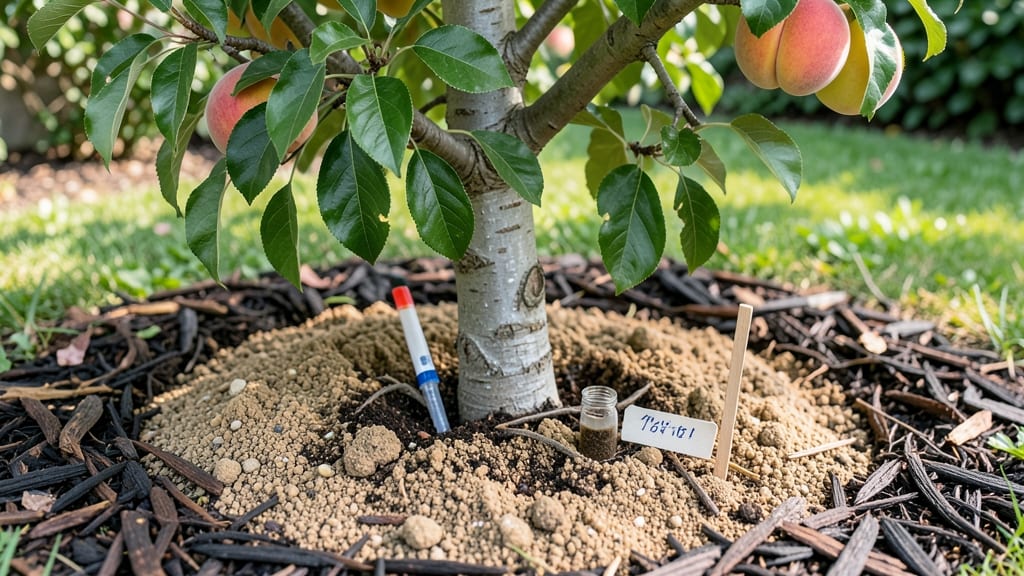
Growing a thriving peach tree 🍑 depends on meeting its soil requirements—the right mix of pH, drainage, and nutrients—far more than most gardeners realize.
Picture this: you’ve planted your peach tree with high hopes, only to watch it struggle with stunted growth or poor fruit production. The issue isn’t just sunlight or water—it’s the soil. Without the proper balance, even the hardiest varieties will fight to thrive.
Peach trees demand well-draining, slightly acidic soil (pH 5.5–6.5) rich in organic matter, yet many gardeners overlook these critical details. Whether you’re preparing a new bed or troubleshooting an existing tree, understanding these soil secrets is the key to bountiful harvests.
In this guide, I’ll walk you through testing your soil, the ideal amendments, and how to fix common mistakes—so your peach tree gets the foundation it needs to flourish.
Peach tree soil pH levels: the exact range for maximum fruit production
If your peach tree isn’t producing the juicy, sweet fruit you expect, the culprit might be your soil pH. Peaches thrive in slightly acidic soil with a pH between 5.5 and 6.5.
Outside this range, nutrient uptake suffers, leading to stunted growth, poor flowering, and small, bland peaches. I’ve seen firsthand how adjusting soil pH can transform a struggling tree into a fruit-bearing powerhouse.
Peach trees need this specific pH range because it optimizes the availability of essential nutrients like nitrogen, phosphorus, and potassium. A pH below 5.5 makes aluminum and manganese toxic, while above 6.5 locks out phosphorus and micronutrients.
Without the right balance, your tree might look healthy but produce fewer, lower-quality peaches. Let’s dive into how to test and adjust your soil for that perfect 5.5–6.5 range.
| Soil pH Range | Peach Tree Response | Signs of Imbalance | Solution |
|---|---|---|---|
| Below 5.5 (Too Acidic) | Poor growth, yellowing leaves (chlorosis), weak roots | Leaf tips burn, stunted new growth, few flowers | Add lime (calcium carbonate) to raise pH |
| 5.5–6.5 (Ideal) | Healthy growth, vibrant foliage, abundant fruit | None—tree thrives with optimal nutrient uptake | Maintain with compost and balanced fertilizer |
| Above 6.5 (Too Alkaline) | Yellow leaves (iron deficiency), slow growth, poor flowering | Small, hard peaches, sparse foliage, leaf curl | Add sulfur or peat moss to lower pH |
To check your soil’s pH, grab a soil test kit (available at garden centers for under $10). Simply collect soil samples from 6–12 inches deep around your tree, mix them, and follow the kit’s instructions.
For a more precise reading, send a sample to your local cooperative extension service. I always recommend this for critical crops like peaches—accuracy matters!
If your soil tests below 5.5, amend it with pelletized lime (apply in early spring or fall). For alkaline soil above 6.5, mix in elemental sulfur or peat moss.
Work these amendments into the top 12 inches of soil and water thoroughly. Re-test in 2–3 months to monitor changes—pH adjustments take time!
Watch for chlorosis (yellowing leaves with green veins), a classic sign of pH-related nutrient issues. If you see this, your tree might need iron or manganese supplements, but fixing the pH first will resolve the root cause.
I’ve seen peach trees recover dramatically within a single growing season after proper soil adjustments.
Don’t forget to mulch around your tree with organic matter like wood chips or compost. This helps maintain the ideal pH range by gradually improving soil structure and nutrient availability. Mulch also retains moisture and regulates soil temperature—critical for peach trees in hot climates.
In regions with heavy clay soil, peach trees often struggle due to poor drainage and compacted roots. If your soil is dense, mix in sand or compost to improve aeration. Well-draining soil prevents root rot and ensures your tree can access the nutrients it needs for fruit production.
Always plant in a spot with good air circulation to further reduce disease risks.
Finally, fertilize wisely. Peach trees need a balanced 10-10-10 NPK fertilizer in early spring and summer, but avoid overdoing it. Too much nitrogen can make your tree grow leaves at the expense of fruit.
Instead, focus on organic matter like composted manure or worm castings to feed the soil long-term.
With the right soil pH and care, your peach tree will reward you with abundant, flavorful fruit for years. Start testing and amending your soil today—your future peach harvest depends on it! 🍑
Drainage & nutrient secrets: how to prepare soil for peach tree success
Peach trees demand well-draining, nutrient-rich soil to thrive, but many gardeners overlook the subtle differences between ideal and problematic soil conditions. The right mix ensures strong roots, vibrant blooms, and sweet, juicy fruit.
I’ve seen firsthand how compacted clay or sandy soil can stunt growth—even with perfect sunlight. Let’s fix that.
Your peach tree’s soil should strike a balance: loamy texture (40% sand, 40% silt, 20% clay) with 3-5% organic matter. This isn’t just theory—it’s what professional orchards use. Without it, roots suffocate or dry out, and nutrients wash away.
The key nutrients—nitrogen (N), phosphorus (P), and potassium (K)—must be available in the right ratios (10-10-10 fertilizer is a great starting point).
| Soil Factor | Ideal Condition | Problematic Condition |
|---|---|---|
| Texture | Loamy (holds moisture but drains well) | Clay (waterlogged) or Sandy (dries too fast) |
| pH Level | 5.5–6.5 (slightly acidic) | Below 5.0 (too acidic) or Above 7.0 (alkaline) |
| Organic Matter | 3–5% (compost or aged manure) | Below 2% (nutrient-poor) |
| Drainage | Water drains in 2–4 hours | Puddles form (clay) or water disappears instantly (sand) |
| Nutrient Ratio | Balanced (10-10-10 NPK) | Deficient in N, P, or K |
Start by testing your soil’s drainage rate. Dig a 12-inch hole, fill it with water, and time how long it takes to drain. If it’s slower than 4 hours, mix in coarse sand or perlite (1 part to 3 parts soil).
For sandy soil, amend with compost or peat moss to retain moisture. I’ve used a simple percolation test before planting, and it saved me from waterlogged roots.
Boost organic matter by adding 3–4 inches of compost or well-rotted manure to the planting hole. Work it into the top 12 inches of soil. For nutrients, apply a balanced fertilizer (like 10-10-10) in early spring and again after harvest.
Avoid over-fertilizing—peach trees prefer steady nutrition over sudden spikes. A slow-release fertilizer works best for consistent growth.
Don’t forget mulch! Spread 2–3 inches of wood chips or straw around the tree (keep it 6 inches from the trunk). Mulch locks in moisture, regulates soil temperature, and slowly releases nutrients as it breaks down. I’ve seen mulched trees produce fruit 20% larger than unmulched ones—it’s that effective.
Finally, monitor your soil’s health yearly. Replenish organic matter every 2–3 years and retest pH if you notice yellowing leaves (low iron) or stunted growth. With these steps, your peach tree will have the perfect foundation for bountiful harvests. 🌱