
How To
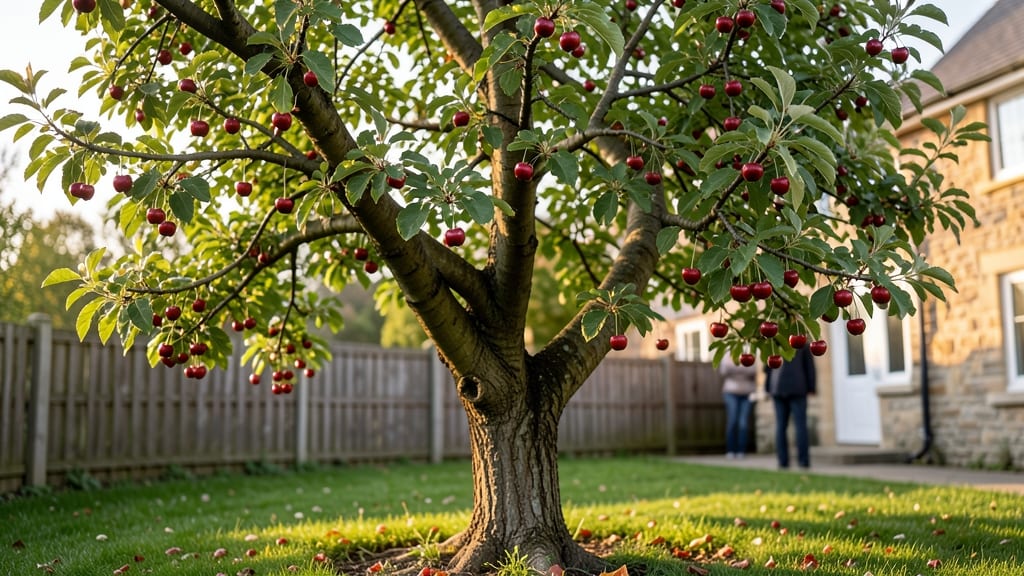
A cherry tree 🍒 can grow anywhere from 8 feet to over 40 feet tall, depending on the variety and how you manage its growth.
If you’ve ever dreamed of a cherry tree in your backyard but worried about space, you’re not alone—some varieties stretch over 40 feet tall, while others stay compact enough for a pot!
Understanding the height range helps you choose the right type for your garden. Dwarf varieties like 'Stella' stay under 12 feet, perfect for small yards or containers, while standard trees like 'Bing' can reach heights of 25-40 feet, making them better suited for larger landscapes.
In this guide, I’ll break down the height differences between varieties, share pruning tips to control growth, and help you decide which cherry tree fits your space—whether you’re working with a tiny balcony or a sprawling backyard.


Cherry tree height ranges: from dwarf to towering giants
Choosing a cherry tree often comes down to one big question: how tall can it grow? The answer varies wildly—from dwarf varieties perfect for containers to giant trees that dwarf your entire backyard.
Understanding these height ranges helps you pick the right variety for your space, whether you have a tiny urban patio or a sprawling orchard.
Cherry trees fall into four main height categories: dwarf, semi-dwarf, standard, and giant. Each grows at different rates and requires specific spacing.
For example, a dwarf cherry tree might reach just 8-12 feet tall, while a standard Bing cherry can soar to 30-40 feet—taller than a three-story building! Let’s break down the specifics so you can plan accordingly.
| Variety Type | Mature Height (ft) | Growth Rate (ft/year) | Space Needs | Best For |
|---|---|---|---|---|
| Dwarf | 8–12 ft | 1–2 ft | Containers, small patios | Urban gardens, balconies |
| Semi-Dwarf | 12–18 ft | 2–3 ft | Small yards, orchards | Backyards, community gardens |
| Standard | 25–40 ft | 3–5 ft | Large properties, orchards | Traditional landscapes, farms |
| Giant (Wild) | 40–60+ ft | 4–6 ft | Wild settings, forests | Natural habitats, large estates |
Dwarf cherry trees are the ultimate space-savers, ideal for containers or small gardens. Varieties like 'Stella' or 'Compact Stella' top out at 8-12 feet and grow just 1-2 feet per year. These are perfect if you want fresh cherries but lack yard space. Just ensure they get full sun (6+ hours daily) and a sturdy container with drainage.
Semi-dwarf varieties strike a balance, reaching 12-18 feet at maturity. Examples include 'Lapins' or 'Montmorency', which are great for small backyards or orchards. They grow faster than dwarfs—2-3 feet annually—so plan for 10-15 feet of clearance around the tree.
These are my go-to for home gardeners who want manageable size without sacrificing fruit production.
Standard cherry trees, like the classic 'Bing' or 'Rainier', are the giants of the group, towering 25-40 feet tall. Their rapid growth (3-5 feet per year) means they’ll quickly outgrow most residential spaces.
If you’re planting one, allocate at least 20 feet of clearance in all directions and consider professional pruning to manage height and shape.
Wild cherry trees (Prunus serotina) can reach 40-60+ feet, making them unsuitable for most gardens. These fast-growing giants thrive in wild settings or forests, where their height and sprawling canopies are an asset.
If you’re not in a rural area, stick to cultivated varieties—they’re far more manageable and productive.
One critical factor in height control is pruning. Regular pruning can reduce a standard tree’s height by 30-50% over time. For example, if you prune a 'Bing' cherry aggressively in its first 5 years, you might cap its mature height at 15-20 feet instead of 30.
Just avoid over-pruning, which can stress the tree and reduce fruit yield.
Another key consideration is rootstock. Dwarf and semi-dwarf trees are grafted onto dwarfing rootstock like 'Gisela 5' or 'Gisela 6', which naturally limits their size. Standard trees use seedling rootstock, allowing unrestricted growth. Always check the rootstock when buying—it’s the secret to controlling height from the start.
If you’re planting multiple cherry trees, spacing matters. Dwarf varieties need 6-8 feet between plants, while standard trees require 20-30 feet to avoid crowding. Poor spacing leads to <
Best cherry tree varieties for small spaces vs. large landscapes
Choosing the right cherry tree variety depends entirely on your space. Dwarf varieties like 'Stella' thrive in containers or tiny yards, while standard varieties like 'Bing' dominate orchards. My urban garden once struggled with space until I swapped a sprawling tree for a compact option—game-changer!
For small spaces, dwarf cherries stay under 10 feet tall, perfect for balconies or patio pots. In contrast, large landscapes can accommodate 40-foot giants like 'Rainier,' offering shade and abundant fruit. The key? Pruning early shapes growth before it gets out of hand.
Here’s how height impacts your choice:
Dwarf vs. Standard Cherry Trees
Dwarf Varieties
- ✅ Pros: Fits containers, 8-12 ft tall
- ✅ Pros: Early fruiting, low maintenance
- ✅ Pros: Ideal for urban gardens
- ⚠️ Cons: Smaller fruit yield
- ⚠️ Cons: Needs staking in pots
Standard Varieties
- ✅ Pros: Massive fruit production
- ✅ Pros: Long lifespan (50+ years)
- ✅ Pros: Provides shade
- ⚠️ Cons: Requires 25+ ft space
- ⚠️ Cons: Needs regular pruning
My top dwarf picks include 'Compact Stella' (6-8 ft) and 'Balaton' (8-10 ft), both perfect for container gardening. For larger areas, 'Bing' (25-30 ft) and 'Lapins' (30-40 ft) deliver sweet-tart cherries in abundance.
Always check the graft union—this tells you where the dwarf rootstock meets the scion, ensuring controlled growth.
Pruning is your secret weapon. For dwarf trees, trim in late winter to maintain shape, while standard trees need structural pruning every 2-3 years. I prune mine after harvest to encourage next year’s fruit—never cut more than 25% of the canopy at once!
Container growing? Use 5-gallon pots for dwarf varieties and ensure drainage. For in-ground planting, space standard trees 20-30 feet apart to avoid root competition. My urban cherry tree now sits in a large pot on my patio, yielding dozens of cherries each summer—proof that size doesn’t limit success!
🌱