
Trees
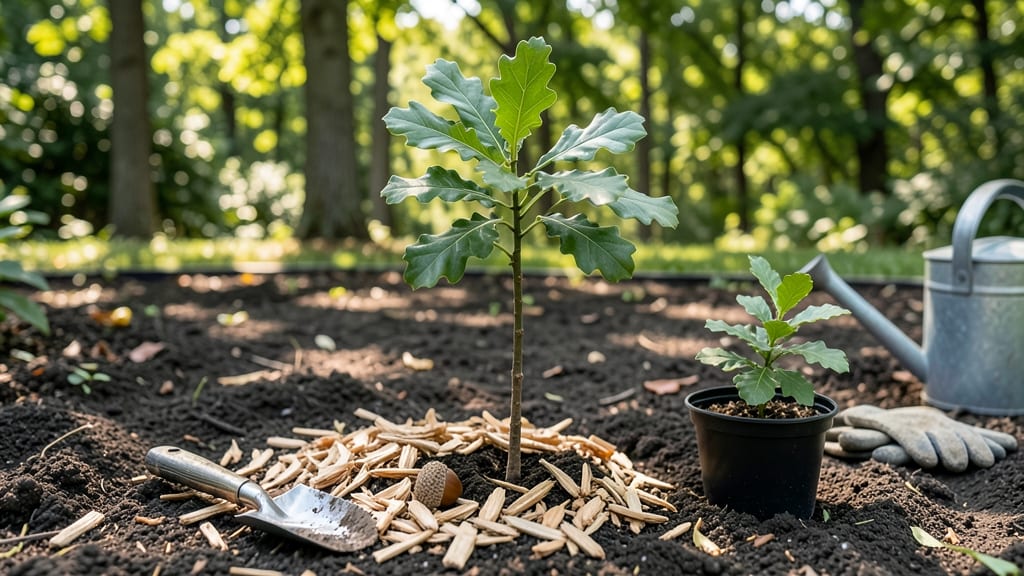
Planting oak tree starts means investing in a legacy that will outlive you—literally. 🌳 These cold-hardy saplings grow into towering giants with proper care, and the process starts with the right soil, timing, and patience you won’t find in a quick-growing annual.
The key to success lies in mimicking their natural environment: well-draining soil with a 6.0-7.0 pH, full sun exposure, and consistent watering that keeps roots moist but never soggy. Most gardeners rush the planting, but oak trees reward slow, steady growth—think decades, not seasons.
By year three, you’ll see sturdy branches forming and roots spreading deep. The mature canopy becomes a wildlife haven, and the wood itself becomes a prized feature in any landscape. This isn’t just gardening; it’s shaping the future of your property.
Works in zones 4-9, whether you’re restoring a forest edge or adding a statement piece to your yard. Let’s get those roots in the ground the right way.
📚 In This Guide
- What you need
- Instructions
- Tips and common mistakes
- Wrapping up and next steps
What you need
- ● Acorns or oak saplings: 5–10 (from a local, disease-free source—avoid invasive species like Chinese oak).
- ● Growing medium: Potting mix: 2–3 bags (sterile, well-draining blend with perlite or sand).
- ○ Optional: Coco coir or peat moss for moisture retention.
- ● Containers: 3–5 nursery pots (6–8 inches deep) or a seed-starting tray with drainage holes.
- ● Fertilizer: Slow-release oak-friendly fertilizer (e.g., 10-10-10 or organic options like worm castings).
- ● Watering can or spray bottle: With a fine rose nozzle for gentle hydration.
- ● Gloves: Heavy-duty work gloves (oak tannins can stain!).
- ● Small hand trowel: For transplanting or soil adjustments.
- ● Pruning shears: Sterilized (for trimming saplings later).
- ● pH testing kit: To ensure soil pH is acidic (5.0–6.5)—oaks thrive in slightly acidic conditions!
- ○ Shade cloth (optional): 30–50% coverage for young starts in hot climates.
- ● Location: Full sun (6+ hours/day) for outdoor planting.
- ● Bright, indirect light for indoor starts.
Step-by-step guide to planting oak tree starts
Here's how to give your cold-hardy saplings the best start for decades of strong growth.
🌱 Step 1: Choose the Right Location and Timing
Oak tree starts need full sun—at least 6 hours daily—and space to grow. Test your site by checking how much sun it gets over a week. I always plant in early spring, after the last frost but before buds swell, so the tree can establish roots before summer heat arrives.
Dig a hole twice as wide as the root ball but only as deep as the container's height. This prevents burying the trunk too deeply, which can suffocate the tree. If your soil is heavy clay, mix in 2-3 inches of compost at the bottom of the hole to improve drainage.
🪴 Step 2: Prepare the Sapling for Planting
Remove the sapling from its container carefully, keeping the root ball intact. If roots are circling the bottom, gently tease them apart with your fingers. This prevents girdling, where roots strangle the trunk as the tree grows. Water the root ball thoroughly before planting to help it settle into the hole.
Place the sapling in the hole so the top of the root ball sits 1-2 inches above ground level. This ensures the trunk stays above future soil settling. Backfill with native soil, tamping lightly every 2 inches to remove air pockets. Avoid compacting too hard—you want roots to spread easily.
☀️ Step 3: Water and Mulch for Long-Term Health
Water deeply right after planting—10-15 gallons for a 1-gallon sapling—to encourage roots to grow into the surrounding soil. Let the water soak in completely, then add 2-3 inches of mulch around the base, keeping it 6 inches away from the trunk to prevent rot.
Use organic mulch like wood chips or shredded bark. This conserves moisture, regulates soil temperature, and suppresses weeds. Check the mulch level every few months and replenish as it breaks down. Avoid piling mulch against the trunk—it traps moisture and invites disease.
⏰ Step 4: Monitor and Protect the Young Tree
Water every 7-10 days during the first growing season, giving 15-20 gallons each time. You'll know it's enough when water runs out the drainage holes if planted in a container, or when the top 6 inches of soil feel moist. Overwatering is just as harmful as underwatering.
Stake the tree only if necessary—young oaks have strong roots and rarely need support. If you do stake, use two stakes on opposite sides and a wide, flexible tie to avoid damaging the trunk as it grows. Prune only to remove broken or crossing branches; oaks heal slowly, so avoid heavy pruning in the first few years.
Tips & tricks for planting oak tree starts
Here's what nobody tells you about giving your oak saplings the strongest possible foundation.
Timing Secret: The early spring window between last frost and bud swell is non-negotiable for oak trees. I learned this the hard way after planting too late—my trees struggled through summer heat before roots could establish. Check your local frost dates and mark your calendar. If you miss this window, wait until fall planting season instead.
Root Ball Rescue: When you remove that root ball from its container, don't just dump it in the hole. Gently massage the sides to loosen any circling roots—this prevents girdling that can strangle your tree as it grows. I use my fingers to carefully tease apart any roots growing in tight circles at the bottom. Think of it like untangling headphones, but with more dirt and less patience.
Watering Wisdom: That initial 10-15 gallons for a 1-gallon sapling might seem like a lot, but it's essential. Water should run out the drainage holes if planted in a container, or soak through to 6 inches deep. I use a garden hose with a gentle spray setting to avoid compacting the soil while watering. This deep watering encourages roots to grow outward rather than staying concentrated in the root ball.
Mulch Matters: The 2-3 inches of mulch around your sapling isn't just decoration—it's a protective blanket. I always keep it 6 inches away from the trunk to prevent rot. Use organic mulch like wood chips or bark, and check it every few months. If it breaks down to less than 2 inches, add more. This mulch layer works year-round to regulate soil temperature and conserve moisture.
Pro Tips for Oak Tree Starts
- Here's what nobody tells you about giving your oak saplings the strongest possible foundation.
- Timing Secret: The early spring window between last frost and bud swell is non-negotiable for oak trees.
- Root Ball Rescue: When you remove that root ball from its container, don't just dump it in the hole.
Frequently asked questions
Got questions about growing oak tree starts? You’re not alone! Here are answers to the most common queries to help you get started on the right foot.
How long does it take for an oak tree start to establish itself?
Oak tree starts typically take 2–5 years to fully establish, depending on species and growing conditions. Red and white oaks grow faster (3–5 years), while live oaks may take longer (5+ years). Patience is key—deep roots build resilience over time!
When is the best time to plant oak tree starts?
The ideal window is late fall to early spring (before buds swell). Fall planting lets roots settle before winter, while spring gives them a full growing season. Avoid extreme heat—oaks despise transplant shock!
Can I grow an oak tree from an acorn instead of buying a start?
Yes, but success rates are low (only ~10–20% germinate). Acorns need stratification (cold treatment) for 60–90 days. For guaranteed results, opt for nursery-grown starts—oaks grow much faster!
How do I protect young oak starts from pests or disease?
Monitor for oak wilt (fungus) and borers (insects). Prune dead branches promptly, water deeply during droughts, and apply mulch to deter pests. Healthy soil = happy trees! Avoid over-fertilizing—oaks prefer lean conditions.
How much space should I leave between oak tree starts?
Space depends on the mature size: 30–50 feet for large oaks (like white oak), 20–30 feet for medium (red oak), and 15–20 feet for smaller varieties. Overcrowding leads to weak growth—plan ahead for long-term beauty!
Wrapping up and next steps
Starting an oak tree from scratch is a rewarding journey that promises decades of beauty and resilience for your landscape.
Whether you’re nurturing an acorn or transplanting a young sapling, patience and care will pay off with a towering, cold-hardy giant that stands the test of time. Now’s your chance to take action: pick your oak variety, gather your supplies, and get planting—your future shade tree is waiting!
- 🌱 Next Step: Mark your calendar for planting season and watch your oak tree grow into a masterpiece.
- 💡 Pro Tip: Document your progress with photos—it’s a great way to track growth and celebrate milestones!