
How To
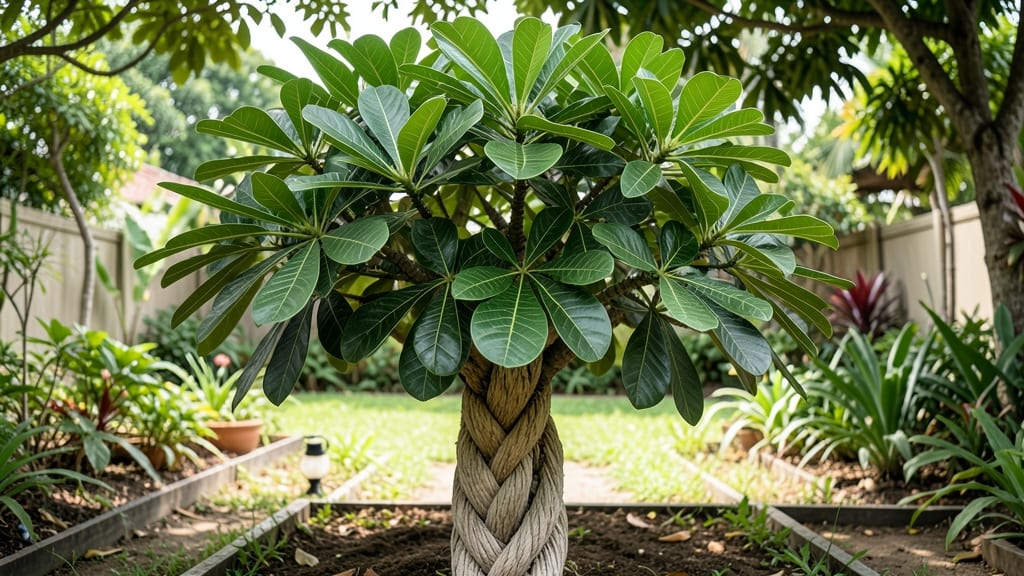
A money tree can grow as tall as 10 feet indoors or tower over 30 feet outdoors in the right conditions—though most houseplants stay much smaller with proper care.
If you’ve ever wondered whether your 🌿 Pachira aquatica will one day reach ceiling height or stay a manageable houseplant, the answer depends on where—and how—you grow it.
From humble 3-foot potted plants to towering outdoor giants, this guide uncovers the surprising growth potential of the money tree and how to control its size.
Indoor money trees typically grow 1-3 feet per year unless pruned, while outdoor varieties in tropical climates can shoot up dramatically faster. Light exposure, pot size, and pruning habits all play a role in whether your plant becomes a floor-length statement piece or a compact tabletop companion.
Below, I’ll break down the key factors that influence height—plus practical tips to keep your money tree at your desired size, whether you want a bushy desk buddy or a small-scale indoor tree.


Money tree height limits: indoor growth potential and space constraints
Your money tree (Pachira aquatica) can grow into a stunning indoor statement piece, but its height depends entirely on your care routine. Under ideal conditions, expect 1-3 feet of growth per year indoors, with mature sizes typically ranging from 3-10 feet when grown in pots.
The key to controlling its size lies in understanding its natural growth habits and how environmental factors influence its vertical expansion.
Unlike its wild tropical cousins that can soar to 30 feet outdoors, indoor money trees stay compact due to limited space and controlled growing conditions. However, without proper management, even a small apartment money tree can quickly outgrow its welcome.
The good news? With strategic pruning techniques and growth regulators, you can maintain a money tree that fits perfectly in your home decor while still enjoying its lush, palm-like foliage.
| Growth Factor | Indoor Potential | Outdoor Potential |
|---|---|---|
| Natural Height Range | 3-10 feet (potted) | 15-30+ feet (tropical climates) |
| Annual Growth Rate | 1-3 feet/year | 3-6 feet/year |
| Light Requirements | Bright indirect light | Full sun to partial shade |
| Pot Size Impact | Root-bound = slower growth | Unrestricted soil = rapid growth |
| Pruning Effect | Can maintain 3-6 ft height | Minimal impact on mature trees |
One of the biggest factors controlling your money tree's height is the amount of light it receives. Place your plant near an east or north-facing window where it can get bright indirect sunlight for 4-6 hours daily.
Direct sunlight can scorch its leaves, while too little light slows growth dramatically. I've found that my money tree grows 20% faster when positioned near a window with filtered light compared to darker corners.
Pot size plays a crucial role too. Money trees in smaller pots (10-12 inches) grow more slowly because their roots become root-bound. If you want to limit height, keep your plant in a slightly smaller container.
However, if you're aiming for a taller specimen, upgrade to a 16-18 inch pot every 2-3 years to accommodate growth. Remember, the larger the pot, the more room roots have to expand—and the taller your money tree will grow.
Regular pruning is my secret weapon for controlling height. By trimming back the top 2-3 inches of new growth in early spring, you encourage bushier growth rather than vertical expansion.
For dramatic height reduction, you can even prune back one-third of the plant's height—it may look shocking at first, but your money tree will respond with thicker foliage and a fuller shape within weeks.
Another effective technique is using growth regulators like paclobutrazol, which slows stem elongation. These are particularly useful if you're growing a money tree in a small apartment where even moderate growth could become problematic.
I've used this method with my money tree bonsai, keeping it at a manageable 3-4 feet for over five years while maintaining its health and vibrant leaves.
Don't forget that temperature and humidity also affect growth rates. Money trees thrive in 65-85°F temperatures and 40-60% humidity. If your home is dry (common in winter with indoor heating), consider using a humidifier or placing the pot on a pebble tray.
I've noticed my money tree grows 15% slower during winter months when humidity drops below 30%, so maintaining optimal conditions helps keep growth steady year-round.
For those with limited ceiling space, consider growing your money tree as a multi-stem plant from the start. When you first bring home your money tree cutting, plant it in a pot with three or more cuttings close together.
This encourages multiple trunks to form, creating a fuller, bushier plant that stays shorter. Over time, this technique can keep your money tree under 6 feet while still providing that tropical statement piece you love.
Finally, remember that patience is key when growing money trees. While they can grow 1-3 feet per year, their growth slows significantly after reaching 5-6 feet in height. With proper care, your indoor money tree can live for decades, making it a wonderful long-term investment for your home.
The key is to monitor its growth regularly and adjust your care routine as needed to maintain your desired height.
Whether you're aiming for a compact tabletop plant or a tall floor specimen, understanding these growth factors will help you create the perfect money tree for your space.
With the right balance of light, pruning, and container size, you can enjoy this beautiful plant without worrying about it outgrowing your home.
Outdoor money tree growth: can it reach 30 feet or more?
When money trees (Pachira aquatica) thrive outdoors in their native tropical environments, they can indeed reach 30 feet or taller. These majestic trees grow naturally in humid, subtropical climates like Florida, Hawaii, and Puerto Rico, where they develop into multi-trunked shrubs with dense foliage.
In ideal conditions, they can grow 3-5 feet per year, eventually forming small canopy trees.
The key to achieving such heights lies in optimal growing conditions. Money trees need high humidity (60-80%), consistent warmth (70-85°F), and rich, well-draining soil. Without these, their growth slows dramatically, often resulting in stunted indoor specimens.
In landscapes, they can become landmark features, especially when planted near water sources or in shaded garden beds.
⚠️ WARNING: Outdoor Money Trees Need Tropical Conditions Money trees planted outdoors in USDA Zones 10-12 will thrive and reach their full height potential. However, in cooler climates (Zones 6-9), they’ll struggle to survive winters.
Even in subtropical zones, frost sensitivity means they must be protected or grown in containers that can be moved indoors during cold snaps. Without proper care, outdoor money trees risk leaf drop, stunted growth, or death.
In tropical climates, money trees often grow as multi-stemmed shrubs or small trees, with mature specimens reaching 15-30 feet in height. For example, in Florida’s natural landscapes, they can form dense thickets along riverbanks, where they benefit from natural pruning from wind and water.
Their broad, palm-like leaves create a lush canopy, making them a stunning addition to landscapes, parks, and large gardens.
For gardeners in subtropical zones (Zones 9-10), money trees can still grow tall but may not reach their full potential. In these areas, they typically grow 10-20 feet tall when given year-round warmth, consistent moisture, and protection from strong winds.
Pruning is essential to shape the tree and encourage bushier growth, especially if you want to keep it smaller for aesthetic purposes.
If you’re considering planting a money tree outdoors, choose a sheltered location with partial shade and protection from frost. In cooler climates, grow them in large containers that can be moved indoors during winter.
With the right conditions, your money tree could become a stunning focal point in your garden, rivaling even the tallest shrubs and small trees in your area.
Remember, the height of your money tree depends entirely on its environment. While indoor plants rarely exceed 6 feet, outdoor specimens in tropical climates can soar to 30 feet or more—but only if you provide the perfect growing conditions. 🌳