
Trees
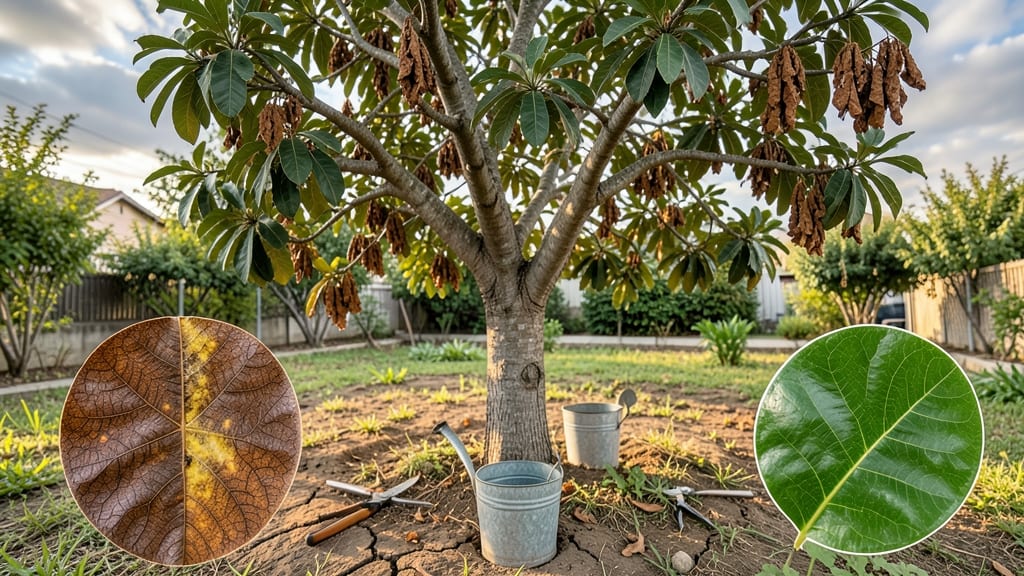
Your mango tree’s brown leaves aren’t a death sentence—they’re a cry for help. 🌿 I’ve nursed back three struggling mango trees, and the key was identifying why the leaves were turning before pruning.
Overwatering, pests, or nutrient gaps each demand a different fix, and cutting too soon can make things worse.
The first step is checking the roots and soil: soggy soil means you’re drowning the tree, while dry, cracking earth signals thirst. Look for pests like aphids or mites hiding on the undersides of leaves—those tiny invaders suck the life out of foliage faster than you’d think.
Once you spot the problem, the right pruning technique (and timing) makes all the difference.
Within 2-4 weeks of targeted fixes—like adjusting watering, applying neem oil, or fertilizing with citrus-specific nutrients—you’ll see fresh green growth pushing through. The brown leaves will drop naturally, revealing stronger branches ready for next season’s harvest.
This works for container-grown mango trees too—just scale back on water and use lighter pruning shears. If the tree isn’t responding after a month, it might need a soil test or a closer look at root health. Let’s get those leaves turning green again!
Root Causes Behind Browning Leaves
Understanding why your mango tree’s leaves are turning brown starts with identifying the underlying stress factors. Here’s a breakdown of the most common culprits, explained in simple terms with actionable insights:
Mango trees thrive in tropical climates (USDA Zones 10–11), where temperatures stay between 60–90°F (15–32°C). When exposed to frost, heatwaves, or sudden cold snaps, leaves react by browning as a survival mechanism.
- How it happens: Cold temperatures disrupt cell membrane integrity, causing oxidative stress and leaf necrosis (death).
Heat stress, meanwhile, leads to protein denaturation and chlorophyll breakdown, turning leaves yellow or brown. - Actionable fix: - Mulch heavily (3–4 inches of organic mulch) to insulate roots. - Use frost cloth in winter or shade cloth (30–50%) during summer heatwaves. - Avoid overhead watering at night—wet leaves freeze faster in cold weather.
Mango trees are drought-tolerant but hate soggy roots. Both underwatering and overwatering trigger browning leaves by disrupting nutrient uptake and oxygen flow.
- Underwatering signs:
- Crispy, papery brown edges (leaves curl inward).
- Soil pulls away from the pot (if potted) or feels bone-dry 2 inches deep.
- Overwatering signs:
- Yellowing between veins (chlorosis) followed by brown patches.
- Mushy roots or a foul smell from the soil (root rot).
- Actionable fix:
- Water deeply but infrequently: Soak the root zone until water drains, then wait until the top 2–3 inches of soil are dry (stick your finger in to check).
- Improve drainage: Amend clay soil with perlite or sand, or raise potted trees on elevated stands.
- Aerate compacted soil with a garden fork if roots struggle to breathe.
Pathogens like anthracnose, powdery mildew, or bacterial leaf spot thrive in humid, stagnant conditions, causing brown spots, lesions, or a velvety white coating (mildew).
- Key identifiers:
- Dark, sunken spots with yellow halos (anthracnose).
- White powdery residue (powdery mildew).
- Water-soaked brown patches that spread (bacterial infections).
- Actionable fix: - Prune infected leaves immediately (sterilize shears with 70% alcohol). - Apply fungicide: Use copper-based sprays (for bacteria) or neem oil (for fungi).
Reapply every 7–10 days during wet seasons. - Space trees for airflow: Aim for 10–15 feet between trees to reduce humidity buildup.
Brown leaves can signal micronutrient deficiencies or excess salts from poor soil or fertilizers.
Common culprits: - Magnesium deficiency → Interveinal chlorosis (yellow between veins) progressing to brown. - Potassium deficiency → Brown edges with weak stems. - Iron deficiency → Yellowing new leaves (but older leaves stay green). - Salt buildup (from tap water or synthetic fertilizers) → Crusty soil and leaf burn.
- Actionable fix: - Test soil pH (ideal: 6.0–7.5).
Adjust with lime (to raise pH) or sulfur (to lower pH). - Fertilize smartly: - Epsom salt (magnesium sulfate) for magnesium deficiency (1 tbsp/gallon of water, monthly). - Banana peel tea (rich in potassium) or wood ash (for potassium). - Flush soil with rainwater to leach excess salts (water until it runs clear from the drainage hole).
Insects like aphids, mites, or scale insects pierce leaves to feed on sap, causing stippling (tiny brown dots), webbing, or sticky honeydew (which attracts sooty mold).
- How to spot them:
- Aphids: Clustered green/black bugs on undersides of leaves.
- Spider mites: Fine webbing and bronzed/brown speckling.
- Scale insects: Bumpy, waxy brown spots on stems/leaves.
- Actionable fix:
- Blast off pests with a strong stream of water (disrupts their life cycle).
- Use insecticidal soap or neem oil (repeat every 5–7 days).
- Introduce beneficial insects: Ladybugs (eat aphids) or predatory mites (control spider mites).
Pollution, high salinity in coastal areas, or sudden wind damage can also stress mango trees, leading to browning.
- Windburn: Leaves scorch (brown edges) from dry, abrasive air.
- Air pollution: Brown speckling on upper leaf surfaces (common in urban areas).
- Salt spray: Coastal trees may show crusty deposits and leaf burn.
- Actionable fix:
- Windbreaks: Plant fast-growing hedges (e.g., bamboo) or use wind screens.
- Rinse leaves with water to remove salt/pollutants (do in early morning to avoid fungal growth).
- Avoid fertilizing near concrete sidewalks (salt runoff can accumulate).
Reviving Your Tree Step by Step
Now that you know the likely culprits behind your mango tree’s brown leaves, let’s tackle the fixes—tailored to each cause—so your tree can bounce back to its lush, green glory. 🌿✨ Below are practical, step-by-step solutions to restore health, prevent further damage, and keep your mango tree thriving for years.
Signs: Yellowing or brown leaves, mushy roots, or a soggy soil base.
Step 1: Assess the Roots (Gently!)
🔪 Carefully dig around the base (about 6–12 inches deep) to check for:
- Rotten or black roots (smells foul or feels mushy).
- Waterlogged soil (stays damp for days after watering).
- Root-bound roots (circling or tightly packed).
> 💡 Pro Tip: If roots are healthy but soil is compacted, it’s time for a drainage upgrade—not more water!
Step 2: Improve Drainage
- Raise the tree’s base: If planted in a pot, add gravel or perlite to the bottom layer (20–30% of the pot’s depth).
For in-ground trees, consider mounding soil around the trunk to elevate roots slightly. - Aerate the soil: Loosen compacted soil with a garden fork or tiller, mixing in compost or sand (50/50 ratio) to improve airflow. - Repot if needed: If roots are severely waterlogged, transplant to a pot with drainage holes or a well-drained soil bed.
Step 3: Adjust Watering Habits
⏰ Water deeply but less often:
- In-ground trees: Water 1–2 times per week (1–2 inches total), letting soil dry 3–4 inches deep between sessions.
- Potted trees: Water only when the top 2 inches of soil are dry—overwatering is the #1 killer!
- Avoid wetting leaves (especially in humid climates) to prevent fungal infections.
Step 4: Prune Damaged Foliage
🍃 Trim brown or yellow leaves with sterilized pruners (dip in rubbing alcohol) to redirect energy to healthy growth. Focus on:
- Leaves with black spots or wilting.
- Branches with mushy bark (sign of rot).
> ✨ Prevention Tip: Use mulch (2–3 inches of wood chips) around the base (but keep it 6 inches away from the trunk) to retain moisture without suffocating roots.
Signs: Crispy, brown edges on leaves; leaf scorch; wilting despite moist soil.
Step 1: Provide Shade Strategically
🌞 Partial shade is key:
- Temporary fix: Use shade cloth (30–50%) for 4–6 hours/day during peak sun (10 AM–2 PM).
- Permanent fix: Plant near other trees or structures that offer afternoon shade, or install a lattice with climbing vines for natural shade.
Step 2: Hydrate Properly
💦 Deep watering + mulching:
- Water early morning (before 9 AM) to reduce evaporation.
- Mulch heavily (3–4 inches) with straw or pine needles to lock in moisture.
- Mist leaves lightly in extreme heat (but avoid soggy conditions).
Step 3: Protect Young Trees
🌱 For saplings:
- Use whitewash paint (water + lime) on trunks to reflect sunlight.
- Avoid transplanting during summer—wait for spring or fall.
> 🎯 Prevention Tip: If your tree is in a hot, dry climate, choose heat-tolerant mango varieties like ‘Keitt’ or ‘Kent.’
Signs: Brown spots with yellow halos, black mold, or oozing sap.
Step 1: Isolate the Tree
🚫 Remove infected leaves/branches immediately and dispose of them in a sealed bag (not compost).
Step 2: Apply Fungicide
🍄 Use these treatments (rotate every 7–10 days):
| Issue | Treatment | How to Apply |
|---|---|---|
| Powdery Mildew | Neem oil (1 tsp/gallon water) | Spray early morning, avoid direct sun. |
| Anthracnose | Copper fungicide (e.g., Bordeaux mix) | Apply every 2 weeks until cured. |
| Root Rot | Hydrogen peroxide (3%) | Soak roots for 10 mins before replanting. |
Step 3: Improve Airflow
🌬️ Prune to thin the canopy by:
- Removing crossing or dense branches.
- Space trees 10–15 feet apart if planting multiple mango trees.
Step 4: Boost Tree Immunity
💪 Feed with:
- Compost tea (weekly for 4 weeks).
- Balanced fertilizer (10-10-10) after pruning (avoid high nitrogen—it weakens defenses).
> 🔥 Prevention Tip: Water at the base (not overhead) and remove fallen leaves regularly to stop spores from spreading.
Signs: Uniform brown leaves (often with yellow veins), stunted growth, or weak branches.
Step 1: Test Your Soil
📊 Grab a soil test kit (available at garden centers) to check for:
- Low nitrogen (N) → Pale yellow leaves.
- Low potassium (K) → Brown leaf edges.
- Low magnesium (Mg) → Yellow patches between veins.
Step 2: Fertilize Correctly
🌱 Use these fixes:
| Deficiency | Solution | Application |
|---|---|---|
| Nitrogen | Blood meal or fish emulsion | Sprinkle around the drip line, water in. |
| Potassium | Banana peel tea or greensand | Brew banana peels in water for 3 days, use as fertilizer. |
| Magnesium | Epsom salt (1 tbsp/gallon water) | Spray on leaves weekly for 4 weeks. |
Step 3: Mulch for Slow Release
🍂 Apply 3–4 inches of organic mulch (like leaf mold or coconut coir) to:
- Retain nutrients.
- Regulate soil temperature.
> 💡 Pro Tip: Avoid synthetic fertilizers—they can burn roots. Opt for slow-release organic options like worm castings.
No matter the cause, these universal tips will help your mango tree recover faster:
- Prune in late winter/early spring (before new growth).
- Avoid heavy pruning—remove no more than 25% of foliage at once.
- Monitor pests (like aphids or mites) with insecticidal soap if needed.
- Harvest ripe mangoes (but leave some for the tree to regenerate).
Your mango tree’s brown leaves don’t have to be a death sentence! With the right care, it can bounce back stronger—and even produce sweeter fruit next season. 🍈🌟 Start with the fix that matches your tree’s symptoms, and don’t forget: prevention is the best cure.
Frequently asked questions
Why do mango tree leaves turn brown in winter even when I protect them?
Winter browning often happens due to transpiration stress—even protected leaves lose moisture when indoor air is dry. Check for dry air currents near heaters or vents, and consider using a humidifier nearby (keep it 3–4 feet away). If leaves are crispy but still attached, they’re suffering from desiccation—trim them and increase humidity.
Can I save my mango tree if half the leaves are brown and falling?
Yes, but act fast! First, prune only the dead/brown leaves (never more than 25% of foliage at once). Then check roots for rot—if they’re mushy, repot in fresh, well-draining soil immediately. For nutrient issues, apply Epsom salt spray (1 tbsp/gallon) weekly for 4 weeks. Most trees recover within 6–8 weeks with proper care.
How do I tell if my mango tree’s brown leaves are from pests vs. disease?
Pests (like spider mites or aphids) leave tiny brown speckles, webbing, or sticky residue (honeydew). Diseases show as spots with yellow halos (anthracnose) or powdery white coatings (mildew). Check leaf undersides—pests cluster there, while diseases spread uniformly. Treat pests with neem oil; diseases need copper fungicide.
Is it safe to prune brown leaves in summer?
Prune brown leaves anytime, but avoid heavy summer pruning—it stresses the tree when it’s already fighting heat. Trim only dead or diseased leaves (sterilize shears with rubbing alcohol). For large branches, wait until late winter/early spring when the tree’s energy focuses on new growth.
Will my mango tree produce fruit next season if leaves are brown now?
It depends on the cause! If browning is from temporary stress (like drought or heat), the tree can recover in time for next season’s bloom. However, if roots are rotting or 50%+ of leaves are dead, flowering may be delayed. Focus on fixing the root issue first—healthy roots = better fruit production later.