
Pests and Diseases
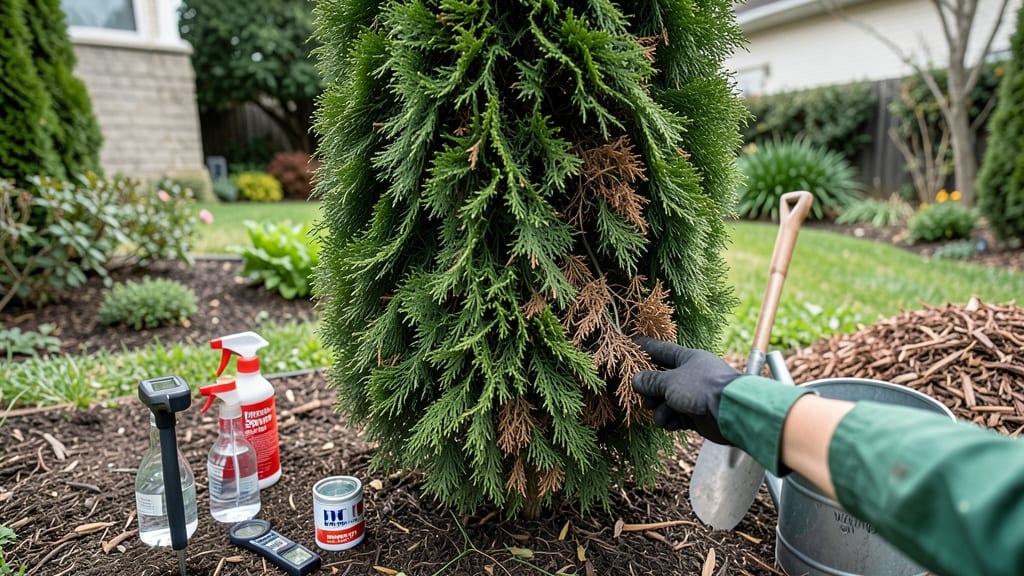
Why is my cypress tree turning brown?—it’s not a death sentence, just a cry for help. 🌲 I’ve nursed back more than a few from root rot, fungal infections, and environmental stress, and the fixes are simpler than you’d think. The first step is figuring out what’s really going wrong, because the solution depends on whether it’s a soil problem, a pest invasion, or just too much heat and not enough water.
Root rot and Seiridium fungus (the #1 culprit for browning cypress) show up differently. Root rot means soggy soil, mushrooms at the base, and branches wilting from the bottom up. Fungal infections start with brown needles that don’t fall, then spread to entire branches.
Environmental stress? That’s usually uniform browning after a long dry spell or winter freeze. Grab a magnifying glass and check for tiny holes (pests) or black spots (fungus) before you prune.
You’ll be able to revive your tree in just a few weeks with the right approach—whether that’s improving drainage, applying fungicide, or giving it a deep watering. The key is acting fast: once 30% of the tree is brown, the damage is permanent.
But with these fixes, you’ll see fresh green growth within 4-6 weeks if you catch it early. Let’s get your cypress back to its lush, evergreen glory.
Works for both Leyland cypress and Italian cypress, and the same principles apply to arborvitae too. Here’s how to diagnose and treat it before it’s too late—no green thumb required.
Root Causes Behind Browning Cypress
When your cypress tree starts turning brown, it’s often a cry for help from its roots, leaves, or even its very core. Understanding the why behind the discoloration is the first step toward saving your tree.
Let’s break down the most common culprits—each with a scientific twist and actionable clues to spot them early.
Cypress trees thrive in moist—but not soggy—conditions. When roots sit in waterlogged soil for too long, they suffocate due to a lack of oxygen. This creates the perfect breeding ground for phytophthora fungi and other pathogens, leading to root rot.
The tree’s vascular system clogs, preventing water and nutrient uptake, which manifests as browning needles or branches.
How to spot it:
- 🌡️ Soil test: Stick your finger 2–3 inches into the soil. If it feels damp or smells like wet socks for days, you’ve got overwatering.
- 🔍 Root inspection: Gently dig near the base (if safe). Healthy roots are white or light tan; rotten roots are mushy, dark brown/black, and may ooze.
- ⏳ Timing: Browning worsens after heavy rains or if the tree is planted in low-lying areas where water pools.
Why it’s deadly: Root rot spreads quickly, especially in sandy or clay soils, which drain poorly. Once established, it can kill a cypress in weeks, not months.
Cypress trees are adaptable but have limits. Excessive heat or intense sunlight can scorch foliage, causing a brown, crispy appearance (often on the south or west sides of the tree). Conversely, shade deficiency (especially in young trees) leads to weak, pale growth that browns prematurely due to nutrient starvation.
How to spot it:
- 🔥 Sunburn pattern: Browning starts on outer branches exposed to direct afternoon sun, while inner foliage stays green.
- 🌑 Shade stress: New growth is stunted, and older needles turn yellowish-brown before falling.
- 📊 Seasonal clue: Sudden browning after a heatwave (90°F+ for days) points to sun stress.
Why it’s tricky: Cypress trees like partial sun (4–6 hours/day). If planted in full sun without acclimation or deep shade, they’ll struggle to photosynthesize efficiently, leading to gradual decline.
Cypress trees are a buffet for pests like bagworms, spider mites, and cypress tip moths. These critters don’t just nibble—they devour needles and bark, disrupting the tree’s ability to photosynthesize and transport water.
The result? Brown, skeletonized branches or sticky sap (a sign of aphids or scale insects).
How to spot them:
- 🕷️ Bagworms: Look for small, brownish bags (like tiny pinecones) hanging from branches. Heavy infestations cause full branch dieback.
- 🕸️ Spider mites: Check the underside of needles for tiny webs and speckled brown specks (feces/dead tissue). Severe cases turn leaves bronze or gray.
- 🐛 Tip moths: New growth tips appear brown and wilted, as if chewed off. Look for tiny white larvae inside buds.
Why it’s urgent: Pests multiply exponentially in dry, hot conditions. A single bagworm can spin 1,000+ eggs in a season—ignoring them means your tree could lose its canopy in one year.
Cypress trees (especially Leyland cypress) are semi-evergreen, meaning they keep some needles year-round—but they’re not frost-proof. When temperatures dip below 15°F for extended periods, ice crystals form in the cells, rupturing them. This causes browning needles that stay attached (unlike pests, which cause needle drop).
How to spot it:
- ❄️ Pattern: Browning starts on exposed branches (tops, outer edges) and spreads inward.
- 📅 Timing: Damage appears within days of a hard freeze, not weeks.
- 🌿 Texture: Needles may feel crunchy or brittle when touched.
Why it’s reversible: Unlike root rot, frost damage is cosmetic—the tree can regrow needles in spring. However, repeated freezes weaken the tree, making it susceptible to pests and disease.
Cypress trees need nitrogen, iron, and manganese to stay vibrant.
A deficiency in these nutrients leads to chlorosis (yellowing) followed by browning, especially on new growth. Iron chlorosis (common in alkaline soils) turns leaves yellow with brown edges, while nitrogen deficiency causes overall browning and stunted growth.
How to spot it:
- 📊 Soil test: pH > 7.0? That’s alkaline territory—iron and manganese become unavailable to roots.
- 🌿 Growth pattern: Browning starts on youngest needles (top third of the tree) and spreads downward.
- 💡 Pro tip: Scratch the bark—if it’s thin or cracked, the tree can’t absorb nutrients efficiently.
Why it’s fixable: Amending soil with chelated iron or sulfur (to lower pH) can revive a deficient tree. However, over-fertilizing can burn roots, causing browning from salt buildup.
Revive Your Cypress Tree Now
---
If your cypress tree is turning brown, don’t panic—there’s hope! 🌿 The key is identifying the root cause (literally and figuratively) and taking action fast. Below, we break down practical fixes for each common issue, from overwatering to fungal attacks, plus tips to keep your tree thriving long-term.
---
If root rot or soggy soil is the culprit, your cypress needs better drainage and less water.
- 🔥 Step 1: Test the Soil Dig 6 inches into the soil near the base. If it’s damp or smells like rot, you’re overwatering.
- 🍳 Step 2: Adjust Watering Habits Cypress trees hate "wet feet." Water only when the top 2 inches of soil are dry. Use a moisture meter for accuracy.
- 👨🍳 Step 3: Improve Drainage Amend heavy clay soil with compost or sand (50/50 mix) to help water drain faster. For container-grown cypress, ensure pots have drainage holes.
- ⏰ Step 4: Mulch Properly Apply 2–4 inches of mulch (wood chips or pine straw) but keep it 6 inches away from the trunk to prevent moisture buildup.
💡 Pro Tip: If root rot is severe, prune affected roots carefully with sterilized shears and treat with a fungicide like copper sulfate.
---
Fungi thrive in wet conditions. Here’s how to fight back:
- 🔥 Step 1: Prune Infected Areas Remove brown, mushy, or discolored branches with clean, sharp pruners. Sterilize tools with 70% isopropyl alcohol between cuts.
- 🍳 Step 2: Apply Fungicide Use a copper-based fungicide (like Bonide Copper Fungicide) or a phosphite fungicide (e.g., Phostrol) every 2–4 weeks until new growth appears.
- 👨🍳 Step 3: Improve Airflow Thin out dense foliage to reduce humidity around the tree. Space branches apart to let air circulate.
- ⏰ Step 4: Solarize the Soil (Advanced) For severe root rot, cover the soil with clear plastic for 4–6 weeks in hot sun to kill fungi naturally.
💡 Pro Tip: Avoid watering in the evening—fungi love nighttime moisture. Water early in the day so foliage dries quickly.
---
If your cypress is brown from underwatering, it’s often reversible with deep hydration.
- 🔥 Step 1: Deep Watering Water slowly and deeply (1–2 inches per week) rather than shallow sprinkles. Use a soaker hose for even distribution.
- 🍳 Step 2: Check for Compaction Compacted soil blocks water. Loosen the top 6 inches with a garden fork to help roots absorb moisture.
- 👨🍳 Step 3: Mulch to Retain Moisture Spread 3–4 inches of mulch (avoid plastic) to lock in moisture and cool roots.
- ⏰ Step 4: Fertilize Lightly Apply a balanced, slow-release fertilizer (10-10-10) in spring to boost recovery. Avoid high-nitrogen fertilizers—they can burn roots.
💡 Pro Tip: If the tree is small, submerge the root ball in water for 30–60 minutes to rehydrate quickly.
---
Pests can drain nutrients, causing browning. Act fast with these steps:
- 🔥 Step 1: Identify the Pest
- Bagworms: Look for pouch-like nests on branches.
- Spider Mites: Check for fine webbing on undersides of needles.
- Scale Insects: Spot bumpy, brown spots on stems.
- 🍳 Step 2: Manual Removal (For Bagworms) Handpick bagworm nests and drop them into soapy water. Repeat every 7–10 days until gone.
- 👨🍳 Step 3: Spray with Insecticidal Soap Use a horticultural oil or insecticidal soap (like Safer® Brand Insect Killing Soap) and spray undersides of branches where pests hide.
- ⏰ Step 4: Introduce Beneficial Insects Release ladybugs or lacewings (available at garden centers) to eat mites and scale naturally.
💡 Pro Tip: For severe infestations, use a systemic insecticide like Imidacloprid (follow label instructions carefully).
---
Extreme conditions can shock cypress trees. Here’s how to protect them:
- 🔥 For Heat Stress:
- Provide afternoon shade with shade cloth (30–50%).
- Mulch heavily to keep roots cool.
- Avoid fertilizing in summer—it stresses the tree.
- 🍳 For Cold Damage:
- Wrap the trunk with burlap in winter.
- Avoid pruning in late fall—it reduces cold hardiness.
- Water deeply before frost to protect roots.
- 👨🍳 For Salt Damage (Near Roads or Coasts):
- Flush soil with fresh water to remove salt buildup.
- Apply gypsum (calcium sulfate) to improve soil structure.
- Use rainwater or distilled water for irrigation.
💡 Pro Tip: If your tree is near a salted driveway, install
Frequently asked questions about browning cypress trees
Why do cypress trees turn brown in patches rather than all at once?
Patchy browning usually signals pest infestations or fungal infections. Bagworms create brown patches where they feed, while Seiridium fungus causes irregular browning that spreads along branches. Check for tiny webs (spider mites) or brown bags (bagworms) to confirm. If the browning follows branch patterns, it's likely fungal.
Can I save a cypress tree if 50% of it is already brown?
It depends on the cause. If the browning is from root rot or severe pest damage, the tree may not recover. However, if it's environmental stress (like underwatering or sunburn), you have a 50% chance of revival with proper care. Prune dead branches immediately and address the root issue—if the core is still healthy, new growth can emerge.
How often should I water a cypress tree to prevent browning?
Water deeply 1-2 times per week during dry spells, ensuring the top 6 inches of soil are moist but not soggy. Cypress trees hate "wet feet" but also suffer from drought stress. Use a soaker hose for even distribution, and check soil moisture by sticking your finger 2 inches deep—if it's dry, it's time to water.
What's the difference between frost damage and fungal browning?
Frost damage causes crispy, brittle needles that stay attached, while fungal browning makes needles soft and mushy before they fall. Frost damage appears within days of cold snaps, often on exposed branches. Fungal browning spreads slowly over weeks and may have black spots or mold. Check for these clues to diagnose correctly.
Will pruning help a browning cypress tree recover?
Yes, but only if you remove the right branches. Cut back dead or severely brown branches to 1/3 of their length, using sterilized shears. Avoid over-pruning—never remove more than 25% of the canopy at once. Prune in late winter or early spring for best results, and always make clean cuts just above a healthy bud.