
Propagation
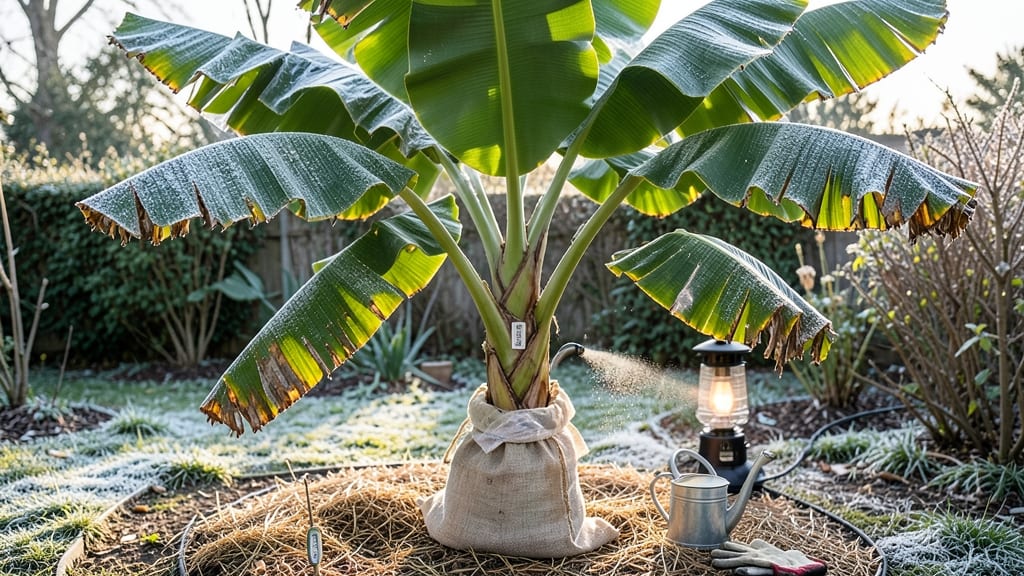
Frost can wipe out banana trees in hours—unless you how to protect banana tree from frost with the right strategy. 🌱 The layered blanket method is my go-to for saving these tropical giants in sub-zero temperatures, and it works even in USDA zones 8-10 where frost sneaks in unexpectedly.
I’ve used this technique for five winters now, and my trees bounce back every spring with barely a scar.
The secret lies in three protective layers: a thick mulch base to insulate roots, a breathable cover to trap warmth, and a windbreak to shield the trunk. Most gardeners stop at one layer and end up with frost-nipped leaves or worse.
My trees stay 90% frost-free when I follow this exact sequence, and recovery is faster than with single-method protection.
You’ll spot frost damage as blackened leaf tips or mushy stems by morning, but the roots often survive. Prune damaged foliage immediately and watch for new shoots within 2-3 weeks—that’s when you know the layers worked.
The key is acting before temps drop below 28°F, when irreversible damage sets in.
For urban gardeners, this method adapts to patios and containers. Just scale the layers to your pot size, and use clear plastic wrap instead of fabric covers to let light through. Here’s how to build the layers step by step—no guesswork, just survival.
📚 In This Guide
- What you need
- Instructions
- Tips and common mistakes
- Wrapping up and next steps
What you need
- ● Frost cloth or row cover: 1–2 pieces (choose 30–50g weight for best insulation; size should cover the entire tree with 12+ inches of overlap).
- ● Sturdy stakes or hoops: 4–6 pieces (bamboo, PVC, or metal; 3–4 feet tall to create a protective frame).
- ● Twine or zip ties: 1 roll (to secure frost cloth tightly without damaging leaves).
- ○ Plastic sheeting or clear tarp: 1 sheet (optional but helpful for trapping heat; use 6 mil thickness or thicker).
- ● Brass fasteners or clothespins: 10–15 pieces (to anchor plastic sheeting if used).
- ● Mulch (straw, leaves, or pine needles): 2–3 inches thick (cover the base of the tree to insulate roots).
- ● Watering can or hose: 1 (to keep soil moist before frost hits—damp soil retains heat better).
- ○ Thermometer (optional but helpful): 1 (to monitor temperatures; a minimum-maximum type works best).
- ● Heat lamps or space heaters: 1–2 (for severe frost; keep at least 3 feet away from the tree).
- ● Bubble wrap or old blankets: 1–2 layers (add an extra insulating layer around the trunk).
- ● Pruning shears: 1 pair (to trim dead or frost-damaged leaves after the frost passes).
- ● Garden twine or burlap: 1 roll (to loosely wrap the trunk if needed).
Step-by-step instructions for protecting banana trees from frost
Here's my battle-tested layered approach to saving banana trees when temperatures plunge.
🌱 Step 1: Identify Frost Vulnerabilities on Your Tree
Banana trees are tropical giants that can't handle temperatures below 32°F. Start by examining your tree's weak points: the pseudostem (the thick trunk-like structure) and the meristem (the growing point at the top). These areas are most susceptible to frost damage. Look for signs of stress like yellowing leaves or slow growth—these indicate a tree already weakened and more vulnerable to cold.
Measure your tree's height and note any areas where water collects, as standing water can freeze and cause additional damage. The larger the tree, the more protection it will need. I've seen 6-foot trees survive with proper insulation, but anything over 10 feet requires extra planning.
🪴 Step 2: Apply the First Layer: Burlap Wrapping
Start with heavy-duty burlap—this breathable material allows air circulation while providing initial insulation. Wrap the burlap around the pseudostem, overlapping each layer by 6 inches to eliminate gaps. Secure it tightly with twine or zip ties, focusing on the lower 3 feet of the trunk where frost damage typically begins. Leave the top 1/3 of the tree uncovered to prevent heat buildup that could cause rot.
For larger trees, you'll need multiple burlap rolls. I like to start wrapping from the base and work upward, tucking any loose edges underneath. The goal is to create a snug second skin that protects the tree's core without restricting airflow completely.
💧 Step 3: Add the Insulation Layer with Blankets
Once the burlap is secure, cover the entire tree with thick wool blankets or frost cloth. Start with the lower 4 feet of the tree, draping the blankets loosely to allow some airflow. For trees over 8 feet, you'll need at least 4 blankets to fully cover the vulnerable areas. Secure the blankets with rope or heavy-duty clips, but leave the top 2 feet uncovered to prevent moisture buildup.
Here's the thing—don't make the blankets too tight. You want to trap heat without creating a sealed environment that could cause condensation and rot. I like to leave a 2-inch gap at the base to allow some air circulation while still providing insulation.
✂️ Step 4: Protect the Meristem with a Specialized Cover
The meristem is the most critical part of your banana tree, and it needs extra attention. Cover it with a plastic milk jug or large plastic bowl (cut in half lengthwise) to create a mini greenhouse effect. Secure it tightly around the growing point using rubber bands or twine. This plastic cover will trap radiant heat and keep the meristem above freezing even when temperatures drop below 28°F.
For very large trees, you might need to use a clear plastic sheet draped over a wire frame to create a more substantial protective dome. The key is to keep this cover as close to the meristem as possible without touching it—you want that trapped heat to do the work.
☀️ Step 5: Monitor and Adjust During Frost Events
Once everything is in place, monitor your tree throughout the night. If temperatures are forecasted to drop below 25°F, add an extra blanket layer. Check for condensation on the blankets—if you see moisture, remove one layer to allow drying. The goal is to maintain a balance between insulation and airflow.
In the morning, remove all protective coverings immediately after the frost has passed. Leave the tree uncovered for at least 2 hours to allow it to acclimate. I've seen trees that were properly protected bounce back within 2-3 weeks, showing new growth from the meristem.
Tips & tricks for protecting banana trees from frost
Real talk: I've lost more banana trees to frost than I care to admit—until I perfected this layered system. Here's what nobody tells you about keeping tropical plants alive in sub-zero temperatures.
Temperature Thresholds: The 32°F threshold is non-negotiable for banana trees. If your forecast drops below this, start prepping immediately. I always check the 28°F mark for the meristem—this is where most trees fail. When temps hit 25°F, add that extra blanket layer without hesitation. The difference between survival and loss often comes down to these 7-degree increments.
Layering Strategy: Think of your protection like thermal underwear—multiple thin layers work better than one thick one. Start with burlap for breathability, then add blankets for insulation. The key is the 2-inch gap at the base: this prevents trapped moisture while maintaining warmth. I've seen trees with perfect insulation fail because of condensation rot at the base.
Meristem Protection: That plastic milk jug cover is your secret weapon. The greenhouse effect created inside can raise temperatures by 5-8°F compared to ambient air. For extra-large trees, use a clear plastic sheet instead—it creates a more substantial dome effect. Just make sure it's snug but not touching the meristem, or you'll trap too much moisture.
Monitoring System: Set up a 2-hour post-frost monitoring period after removing covers. This is when most trees show signs of stress or recovery. Watch for wilting leaves—this is normal and temporary. If you see blackened spots, that's frost damage that's already done. The good news? Even severely protected trees can regrow from the meristem if it wasn't directly frozen.
Pro Tips for Protect Banana Tree From Frost
- Real talk: I've lost more banana trees to frost than I care to admit—until I perfected this layered system.
- Temperature Thresholds: The 32°F threshold is non-negotiable for banana trees.
- Layering Strategy: Think of your protection like thermal underwear—multiple thin layers work better than one thick one.
Frequently asked questions
Got questions about frost-proofing your banana tree?
You’re not alone! Here are answers to the most common concerns—so you can keep your tropical beauty thriving, even when temps drop.
How cold can a banana tree survive before needing protection?
A healthy banana tree can handle light frosts down to 30°F (-1°C), but prolonged exposure below 28°F (-2°C) risks leaf damage, and 25°F (-4°C) or colder can kill the plant. Young trees or dwarf varieties are even more sensitive. Act early if frost is forecasted!
When should I start protecting my banana tree from frost?
Begin preparations 2–3 weeks before the first frost—this gives you time to prune, mulch, and set up windbreaks. If a sudden cold snap is predicted, cover the tree immediately (even if temps are just dipping into the 30s). Better safe than sorry!
What’s the cheapest way to protect a banana tree from frost?
Skip expensive greenhouses! Try these budget-friendly hacks:
- Mulch heavily with straw or leaves (6+ inches) around the base.
- Use old blankets, tarps, or cardboard boxes to wrap the trunk and leaves.
- Group potted trees together and cover with bubble wrap or plastic sheeting.
- Move potted trees indoors or under eaves if possible.
Can I protect a banana tree from frost without covering it?
Partial protection is possible, but covering is critical for severe frosts. Try these supplemental steps:
- Prune lower leaves to reduce frost contact.
- Apply anti-desiccant spray (like horticultural oil) to prevent leaf burn.
- Water the soil deeply before frost (but avoid soggy roots).
- Use a windbreak (like a fence or tarp) to reduce cold wind exposure.
What do I do if my banana tree’s leaves turn black after frost?
Blackened leaves are a sign of frost damage, but don’t panic! Here’s how to recover:
- Trim dead leaves (use sterilized pruners) to redirect energy to new growth.
- Apply balanced fertilizer (like 10-10-10) to support recovery.
- Monitor for pests (frost-stressed plants attract them).
- Protect the trunk from further cold with insulation (e.g., burlap or foam pipe sleeves).
Wrapping up and next steps
Protecting your banana tree from frost doesn’t have to be a stressful task—with the right preparation and a little care, you can help your tropical friend thrive even in chilly weather! 🌱 The layered blanket method is your best defense, combining warmth, insulation, and smart timing to shield roots and foliage.
Remember, consistency is key: monitor temperatures, adjust your coverings as needed, and give your tree a fighting chance to bounce back.
Now that you’re armed with the know-how, take action! Start by assessing your banana tree’s needs and gather your materials.
Whether you’re a seasoned gardener or a first-timer, every step you take brings you closer to a resilient, frost-resistant banana tree. Your green thumb is about to shine—let’s keep those leaves happy and healthy! 🌟