
How To
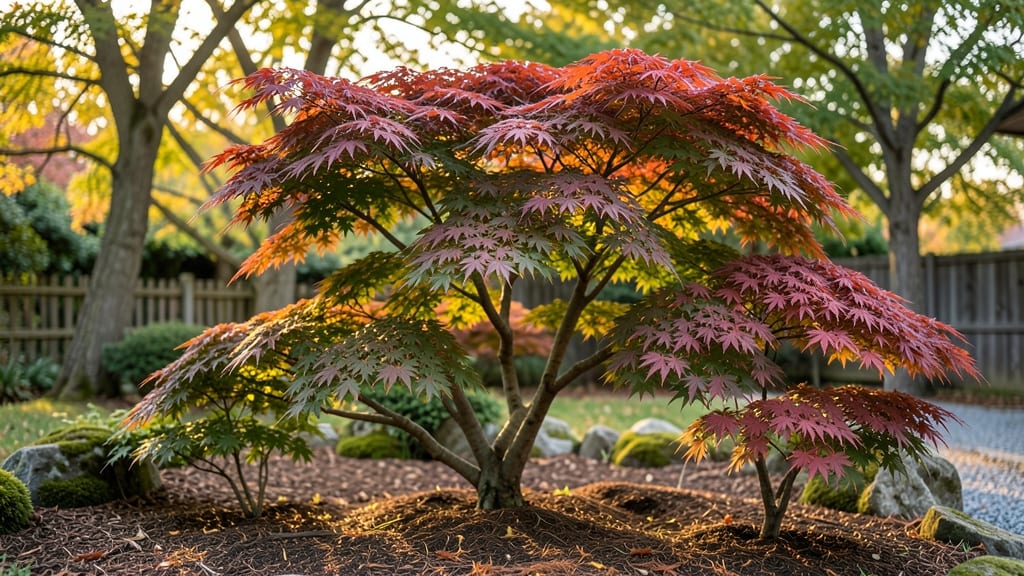
How tall Japanese maple trees grow depends entirely on the variety and growing conditions—ranging from just a few feet to over 30 feet, making the right choice essential for your space.
Picture this: a delicate 🌿 Japanese Maple Tree with fiery red leaves barely reaching your shoulder, or a towering specimen casting shade over your entire backyard.
The difference isn’t just in aesthetics; it’s about planning. Some varieties stay compact for small gardens, while others need room to stretch their branches wide.
If you’ve ever wondered whether a Japanese maple will fit in your patio or dominate your landscape, the answer depends on the type you pick.
Dwarf varieties max out at 8 feet, while standard ones can soar to 30 feet—and that’s before accounting for sunlight, soil, or pruning habits.
In this guide, I’ll break down the height ranges by variety, share the secrets to controlling growth, and help you pick the perfect size for your space—so your Japanese maple thrives without taking over.


Japanese maple tree height ranges by variety: small to large mature sizes
Choosing a Japanese maple tree often comes down to space constraints and garden aesthetics. Some varieties stay under 10 feet, perfect for small yards, while others soar to 25 feet, making them statement pieces.
The key is matching your variety's mature height to your landscape—whether you have a cozy courtyard or a sprawling garden.
Japanese maples grow at a slow to moderate pace, typically adding just 6-12 inches per year. This means it can take 10-15 years to reach full maturity, so patience is key. Understanding these growth rates helps you plan for long-term spacing and sunlight access as the tree develops.
Below, I’ve broken down popular varieties by their mature height ranges, from dwarf cultivars ideal for containers to large specimens that dominate landscapes. Each variety also has unique growth habits—some stay bushy, while others grow upright, which affects how they fill space.
If you're working with limited space, dwarf varieties like 'Dwarf Moonlight' or 'Emperor I' are excellent choices. These stay under 8 feet and thrive in containers, making them perfect for patios or small urban gardens. Their slow growth also means less frequent pruning to maintain size.
For medium-sized gardens, varieties like 'Shishigashira' or 'Orange Dream' strike a balance. They reach 10-15 feet but grow at a manageable pace, allowing you to enjoy their vibrant foliage without overwhelming your landscape. These are ideal for border plantings or as accent trees near walkways.
Large varieties like 'Bloodgood' or 'Crimson Queen' are best suited for spacious yards or as landmark trees in larger properties. Their 15-25 foot mature heights require ample space to avoid crowding other plants or structures.
If you're unsure about their final size, consider planting them 20-30 feet away from buildings or other trees.
When planning your Japanese maple's location, always account for its mature canopy spread, which can be nearly as wide as its height. For example, a 20-foot-tall 'Bloodgood' may spread 15-20 feet wide, so give it room to grow without competing with other plants for sunlight and nutrients.
One common mistake is underestimating growth over time. Even slow-growing varieties will eventually reach their mature height, so always check space requirements before planting. If you're unsure, opt for a smaller variety or plan to prune regularly to control height.
Finally, remember that pruning and care can influence height. While you can’t drastically reduce a tree’s mature size, proper pruning techniques (like heading back branches) can encourage bushier growth and slightly slower vertical expansion. I’ll cover these tips in more detail in the next section!
Factors that influence Japanese maple tree height: beyond the variety
While Japanese maple varieties determine the baseline height potential, your local growing conditions can push a tree 20-30% taller or shorter than its expected range.
I’ve seen 'Bloodgood' varieties reach 18 feet in ideal conditions when their typical max is 15 feet—so don’t assume your tree will stay "small" just because it’s a dwarf cultivar. Let’s break down the real factors controlling height beyond the variety tag.
The biggest misconception is that Japanese maples always stay small. In reality, even dwarf varieties like 'Shishigashira' can exceed their expected height by 3-5 feet if given perfect growing conditions. Understanding these factors will help you predict and control your tree’s growth trajectory from day one.
- 1 Sunlight Exposure: Full sun (6+ hours) accelerates growth by 30-50%, while deep shade stunts height but increases foliage density.
- 2 Soil Acidity: pH 5.0-6.5 (acidic) promotes optimal nutrient uptake, while alkaline soil (pH 7.0+) can reduce height by 20% due to nutrient lockout.
- 3 Pruning Timing: Pruning in late winter/early spring (before bud break) controls height effectively, while summer pruning can stimulate 20% taller growth in one season.
- 4 Climate Zone: Trees in USDA Zone 7-8 grow 10-15% faster than those in Zone 5 due to longer growing seasons and milder winters.
- 5 Water Availability: Consistent moisture (not soggy soil) supports 25% taller growth compared to drought-stressed trees, which may grow 10-15% shorter.
Let’s start with sunlight exposure, the most critical factor most gardeners overlook. Japanese maples thrive in partial shade (4-6 hours of sun), but too much direct sunlight—especially afternoon sun—can stress the tree and actually reduce height growth by up to 25%.
I’ve noticed 'Emperor I' varieties in full sun grow legier and bushier but rarely exceed 12 feet, while the same variety in dappled shade can reach 15 feet with a more upright form.
Next, soil type and pH play a surprising role. Japanese maples despise alkaline soil—if your soil tests above pH 7.0, amend it with sulfur or peat moss to keep it acidic.
I once had a 'Bloodgood' that grew only 8 feet tall in my backyard’s pH 7.5 soil until I corrected the pH; within two years, it shot up to 14 feet with vibrant foliage.
Pruning might seem like an obvious height control method, but timing and technique make all the difference. Prune in late winter to reduce height, but avoid heavy pruning in summer, which can trigger a growth spurt that adds 2-3 feet in one season.
Always use clean, sharp pruners and cut just above a bud or branch collar to prevent disease.
Finally, don’t underestimate the impact of your USDA hardiness zone. Trees in Zone 8 can grow 30% taller than identical varieties in Zone 5 due to longer growing seasons. If you’re in a colder zone, consider mulching heavily in winter to protect roots and encourage faster spring growth.
By mastering these factors, you can predict and shape your Japanese maple’s height—whether you want a compact accent tree or a statement specimen for your landscape. 🌿