
How To
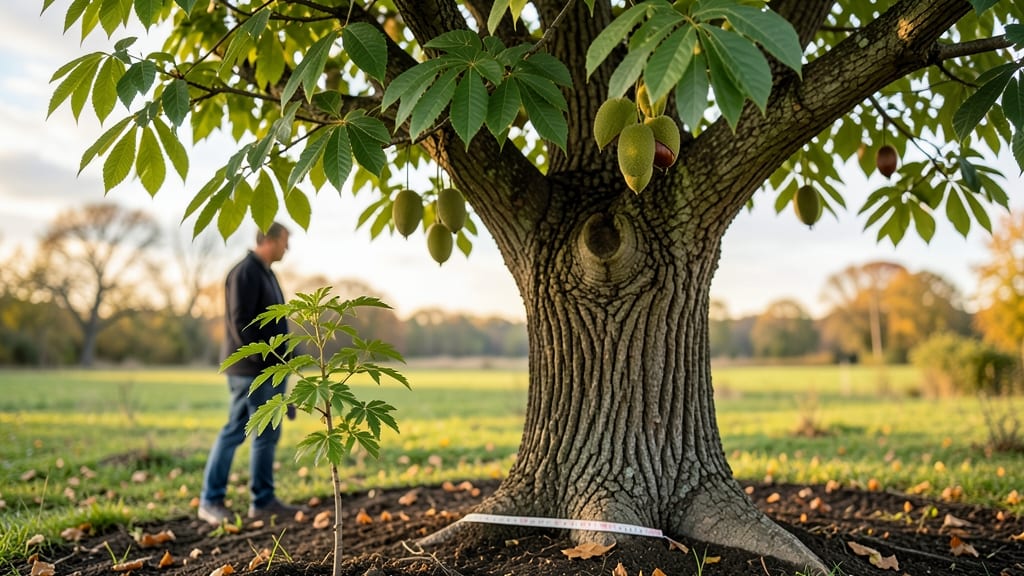
A walnut tree can grow anywhere from 40 to 130 feet tall, depending on the variety and growing conditions—so if you’re planning your backyard landscape, size matters more than you might think.
Picture this: a towering 🌳 black walnut reaching the second story of your home, its branches casting decades of shade, while a smaller English walnut stays neatly within your property lines. The difference isn’t just aesthetics—it’s about spacing, sunlight, and long-term care.
Most standard varieties like black walnut or heartnut will stretch toward the sky, but dwarf or semi-dwarf options (like 'Paradox') stay under 25 feet, making them perfect for urban yards or patio planting. Knowing your tree’s growth habits upfront saves headaches later.
In this guide, I’ll break down the height ranges by variety, share what influences how tall your walnut tree grows, and give you the spacing and sunlight tips to set it up for success—whether you’re planting a shade giant or a compact nut producer.


Mature heights of popular walnut tree varieties compared
When planning your landscape, knowing how tall walnut trees grow is crucial—because some varieties can reach the height of a 10-story building, while others stay manageable for smaller yards. Walnut trees vary dramatically in size, from towering giants to more compact options that still produce delicious nuts.
Let’s break down the mature heights of the most popular walnut varieties so you can choose the perfect fit for your space.
English walnut trees (Juglans regia), for example, are often the go-to choice for home gardens due to their moderate growth rates and delicious nuts. But did you know their mature height can range from 50 to 80 feet?
Meanwhile, black walnut trees (Juglans nigra) are the heavyweights of the walnut world, often surpassing 100 feet in ideal conditions. Understanding these differences helps you avoid planting a giant walnut tree where it’ll outgrow your property.
| Variety | Mature Height (ft) | Canopy Spread (ft) | Growth Rate (ft/year) | Space Needs |
|---|---|---|---|---|
| English Walnut (Juglans regia) | 50–80 ft | 30–50 ft | 1–3 ft | Large yard, 60+ ft spacing |
| Black Walnut (Juglans nigra) | 70–100+ ft | 40–70 ft | 2–4 ft | Very large property, 80+ ft spacing |
| Heartnut (Juglans ailantifolia) | 30–50 ft | 20–30 ft | 1–2 ft | Medium yard, 40+ ft spacing |
| Butternut (Juglans cinerea) | 40–60 ft | 25–40 ft | 1.5–3 ft | Large yard, 50+ ft spacing |
| Hybrid Walnut (Juglans x intermedia) | 40–70 ft | 30–50 ft | 1.5–3 ft | Medium to large yard, 50+ ft spacing |
| Dwarf Varieties (e.g., 'Thomas') | 15–25 ft | 10–15 ft | 0.5–1 ft | Small yard, 20+ ft spacing |
If you’re working with a limited space, dwarf varieties like the 'Thomas' English walnut are game-changers. These trees typically max out at 15–25 feet and are perfect for urban gardens or even large containers. However, they still require full sun exposure and well-draining soil to thrive.
For larger properties, black walnut trees offer stunning shade and nuts, but their aggressive root systems demand plenty of space to avoid damaging nearby structures.
Another key factor is the canopy spread, which often exceeds the tree’s height. A black walnut’s canopy can stretch 70 feet wide, meaning you’ll need to plant it at least 80 feet away from buildings or other trees.
Heartnut trees, on the other hand, are more compact with a 20–30 foot spread, making them ideal for medium-sized yards where you still want shade and nuts without overwhelming your space.
For gardeners in USDA Zones 5–9, most walnut varieties thrive, but their growth rates vary. English walnut trees grow 1–3 feet per year in ideal conditions, while black walnuts can shoot up 2–4 feet annually during their first decade.
This rapid growth means your walnut tree spacing should account for future expansion—planting too close can lead to crowded canopies and reduced nut production.
One common mistake is assuming all walnut trees grow at the same pace. Young trees, especially black walnuts, can seem slow to start but then bolt upward once established. To manage this, consider pruning in late winter to shape the tree and encourage a stronger structure.
For slower-growing varieties like heartnut, you’ll have more time to enjoy their ornamental value before they reach maturity.
Before planting, check your local frost dates and soil type—walnut trees prefer well-draining, slightly acidic soil (pH 6.0–7.0). In areas with heavy clay soil, amending with compost or planting on a mound can improve drainage and prevent root rot.
If your yard has limited sunlight, avoid walnut trees entirely—they require full sun to reach their full height and nut-producing potential.
For those with smaller properties, hybrid varieties like the 'Paradox' walnut offer a middle ground, combining the best traits of English and black walnuts while staying under 50 feet tall. These hybrids also produce
How fast do walnut trees grow: annual growth rates by age
Walnut trees are patient giants, with their growth rates shifting dramatically from their early years to maturity. In their first decade, these trees focus on building a strong root system and trunk, while later years see explosive vertical growth.
Understanding these patterns helps you plan for space and manage expectations—especially if you're balancing them with other plants in your landscape.
For the first three years, walnut trees grow slowly, gaining only 1-2 feet annually. This juvenile stage is critical for establishing deep roots, which is why well-draining soil and consistent moisture are non-negotiable. Skipping this step often leads to stunted growth later on, even if you later provide ideal conditions.
Here’s how walnut trees grow by age, including key milestones and pruning tips to guide their development:
- 1 Year 1-3: 1-2 ft/year – Focus on root development; avoid heavy pruning.
- 2 Year 4-7: 3-5 ft/year – Rapid trunk growth; prune to remove dead or crossing branches.
- 3 Year 8-15: 6-12 ft/year – Peak growth phase; space trees 30-50 ft apart to prevent root competition.
- 4 Year 16+: 1-3 ft/year – Growth slows; focus on nut production and structural pruning.
Black walnut trees, for example, often outpace English walnuts in their early years, thanks to their aggressive root systems. By age 10, a black walnut can reach 30-40 feet, while English walnuts may only hit 20-25 feet.
This difference is why spacing and variety selection matter—especially in smaller properties.
Pruning plays a crucial role in managing walnut tree growth. During the juvenile stage (years 1-7), remove only dead or diseased branches to avoid stressing the tree. Once mature, focus on structural pruning to maintain an open canopy, which improves air circulation and reduces disease risk.
Never prune more than 25% of the canopy in a single season.
If you’re working with limited space, consider dwarf varieties like 'Paradox' or 'Thomas,' which grow just 15-25 feet tall. These still produce nuts but reach maturity faster, making them ideal for urban gardens. Just remember: even dwarf walnuts need full sun and deep soil to thrive.