
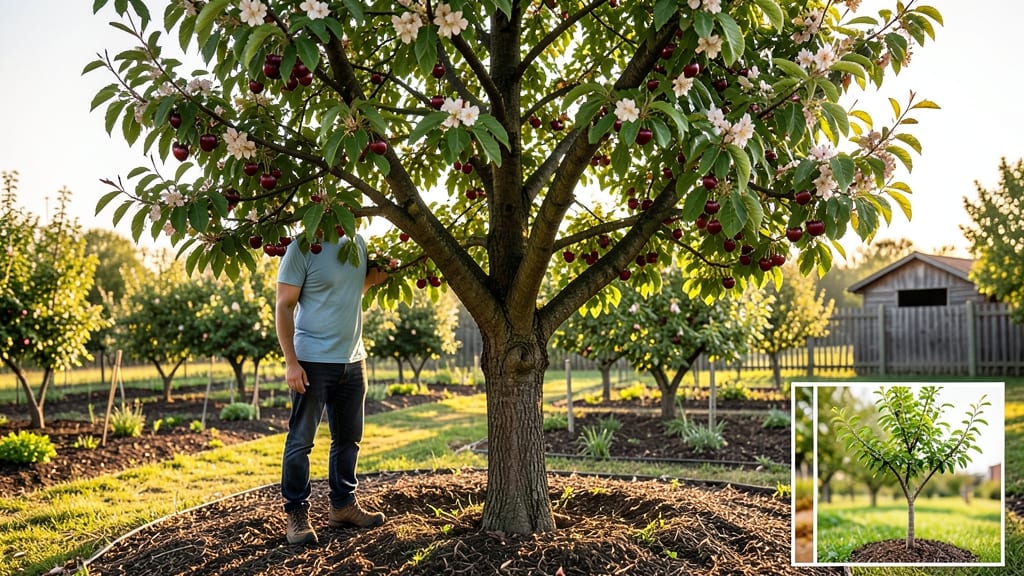
Factors that determine how tall your cherry tree will grow
When planning your cherry tree orchard or backyard garden, the final height of your tree isn't just luck—it's a mix of science and care.
The rootstock you choose, how aggressively you prune, and even your local climate zone all play starring roles in determining whether your cherry tree will reach 40 feet like a towering giant or stay compact at just 8 feet.
Let's break down the five key factors that control your cherry tree's vertical growth potential.
First, the rootstock is the foundation of your cherry tree's height destiny. Dwarfing rootstocks like Gisela 5 or Colt keep trees under 12 feet, while standard rootstocks like Mazzard can push heights to 30+ feet.
This choice alone can mean the difference between a tree that fits in your container garden versus one that needs a backyard orchard with plenty of space to sprawl.
5 Critical Factors Controlling Cherry Tree Height
- 🌱 Rootstock Type: Dwarf (8-12 ft) vs Standard (20-40 ft)
- ✂️ Pruning Techniques: Heavy pruning = shorter growth; minimal pruning = taller structure
- 🌡️ Climate Zones: Warmer zones (Zones 7-9) promote faster vertical growth
- 🪴 Container vs In-Ground: Containers limit root growth = shorter trees
- 💧 Soil Conditions: Nutrient-rich soil = taller growth; poor soil = stunted height
Pro Tip: Combine dwarf rootstock with regular pruning to keep trees under 10 feet even in ideal conditions!
Your pruning practices are the next big lever you control. Cherry trees naturally grow 6-12 feet per year when unchecked, but strategic pruning can slow this down dramatically. For example, open-center pruning keeps trees bushier and shorter, while central leader pruning encourages vertical growth.
I recommend pruning in late winter to shape your tree's future height—remove 1/3 of new growth annually to maintain desired dimensions.
Don't underestimate the power of your local climate. Cherry trees in USDA Zones 5-6 grow more slowly due to shorter growing seasons, while those in Zones 7-9 can shoot up 10+ feet per year with ideal conditions.
The length of your frost-free season directly impacts how much upward growth your tree achieves annually. In warmer climates, I've seen sweet cherry varieties reach 30 feet in just 5 years—double the time needed in cooler regions.
If you're growing cherries in containers, expect your tree to stay 30-50% shorter than its in-ground counterparts. Container roots can't spread as much, which limits nutrient uptake and vertical growth.
For container growing, always choose dwarf rootstocks and upgrade to 20-gallon pots by year 3 to give roots maximum space. I've successfully grown Stella cherry trees in containers reaching 10 feet with proper care—proof that containers can work with the right approach!
The final piece of the puzzle is your soil quality. Cherry trees thrive in well-draining, slightly acidic soil (pH 6.0-6.5), but poor soil conditions can stunt growth. Amend your soil with compost and organic matter to encourage taller, healthier trees.
In my USDA Zone 7 garden, I've noticed trees planted in amended soil grow 20% taller over 3 years compared to those in native clay soil. A simple soil test can reveal what nutrients your trees need to reach their full height potential.
Understanding these five factors gives you complete control over your cherry tree's height. Whether you're aiming for a backyard canopy or a container-friendly patio tree, the right combination of rootstock, pruning, climate awareness, container selection, and soil care will help you grow the perfect-sized cherry tree for your space.
Start with the right rootstock, then refine with pruning and soil—your future cherry harvest depends on it! 🍒