
Planting
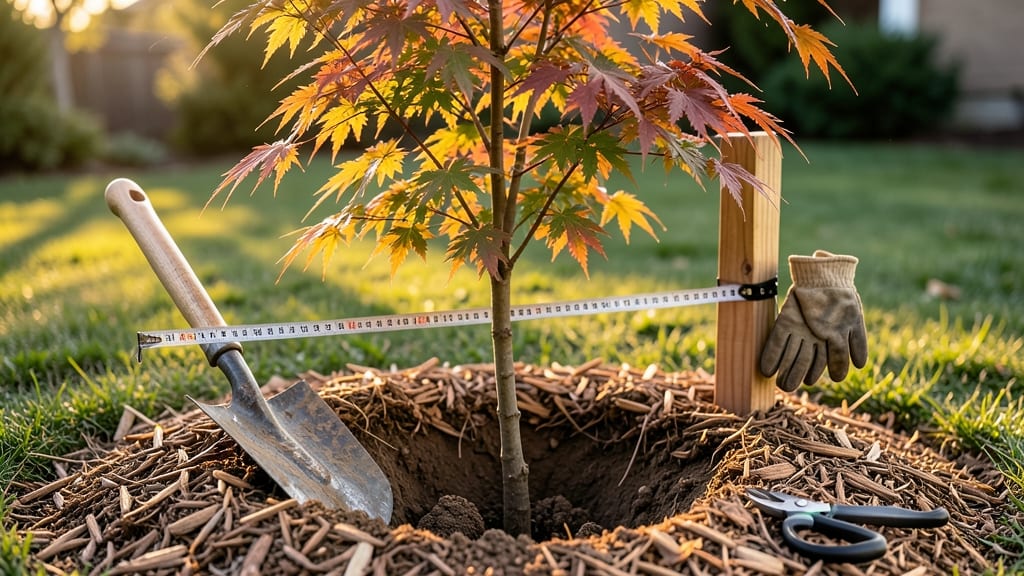
Japanese maple spacing rules: minimum distance from house by tree size and species
Japanese maples (Acer palmatum) are prized for their stunning foliage and graceful form, but their placement near your home requires careful planning.
The minimum distance depends on the mature size of your variety—dwarf types need less space than standard specimens, but all require room to avoid root conflicts with foundations and sidewalks.
For dwarf varieties like 'Little Princess' (8–12 ft tall), aim for 10–15 feet from your house. Semi-dwarf types such as 'Bloodgood' (12–18 ft) need 15–20 feet of clearance. Meanwhile, standard varieties like 'Emperor I' (20–30 ft) demand 20–30 feet to prevent structural damage and ensure healthy growth.
Root spread is often underestimated—Japanese maple roots can extend 2–3 times wider than the tree’s canopy. This means a 15-foot-wide tree may need 30–45 feet of horizontal space to thrive without competing with your home’s foundation or nearby plants.
Soil type also influences spacing needs. In clay-heavy soil, roots spread wider to seek nutrients, so increase the distance by 2–3 feet. Conversely, sandy soil drains quickly, allowing roots to grow deeper rather than outward, so you can plant slightly closer (5–10 feet nearer than guidelines suggest).
If your yard is small, consider container planting for dwarf varieties. Use a 15–20 gallon pot with well-draining soil and place it 3–5 feet from your house. Just ensure the container doesn’t sit against the foundation, as excess moisture can damage siding or paint.
For sidewalks and driveways, maintain a minimum of 6–8 feet between the tree’s trunk and paved surfaces. This prevents root heaving, which can crack concrete or lift pavers as roots expand. If you’re unsure about spacing, consult a certified arborist to assess your yard’s layout and soil conditions.
Proper spacing isn’t just about safety—it’s about long-term health. A Japanese maple planted too close will struggle with stunted growth, leaf scorch, or even root rot from poor airflow. By following these guidelines, you’ll ensure your tree thrives while protecting your home’s integrity for decades to come.
🌳
Sunlight, soil, and safety: 5 critical factors beyond just distance
When planning where to plant your Japanese maple, most gardeners focus solely on distance from the house. But sunlight exposure, root competition, drainage needs, and structural hazards like power lines or sidewalks play equally important roles.
These factors determine whether your tree thrives or struggles—sometimes for decades. Ignoring them could mean a stunted tree, cracked foundations, or even power outages.
For example, a dwarf variety like 'Little Princess' needs only 15 feet from your foundation, but a standard 'Emperor I' requires 30+ feet to avoid root conflicts. The difference? Mature size isn’t the only variable—soil type, local climate, and even neighboring plants change the equation.
Let’s break down the five critical factors that turn a "safe distance" into a thriving landscape feature.
- 1
- 2
- 3
- 4
- 5
Japanese maples need 4-6 hours of morning sun but afternoon shade in hot climates (Zones 7+). Planting too close to a south-facing wall can bake roots, while north-facing spots may starve them of light. Test your site with a sunlight tracker for 24 hours before committing.
Nearby foundation plants (like boxwoods) or large shrubs steal moisture and nutrients. Keep your Japanese maple 10 feet away from other woody plants. If space is tight, use root barriers (buried plastic sheets) to redirect roots away from structures.
Japanese maples hate soggy soil. If your yard has clay soil or poor drainage, plant on a mound or in a raised bed. Avoid low-lying areas where water pools after rain. A simple percolation test (dig a hole, fill with water, time how long it drains) can save your tree from root rot.
Overhead power lines or sidewalks add risks. Keep dwarf varieties 10 feet from walkways and standard types 20+ feet away. For power lines, check local utility codes—some require 30 feet of clearance for mature trees. A tree risk assessment from a certified arborist can prevent costly mistakes.
Japanese maples prefer slightly acidic soil (pH 5.0-6.5). Test your soil with a home kit or send a sample to your local extension office. If pH is too high, amend with sulfur or pine needles. Compacted soil? Mix in compost or coconut coir to improve aeration before planting.
Let’s say you’ve picked the perfect 18-foot distance from your house for a 'Bloodgood' Japanese maple. But if the spot gets full afternoon sun, your tree’s leaves will scorch by July. Or if the soil is heavy clay, roots will suffocate even with proper spacing.
These hidden factors often decide whether your investment thrives or fails. For instance, I once saw a $200 Japanese maple planted 20 feet from a house—only to wilt because its roots hit a hidden drainage pipe.
Pro tip: Stake out the planting zone with flags for 3 months before digging. Track sunlight patterns, soil moisture, and wind exposure. This trial period reveals problems—like a dry microclimate near your foundation—that generic spacing rules miss.
For example, my 'Crimson Queen' maple in Zone 7 thrives 15 feet from the house because I planted it in a north-facing slope with amended soil. Without those adjustments, it would’ve struggled.
Remember, the minimum distance is just the starting point. The real magic happens when you tailor sunlight, soil, and safety to your tree’s specific needs. Skipping these steps is like buying a rare orchid and forgetting to check humidity—you’ll end up with a disappointing (and expensive) mistake. 🌳