
Pruning
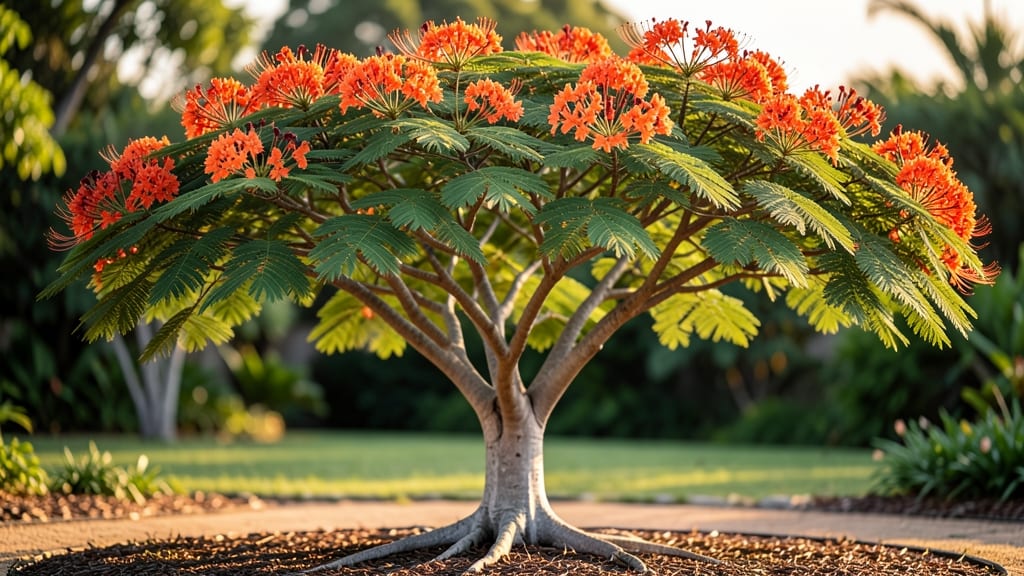
Flame trees in Florida need careful seasonal pruning to keep their bright blooms and strong growth. Trim lightly after flowers fade in late spring, skip heavy cuts during summer, and remove dead branches in winter—just watch for cold below 25°F.
Florida’s flame trees (Delonix regia and hybrids) bloom best when pruned at the right time—late spring lets them store energy for next year’s flowers, while winter cuts prevent stress before spring growth. 🌸 The state’s heat and humidity mean you’ll also need to monitor for fungal infections after pruning, so always use sterilized tools.
Younger trees handle pruning better than mature ones, which need gradual shaping to avoid weakening their structure.
For Florida’s sandy soil and occasional cold snaps, focus on three key cuts: light shaping after blooms (May-June), removing dead wood in winter (December-February), and thinning crowded branches to improve airflow.
Varieties like Brachychiton hybrids tolerate pruning more aggressively than classic flame trees, so adjust based on your specific type.
💡 In This Article
- Seasonal Pruning Science for Florida Flame Trees
- Florida-Specific Flame Tree Pruning Tools and Techniques
Seasonal pruning science for Florida flame trees
Flame trees in Florida rely on a precise hormonal balance to produce their iconic red-orange blooms, and pruning timing directly impacts this cycle.
When you trim branches after flowering in late spring (May-June), you're allowing the tree to redirect stored carbohydrates from the blooms into root and branch growth.
This is critical because Florida's short dry season (November-April) forces trees to conserve energy—heavy pruning during this time can starve them of the nutrients needed for next year's flowers. 🌿 The key is to prune after the blooms fade but before new growth begins, typically around 6-8 weeks post-flowering.
The science behind winter pruning (December-February) focuses on cold tolerance. Flame trees are tropical but can handle Florida's occasional cold snaps (25-30°F), but their cambium layer (growth tissue) becomes vulnerable when pruned too late.
Removing dead or damaged branches in winter reduces stress points where cold air could penetrate, while avoiding fresh cuts prevents sap loss that could attract pests.
Varieties like Delonix regia (classic flame tree) are more sensitive to winter pruning than Brachychiton hybrids, which can tolerate more aggressive shaping due to their thicker bark and deeper root systems.
Summer pruning (July-August) is where most gardeners go wrong—this is when Florida's heat and humidity create ideal conditions for fungal infections. Cutting during this time forces the tree to heal wounds in extreme conditions, often leading to anthracnose or sooty mold infections.
The tree's natural defense mechanisms are weakened by the heat, and pruning wounds take 4-6 weeks to fully seal. If you must prune in summer, do so on overcast days and sterilize tools with 70% isopropyl alcohol to minimize risk.
Root development plays a hidden but crucial role in pruning success. Florida's sandy soil drains quickly, so flame trees develop extensive lateral roots to access moisture. When you prune above-ground branches, the tree compensates by growing more roots—this is why heavy pruning can actually strengthen the tree's stability over time.
However, this process takes 2-3 years, so avoid drastic cuts (more than 25% of canopy) unless absolutely necessary. Younger trees (under 5 years) handle pruning better because their root systems are still expanding, while mature trees may need gradual thinning over multiple seasons.
Consider this example: A Delonix regia tree in Miami that blooms in April should have its summer pruning completed by June 15th to avoid heat stress. If you wait until July, you risk stunted growth and poor flowering the following year.
The tree's energy reserves are already depleted from blooming, and summer pruning would force it to allocate resources to wound healing instead of root development. 🌺 This timing difference explains why some Florida flame trees bloom profusely while others struggle—it's not just about when you prune, but how it aligns with the tree's natural growth cycles.
For Florida gardeners, understanding these seasonal triggers means you can predict blooming patterns. Trees pruned correctly in late spring will typically flower 12-18 months later, while those pruned at the wrong time may take 2-3 years to recover.
The key takeaway is that flame trees are not like ornamental trees that can be pruned anytime—they follow a strict biological clock tied to Florida's climate patterns.