
Trees
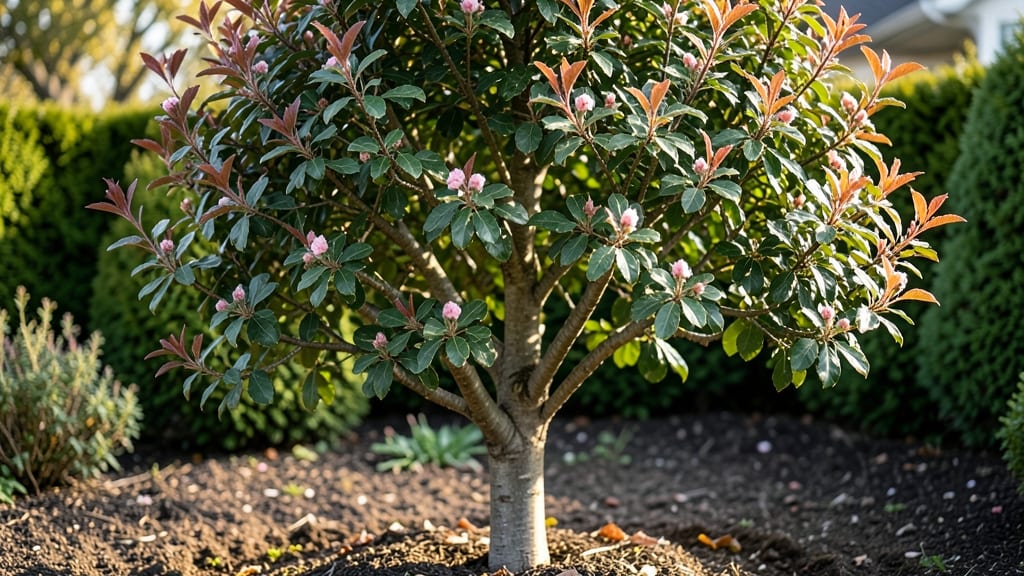
Non-fruit-bearing crabapple trees are cultivated as decorative plants, valued for their vibrant spring flowers, pest resistance, and smaller stature rather than producing edible fruit. These varieties prioritize ornamental features like colorful foliage and striking bark patterns over fruit yield.
These sterile crabapple varieties are specifically bred to eliminate fruit production, making them ideal for urban landscapes where messy fruit isn't desired. 🌸 The absence of fruit also means fewer pests and less mess to clean up, while their compact size (often under 20 feet tall) makes them perfect for small yards.
Many gardeners choose them for their reliable blooms and low-maintenance nature compared to fruiting varieties.
What sets them apart is their consistent flowering—some varieties produce blooms so densely they nearly obscure the branches. The trade-off? You won't get the fall fruit displays that attract birds, but you gain year-round visual interest from their unique bark patterns and autumn leaf colors.
Nursery labels often specify "sterile" or "ornamental" to help shoppers identify these non-fruiting types.
💡 In This Article
- Why Some Crabapple Trees Skip Fruit Production
- Identifying Sterile Crabapple Trees vs. Fruitless Varieties
Why some crabapple trees skip fruit production
Non-fruiting crabapple trees are the result of careful horticultural breeding to eliminate seed development.
These varieties undergo genetic modifications where the flowers lack functional reproductive organs, specifically the ovary or ovules that would normally develop into fruit. 🌸 The process involves selecting trees with naturally occurring mutations or cross-breeding specific cultivars that produce sterile pollen or non-viable seeds.
This creates what's called "functional sterility" - the flowers still bloom beautifully but never progress beyond the petal stage to fruit formation.
The science behind this involves manipulating the tree's flowering mechanism. Most crabapple trees require cross-pollination between different varieties to produce fruit, but sterile cultivars have been bred to bypass this requirement entirely.
For example, the popular 'Adirondack' variety produces stunning pink blooms but lacks the internal structures needed for fruit development. 🌿 What's fascinating is that these trees still produce nectar and pollen, making them valuable pollinators for bees while eliminating the fruit mess.
The absence of fruit also means these trees are immune to common crabapple diseases that target developing fruit, like apple scab and cedar apple rust.
Climate plays a surprising role in fruit production too. Even fruit-bearing crabapple varieties often fail to produce fruit in colder climates because the flowers require specific temperature thresholds to develop properly.
Sterile varieties bypass this entirely, making them more reliable for northern gardens. 🌡️ The trade-off is that these trees focus all their energy into vegetative growth and flower production rather than fruit development, which is why they often grow more vigorously and produce larger, showier blooms than their fruiting counterparts.
Growers intentionally create these varieties because they solve several landscape problems. The absence of fruit means no dropped fruit to clean up, no birds stripping the fruit, and no fruit-related pests like codling moths. 🌳 This makes them ideal for urban settings where maintenance is a concern.
The breeding process also allows for more consistent flowering - some sterile varieties bloom so densely they create a "snowstorm" effect with petals covering the ground. This visual spectacle would be impossible with fruit-bearing trees that divert energy to seed production.
What's particularly interesting is how these sterile varieties maintain their ornamental value year-round. While fruiting crabapples rely on their fall fruit displays, sterile varieties often develop more vibrant autumn foliage colors and more striking bark patterns.
For instance, the 'Dolgo' crabapple features exfoliating orange bark that becomes a winter landscape highlight - something fruit-bearing varieties typically don't offer. 🍂 The breeding focuses on maximizing these non-fruit attributes while completely eliminating the reproductive cycle that would produce fruit.
One common misconception is that all non-fruiting crabapples are naturally sterile. In reality, many are the result of careful selection and propagation of specific rootstocks that prevent fruit development.
Some nurseries even use specialized grafting techniques to ensure sterility is maintained across generations. 🌱 This controlled breeding allows growers to create trees with predictable characteristics - something that would be impossible with naturally occurring sterile mutations which are rare in crabapple species.