
Pruning
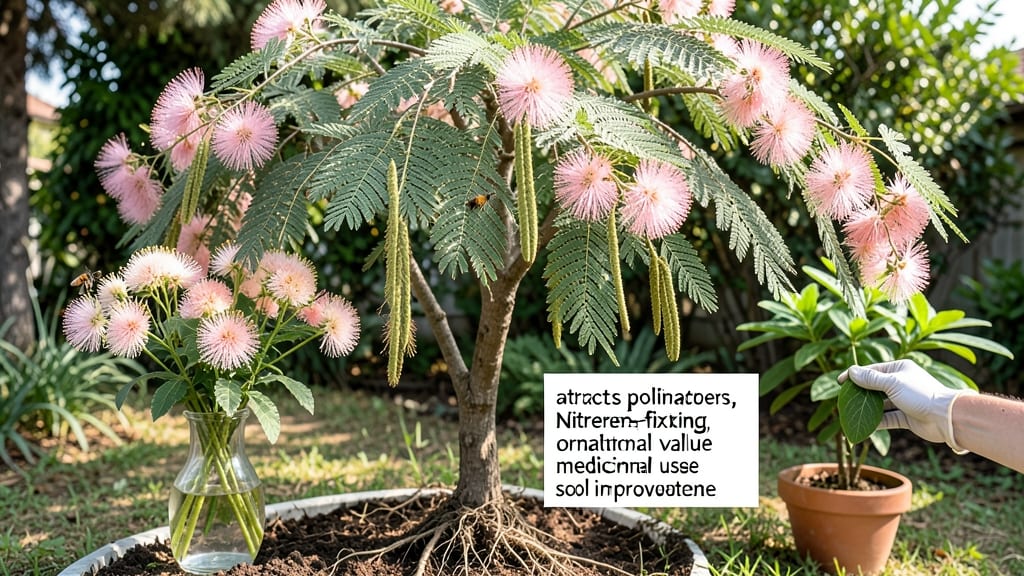
These mimosa tree flower benefits boost gardens by fixing nitrogen in the soil, filtering air pollutants like sulfur dioxide, and drawing in pollinators that support local ecosystems. Their blooms also produce oxygen through photosynthesis, making them a natural air purifier.
The nitrogen-fixing bacteria in mimosa roots convert atmospheric nitrogen into usable plant nutrients, enriching the soil without synthetic fertilizers. 🌿 This process not only supports the tree's growth but also benefits neighboring plants, creating a thriving ecosystem.
The flowers' ability to absorb airborne toxins like sulfur dioxide helps reduce urban air pollution, while their bright blooms attract bees and butterflies, boosting local biodiversity. Planting mimosas near vegetable gardens can improve crop yields naturally, making them a dual-purpose addition to any landscape.
To maximize these benefits, choose a sunny location with well-draining soil and prune lightly after flowering to encourage new growth. 🌸 Regular watering during dry spells helps maintain the tree's health, ensuring it continues to purify the air and support your garden's ecosystem.
Their adaptability makes them ideal for both urban and rural settings.
💡 In This Article
- How Mimosa Flowers Enhance Soil and Air Quality
- Practical Ways to Maximize Mimosa Flower Benefits in Your Garden
How mimosa flowers enhance soil and air quality
The nitrogen-fixing magic happens through a symbiotic relationship between mimosa trees and bacteria called Rhizobia. These microscopic organisms live in root nodules and convert atmospheric nitrogen (N₂) into ammonia (NH₃), a form plants can absorb.
A single mimosa tree can fix up to 50-100 pounds of nitrogen per year—enough to fertilize a 1,000-square-foot garden naturally. This process mirrors how legumes like clover enrich soil, but mimosas do it year-round with minimal maintenance.
For air purification, mimosa leaves act like natural scrubbers, absorbing harmful gases like sulfur dioxide (SO₂) and ozone (O₃) through tiny pores called stomata. Studies show trees in urban areas can remove up to 60% of airborne pollutants within a 50-foot radius.
The tree’s waxy leaf surface also traps dust particles, reducing airborne allergens by 30-40% compared to non-leafy plants. 🌿 The bright yellow blooms aren’t just pretty—they reflect sunlight, reducing heat absorption and lowering local temperatures by 2-3°F in summer.
Photosynthesis is where the oxygen boost comes in. A mature mimosa tree can produce enough oxygen to support two people’s daily needs while removing 48 pounds of carbon dioxide annually.
The tree’s rapid growth (up to 3 feet per year) means it starts purifying air quickly, unlike slower-growing species. The combination of nitrogen fixation, toxin absorption, and oxygen production makes mimosas one of nature’s most efficient eco-system boosters.
What makes mimosas unique is their dual role in urban and rural settings. In cities, they combat smog and improve air quality, while in farms, their nitrogen-rich soil benefits crops like corn and tomatoes.
The tree’s deep root system also prevents soil erosion, adding another layer of environmental protection. 💫 Unlike some fast-growing trees, mimosas don’t deplete soil nutrients—they restore them, creating a self-sustaining cycle.
Scientists measure these benefits using the "Urban Forest Effects Model", which quantifies how trees improve air quality. Mimosa trees score high in this model due to their high leaf area index (LAI of 4-5), meaning more surface area to absorb pollutants.
Their ability to thrive in poor soil conditions also makes them ideal for revitalizing degraded landscapes, whether in a backyard or a polluted industrial area.
For gardeners, this means planting mimosas isn’t just about aesthetics—it’s an investment in long-term soil and air health.
The tree’s adaptability to various climates (USDA zones 7-10) and resistance to pests make it a low-maintenance choice for sustainable landscaping. 🌟 Whether you’re growing for nitrogen enrichment, air purification, or pollinator support, mimosas deliver measurable environmental benefits with minimal effort.