
Diseases
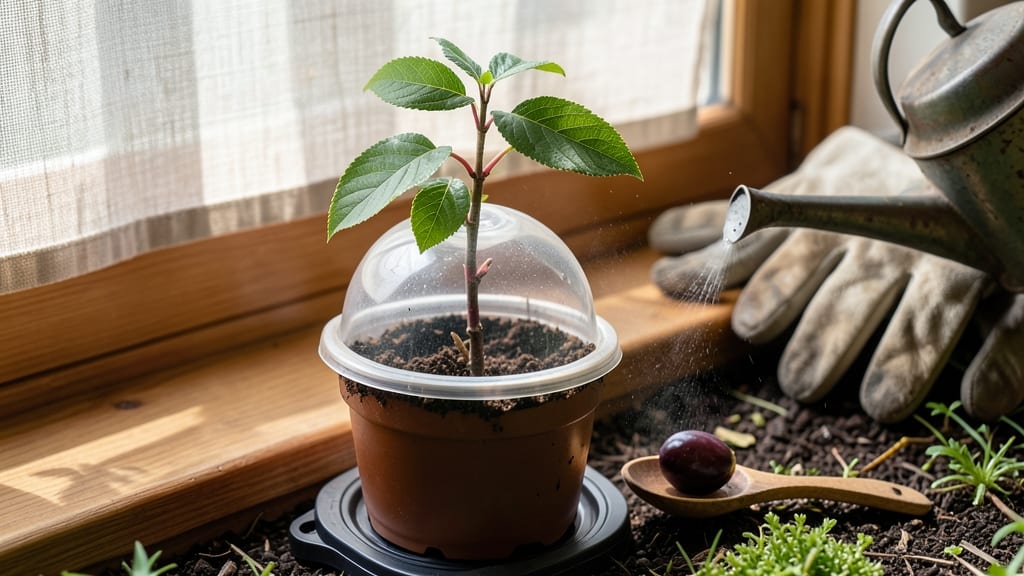
You can grow a plum tree from a plum seed, but the results are often unpredictable: seeds rarely produce fruit identical to the parent tree, and germination can take 6–12 months. Start seeds indoors using cold stratification for best success, though most will grow into wild, non-fruiting trees.
Growing a plum tree from seed is more of a scientific experiment than a guaranteed gardening project. 🌱 The genetic lottery means most seedlings won't produce fruit worth eating—they'll be wild, hardy plants with unpredictable flavors.
I've tried this myself with European plums, and while the seedlings were sturdy, none bore fruit resembling the parent tree. Cold stratification (mimicking winter) is key to breaking seed dormancy, but even with perfect conditions, patience is required.
If you're set on fruit-bearing trees, grafting onto a known rootstock is the far more reliable method.
For those willing to embrace the adventure, start with fresh seeds from a trusted source.
Plant them in damp paper towels or a mix of peat and sand, then refrigerate for 4–8 weeks before transferring to pots. 🌱 Most gardeners who attempt this do it for the learning experience rather than the harvest—because the real reward is watching nature's unpredictability unfold in your own backyard.
💡 In This Article
- Why Plum Tree Seeds Rarely Yield Fruit Bearing Trees
- Step-by-Step Plum Seed Germination Guide for Gardeners
Why plum tree seeds rarely yield fruit bearing trees
Plum seeds contain two critical genetic components: the embryo and the endosperm, but the real challenge lies in the parent tree's breeding history. Most commercial plum varieties are heterozygous, meaning they carry two different alleles for traits like fruit color, size, and sweetness.
When you grow a seedling, it inherits a random mix of these alleles through a process called genetic recombination, which is why seedlings often produce fruit that's completely different from the parent—sometimes inedible or even bitter.
The science gets even more interesting when you consider cross-pollination. Plum trees are often self-incompatible, meaning they need pollen from a different tree to produce viable seeds.
Even if the seed germinates, the resulting tree might carry traits from an entirely different plum variety that happened to pollinate it. 🌿 For example, a seed from a sweet Santa Rosa plum might grow into a tree producing tart, small fruit because it inherited genes from a nearby wild plum.
This genetic roulette is why professional orchards never rely on seeds—they use grafting to preserve desirable traits.
Dormancy also plays a role in why plum seeds are finicky. Many plum varieties have hard seed coats that prevent water absorption until they've undergone cold stratification. Without this process, which mimics winter conditions, the seed may never break dormancy.
Even when it does germinate, the resulting tree might take 5-10 years to mature enough to produce fruit—if it ever does. The viability rate for plum seeds is typically around 20-30%, meaning most seeds simply won't sprout at all, regardless of conditions.
There's another layer to consider: plum trees are often polyploid, meaning they have multiple sets of chromosomes. This makes them more complex to propagate via seeds because the offspring may inherit an unstable genetic combination.
For instance, a tetraploid plum (with four sets of chromosomes) might produce seedlings that are sterile or produce poor-quality fruit. This is why horticulturists prefer grafting—it allows them to combine the root system of a hardy tree with the scion (bud) of a known fruit-bearing variety.
If you're still tempted to try growing from seed, focus on heirloom or open-pollinated varieties, which have more stable genetics. For example, Methley or Stanley plums are sometimes more predictable when grown from seed, though results vary.
The real magic happens when you embrace the experiment: even if the fruit isn't perfect, the tree itself might develop unique characteristics like disease resistance or adaptability to your local climate. 🌱
For those who want guaranteed fruit, grafting is the gold standard. It involves attaching a bud from a known fruit-bearing tree onto the rootstock of a seedling.
This way, you get the best of both worlds: the hardiness of a seed-grown root system and the predictable fruit of a cultivated variety. Many gardeners start with seed-grown rootstock just to practice grafting before moving on to more valuable trees.